

5 Companion Plants To Grow Near Hostas For Season-Long Color
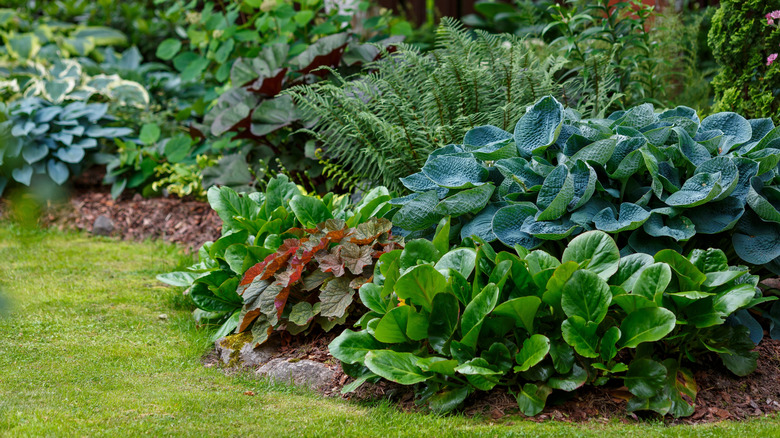
With their lush foliage and wide range of colors and sizes, hostas are the quintessential queens of the shade garden. And while a landscape of this plant can be stunning, especially if you grow award-winning cultivars like 'Curly Fries', these beauties also look great next to other plants that thrive in similar conditions. The trick is to choose companions that pick up where these perennials leave off, adding flowers, evergreen foliage, or colorful leaves when they retreat for the season. Because hostas are herbaceous perennials that die back in fall, pairing them with evergreen plants like dwarf yaupon holly, for example, which add texture, color, and interest during the winter months, can keep your planting looking lively from spring through winter.
A great fit for large swathes of the United States, hostas are generally hardy in zones 3 through 9. In addition to shady conditions, they also love fertile, acidic soil and grow best with regular moisture. Luckily, this puts them in good company, as a variety of gorgeous plants can thrive alongside them in these spots, including colorful azaleas and coral bells. For the most color with the least fuss, look for companions that share hostas' preference for moisture and dappled light while offering a different season of interest.
How to grow dwarf yaupon holly to complement your hosta garden
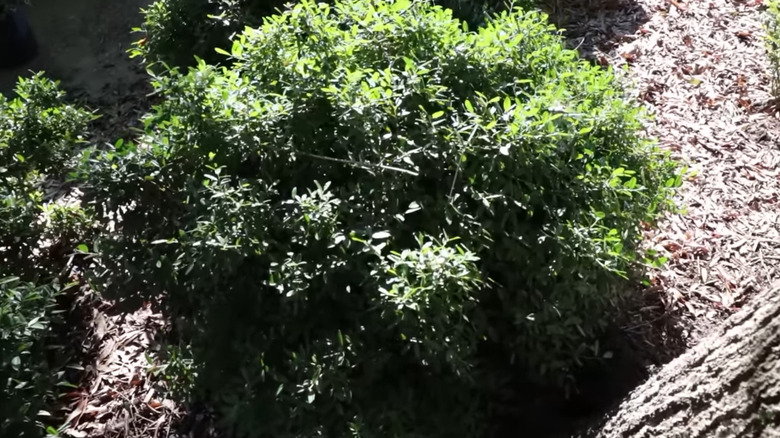
Native to the eastern United States and hardy in zones 7 through 9, dwarf yaupon holly (Ilex vomitoria 'Dwarf') can thrive in the same part-sun spots preferred by hostas, though it also grows well in full sun. Additionally, this adorable holly enjoys the same moist growing medium that hostas prefer. Just make sure to also put it in well-draining soil, or it is likely to struggle. A layer of compost can help improve soil structure where drainage is poor.
As dwarf yaupon holly only grows to around 2 to 5 feet tall and around 5 feet wide, it is roughly the same size as or slightly bigger than many hostas. Smaller hosta varieties, like 'Blue Mouse Ears,' could beautifully grow in front of the holly in a border or landscape. If you want to have cheerful red berries to appreciate on your holly, you'll need to be sure to grow both a male and a female plant. (You'll still only have berries on the female holly, though.) Those evergreen leaves and winter berries make dwarf yaupon holly especially valuable once hosta foliage disappears in fall.
Coral bells bring unique colors to complement or contrast with garden hostas
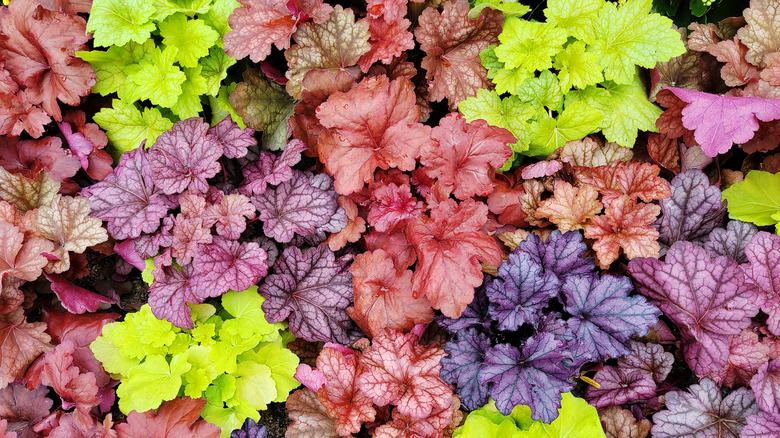
Another amazing plant to grow if you love hostas is gorgeous coral bells (Heuchera spp.). The two plants grow extremely well together, too. The darling bell-shaped summer blooms of coral bells are just a small part of these plants' appeal. They also have evergreen foliage that fills your part-shade gardens with colorful leaves year-round. Hardy in zones 3 through 9, coral bells have a range of foliage colors from peaches and reds to frosted purples and greens, so you're sure to find one that looks stunning against a backdrop of hostas. That foliage can keep the planting colorful even after your shade garden's green foliage has gone dormant for winter.
Like hostas, coral bells thrive in fertile soil and need moist but well-draining conditions to flourish. Both plants are also partial to a slightly acidic growing medium. Since coral bells only reach a height of around 8 inches, they'll likely work best planted towards the front of your garden, with taller hostas acting as a lush summer backdrop. Try pairing dark-leaved heucheras with green or blue hosta cultivars for contrast, or use similarly colored foliage for a more coordinated look.
Azaleas are the perfect hosta companions if your looking for flowers and evergreen foliage
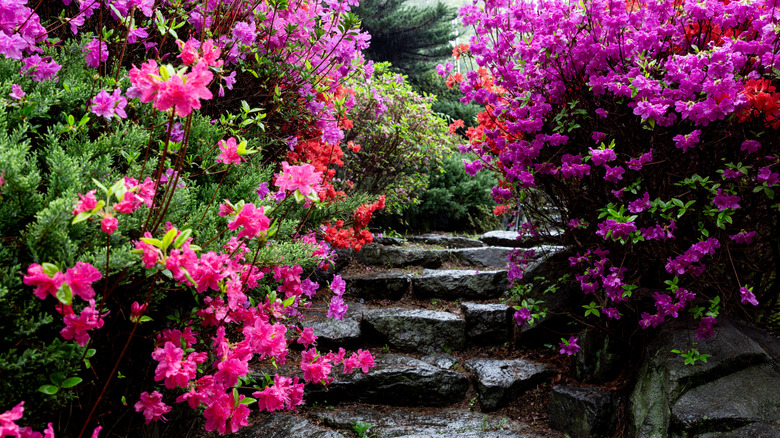
If you're looking for stunning blooms and evergreen foliage, you can't do much better than beautiful azaleas (Rhododendron spp.). There's a lot of diversity among these plants, so make sure to pick evergreen varieties if you're looking for winter interest. Keep in mind that the cultivar you choose will decide whether you get to enjoy blooms in spring, summer, or fall. Azaleas thrive in filtered or dappled sunlight and enjoy acidic, well-draining soil, so they're natural companions for a hosta planting.
Azaleas are generally hardy in zones 5 through 9 and come in sizes ranging from just a foot tall to 10 feet or more. As with hostas, make sure to keep azaleas' growing medium moist and well watered so they can thrive. Choose the mature size carefully when planting, since a fast-growing azalea can eventually shade or crowd nearby plants. If part of hostas' appeal is the way their flowers attract pollinators, then you'll be thrilled by the hummingbirds and bees your azaleas will lure to your garden. If you choose an early-blooming variety, the flowers will also provide a welcome burst of color while hostas are still developing their spring foliage.
Hellebores bring winter blooms to the garden while your hostas rest
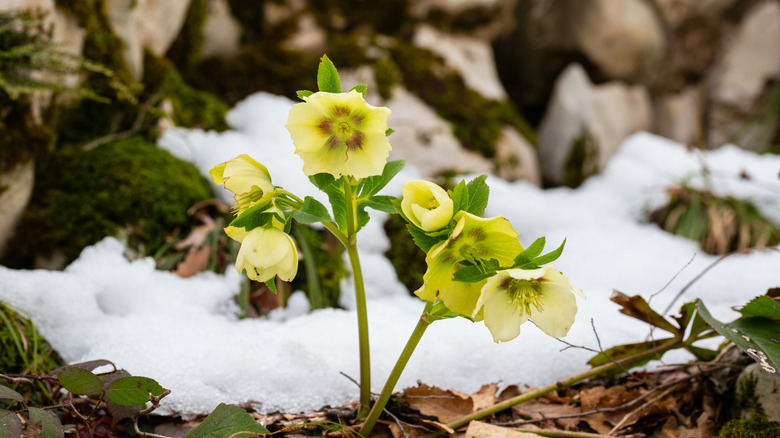
If you're struggling with the lack of winter and early spring blooms in your shady garden, hellebores could be the answer to your problem. And even better, their blooms can stick around for months, providing flowers into late spring or even summer. These unique flowers come in shades of red, white, yellow, and even almost black and are perfect for almost any outdoor color palette. They grow wonderfully alongside hostas, as they both enjoy part shade, rich, well-draining soilwith a neutral pH. If necessary, you can amend their soil with compost to improve structure and fertility.
Hellebores are hardy in zones 5 through 9. As they only grow to around 2 feet tall, they're similar in height to many hostas. Hellebores are evergreen as well, with their leathery leaves adding pops of green to your garden year-round. Because they bloom before hostas emerge from dormancy, they can fill one of the biggest seasonal gaps in a shade garden, adding interest when the rest of the bed is still waking up.
Astilbes thrive alongside hostas and have stunning and long-lasting blooms
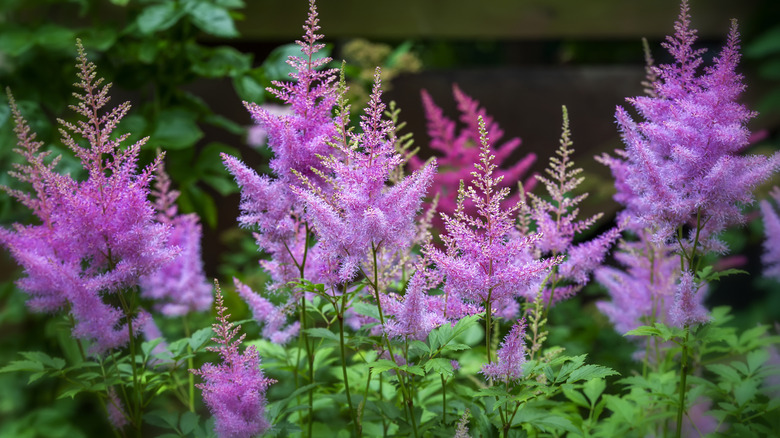
There are few planting companions that offer flowers quite as unique as astilbes (Astilbe spp.). Their gorgeous plumes are perfect for adding unique texture to complement your hostas' foliage. And because the flowers are available in a range of shades including pinks, purples, reds, and whites, you're sure to find one that's the perfect plant for your shade garden. Hardy in zones 3 through 9, depending on the species, astilbes need rich, fertile soil that drains well. And like hostas, they thrive in part-shade locations.
With a height that can reach up to around 3 feet depending on the cultivar, your astilbes make a beautiful backdrop for most hosta varieties. And because their flowers dry beautifully, you can leave them up through fall and winter to add some additional interest to your garden during the cold season. Their tall flower plumes also create vertical contrast against hostas' broad, low foliage, giving the planting more depth and dimension.