

5 Plants To Grow If You Like Hostas
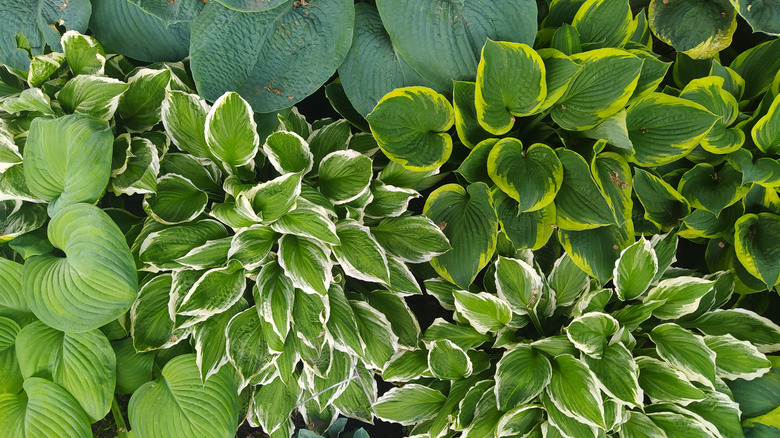
Hostas are gorgeous plants for adding color and texture to shady sections of your landscape. With a range of leaf colors that includes not just shades of green, but also blues, creams, and golds, hostas are perfect foliage plants. They boast stalks of pollinator-attracting flowers, are winter-hardy in much of North America, and can be found in a range of sizes, as well. Hostas are far from the only gorgeous foliage plants for shady spots with these features, though. Plants such as lungwort and coleus, for example, can also add eye-catching leaves to your garden.
Whether you've struggled with growing hostas due to their heat sensitivity or attractiveness to pests like deer and snails, or just want to add some variety to complement your hosta collection, there is a range of options you can add to your garden. In fact, some of these plants fill many of the same roles as hostas and are actually resistant to garden pests. There are even hosta alternatives, like coleus, that thrive in warmer climates, allowing those in the Deep South a chance to enjoy eye-catching foliage in their shade gardens. The bottom line is there are plenty of plants that offer the lush foliage, striking blooms, and shade-loving appeal that make hostas so popular.
Lungwort offers unique spotted leaves and beautiful blooms
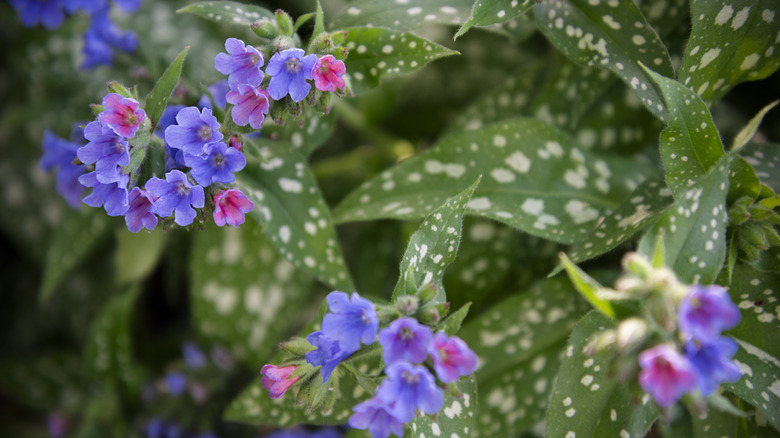
If one of your biggest challenges is that deer are eating your hostas, lungwort (Pulmonaria spp.), which is both deer- and rabbit-resistant, could be the plant for you. Hardy in zones 3 through 9 depending on the species and cultivar, lungwort is the perfect way to add a fun polka-dotted element to your part-sun or shade garden. It's even partially evergreen year-round in many areas.
More petite than many hostas, lungworts generally only reach around 1 or 1 ½ feet tall, making them perfect for the front of shady beds and borders. Just be aware that, similar to hostas, lungworts appreciate even moisture while also needing well-draining soil, especially during winter. You may want to amend their growing media with compost to improve not just drainage, but also soil fertility. Applying a slow-release fertilizer is also beneficial in early spring. You can share your lungworts by dividing them as you would hostas. Just be sure to wait until your plant is around five years old.
Brunnera's unique foliage is sure to win your heart
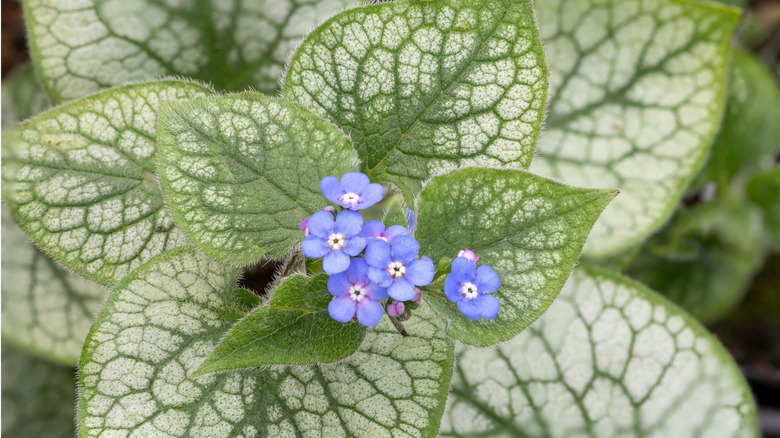
Another amazing plant for shade foliage fanatics to consider is the beautiful brunnera (Brunnera macrophylla). Native to Western Asia and Eastern Europe, this gorgeous species is hardy in zones 3 through 8. In addition to their silver-and-green heart-shaped leaves, brunneras also boast delicate flowers that are reminiscent of forget-me-nots. This makes them a great way to fill your shadier areas with blue spring flowers. The blooms are also a big hit with pollinators, similar to hostas.
Brunneras are around a foot tall and often around 2 feet wide, making them similar in size to many popular hosta cultivars. As with hostas, brunneras need moist and well-draining soil to thrive. But unlike hostas, they're resistant to damage from both deer and rabbits. So they could be perfect for pairing with lungwort in shady areas where other plants tend to get devoured by wildlife.
Coleus provide annual shade foliage and fast growth
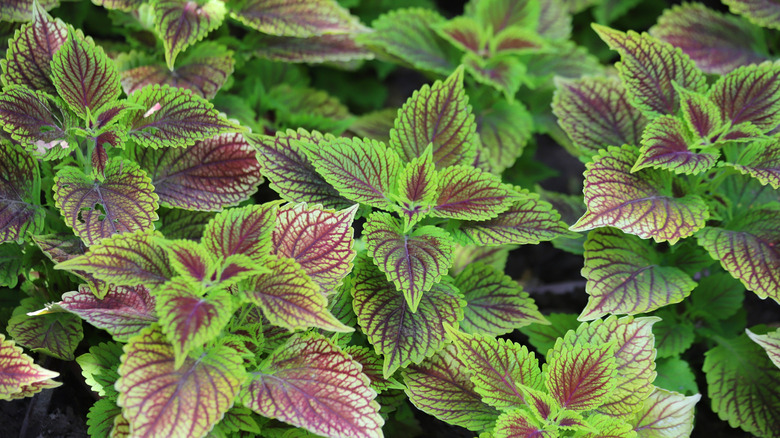
If you're a fan of hosta-like shade plants with gorgeous foliage, you don't have to limit yourself to perennials. Despite only being hardy in zones 10 and higher, coleus (Coleus scutellarioides) grows quickly enough to provide you with lush leaves all summer, even in areas where it only grows as an annual. Often variegated with shades of greens, pinks, reds, and browns, coleus are perfect for adding unexpected colors to your shady gardens. There are also newer cultivars available that can thrive in sun too. Depending on the cultivar, coleus can be as small as 6 inches or as tall and as wide as 3 feet.
Whether you're planting up a woodland garden bed or creating a basket or container for a shady spot on your porch, coleus are a great option. While their small flowers are not generally what they are grown for, they are a big hit with pollinators. Depending on your preference and the cultivar you want, coleus can be grown from seeds or purchased as young plants. Just make sure to grow them in well-draining soil and avoid overwatering. They also benefit from monthly additions of a balanced fertilizer.
Lady's mantle has beautiful leaves and can thrive in sun or shade
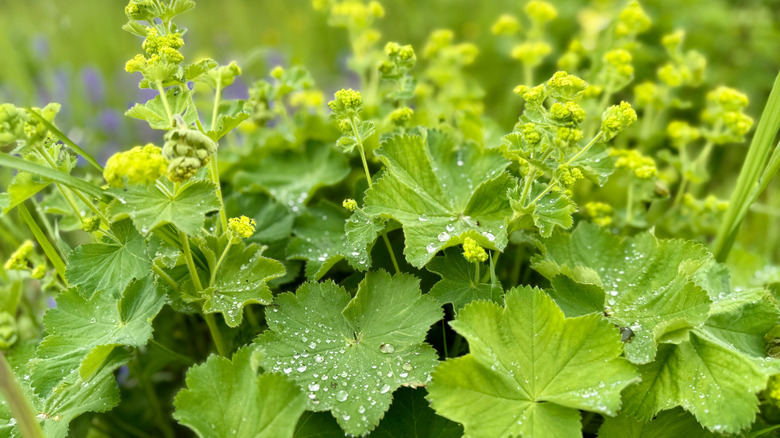
Another gorgeous plant that's adaptable to a range of light levels and soil conditions, lady's mantle is a perfect option for adding even more leafy beauty to almost any garden. It actually makes a great companion plant for your hostas, creating a subtle but eye-catching contrast. It can handle everything from full sun to deep shade and is hardy in zones 3 through 7. Just make sure its soil stays moist. And while lady's mantle's chartreuse flowers might not be the most eye-catching in the landscape, they're great for attracting butterflies. They also dry beautifully and work well as cut flowers. Even better, lady's mantle is rarely bothered by deer or rabbits.
With a height and spread that rarely exceeds 18 inches, lady's mantle is perfect for growing near the front of gardens, where you can admire up close the way water droplets cling to the fuzzy leaves. Don't be too alarmed when it dies back for the winter. It's an herbaceous perennial and returns again in spring.
Coral bells bring stunning foliage and delicate blooms to the garden
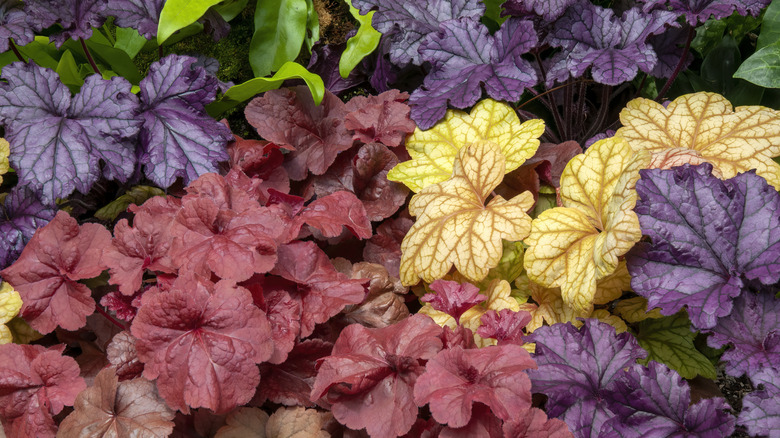
For low-growing foliage, it doesn't get much better than coral bells (Heuchera spp.). These stunning ground cover plants boast leaves that can range from white and purple to copper, and shades of blue and green. This is a perfect choice if you enjoy the range of colors of hosta blooms. There are even some species native to North America. While coral bells rarely grow taller or wider than 20 inches, the little plants make a lot of impact in the landscape. Hardy in zones 3 through 9 depending on the species and cultivar, they are even evergreen in many areas, providing you with some extra winter color. In addition to their stunning foliage, coral bells also have small bell-like flowers that are popular with a range of pollinators, including hummingbirds.
Depending on the species, coral bells generally grow well in everything from full sun to full shade, but need to be grown in well-draining soil. They also benefit from regular division, which can help expand their lifespan. Luckily, it's quite easy to divide your Heuchera.