

Different Kinds Of Flowering Crabapple Trees
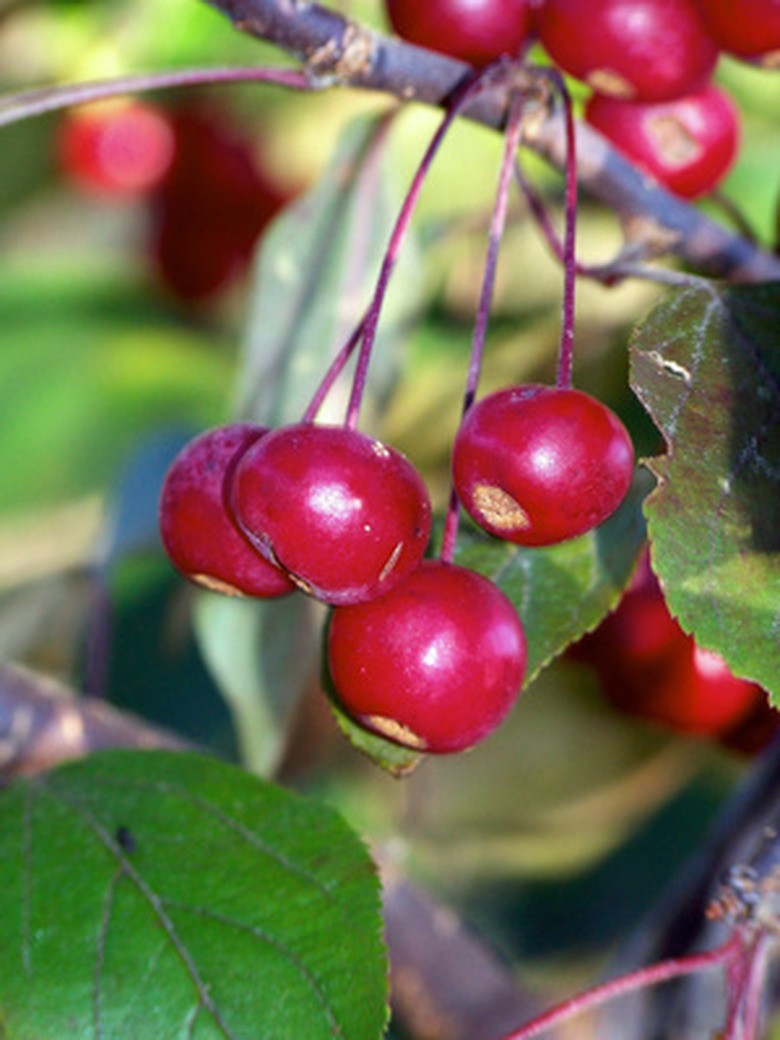
Related to apple trees and part of the same genus (Malus spp.), flowering crabapple trees produce smaller but still edible fruits. Crabapple fruits aren't technically classified as apples, because they're less than 2 inches in diameter. Flowering crabapples come in many different species and cultivated varieties, most of which are fairly drought-tolerant and cold-hardy. Flowering crabapples have become increasingly popular ornamental landscape trees.
European Crabapple (Malus sylvestris)
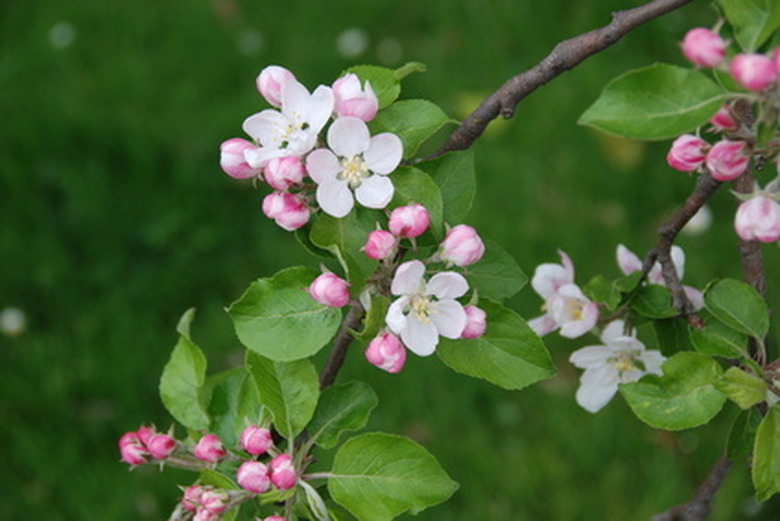
The most common flowering crabapple species, the European crabapple tree, blooms in white blossoms and can reach a mature height of up to 40 feet. Blooming in mid-spring, the European crabapple produces its red fruits in summer.
- Related to apple trees and part of the same genus (Malus spp.
- ), Flowering crabapples come in many different species and cultivated varieties, most of which are fairly drought-tolerant and cold-hardy.
Sweet Crabapple (Malus coronaria)
The sweet crabapple tree, also called the prairie crabapple, is a wild species that is most commonly found in the northeastern United States. Producing yellow fruits, the sweet crabapple has distinctly reddish-brown, fissured bark on its trunk.
Siberian Crabapple (Malus baccata)
The Siberian flowering crabapple is extremely hardy, growing in even the coldest regions and withstanding winter temperatures to 45 degrees below zero. The Siberian crabapple blooms white flowers followed by red fruits.
Manchurian Crabapple (Malus cerasifera)
Like the Siberian crabapple tree, the Manchurian flowering crabapple can grow in extremely cold climates and produces white blossoms. The Manchurian crabapple also produces red or yellow cherry-sized fruits.
Japanese Crabapple (Malus floribunda)
The Japanese flowering crabapple, also sometimes called the purple chokeberry, blooms in white or pink flowers. This crabapple species is commonly planted in landscapes along the eastern coast of the United States, as well as in California. Producing tiny, 1/3-inch red fruits, the Japanese crabapple is hardy down to USDA Zone 5, tolerating winter temperatures as low as 15 degrees below zero. The Japanese crabapple tree can reach a mature height of 25 feet.
- The sweet crabapple tree, also called the prairie crabapple, is a wild species that is most commonly found in the northeastern United States.
- Like the Siberian crabapple tree, the Manchurian flowering crabapple can grow in extremely cold climates and produces white blossoms.
Hall’s Crabapple (Malus halliana)

Producing edible, purple, 1/3-inch-diameter fruits, the Hall's crabapple tree blooms in bright-rose or pinkish-white flowers and reaches about 16 feet in height. Hall's crabapple is hardy down to Zone 6, where winter temperatures don't fall less than 5 degrees below zero.
Tea Crabapple (Malus hupehensis)
Over-wintering in temperatures as low as 25 degrees below zero, the tea crabapple blooms in pink flowers that fade to white. The tea crabapple, also sometimes called the Chinese crabapple, grows up to 27 feet and produces tiny red fruits that are tinged with yellow.
Dwarf Crabapple or Sargent’s Crabapple (Malus sargentii)
The dwarf crabapple tree can endure extreme winter cold and produces white flowers, small leaves and red fruits. This crabapple species is shrub-like with multiple stems and grows to only 10 feet.