

Do Your Outdoor Planters Need To Be Emptied Before Winter? Here's What To Know
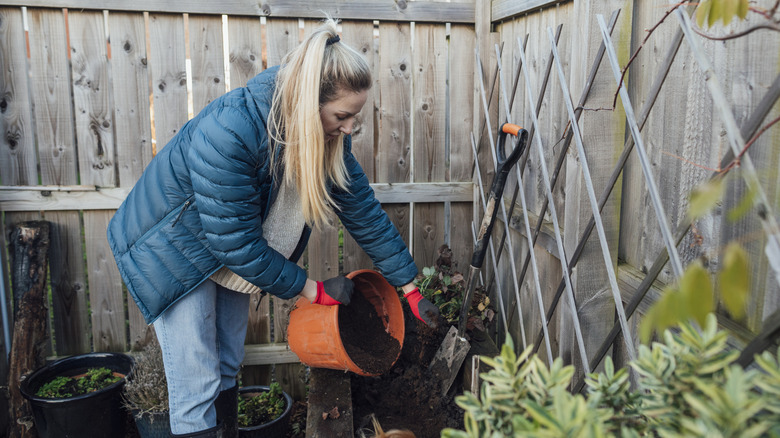
Fall is the time to clean up your garden beds and tidy your landscape. You might wonder if oncoming cold weather means you have to empty and put away your flower pots and planters as part of this clean-up as well. While this isn't always necessary, it depends on factors like how cold your winters get, what material your planter is made of, and how your planter is shaped.
Exactly what winter weather entails in your region is an important consideration when deciding how to handle planters. If you garden in an area where winter temperatures never drop below freezing, then you don't need to worry about your planters at all and can continue using them as normal. But for those who grow in USDA Hardiness Zones 10a or lower, it's important to consider how best to care for planters during freezes and whether you need to winterize your flowerpots.
Also, even if your outdoor planters aren't likely to be damaged by winter weather, that doesn't necessarily mean perennials growing in those planters can survive the cold. Because planters are above ground, they often expose roots to far colder temperatures than in the ground. In general, potted perennials are subjected to two USDA Hardiness Zones colder than landscape plants. So if you're in zone 7, your winter container garden is likely experiencing conditions equivalent to USDA zone 5.
Which planters can be left outdoors and which must be emptied and put away?
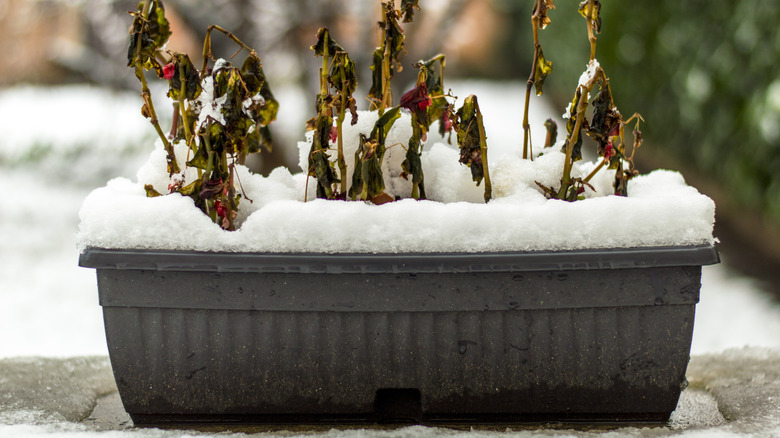
Garden pots and planters can be made from a wide range of materials. Terracotta pots add rustic charm but tend to be the most vulnerable to damage during cold weather thanks to their high porosity. These pores allow water to seep through, and when the water freezes, it expands and causes the pot to crack. While terracotta made of vitrified clay is less vulnerable to this type of damage, it can pose a major problem for standard terracotta containers. But while most terracotta and ceramic pots should be emptied and stored in a protected area, many other containers are entirely fine out in the elements and can even be used to create winter container gardens. Fiberglass and polyethylene are especially good options for planters you'd like to be able to keep outdoors year-round, as they're insulating and non-porous. Weather-proofed wooden planters can also stand up to freezes, but you should elevate them off the dirt to prevent rot.
Another factor that can impact whether or not a planter or pot can handle cold winter temperatures without damage is the container's shape. Planters with wider tops and narrower bottoms tend to hold up better in freezes because the soil can lift and expand upward instead of expanding out and breaking the sides of the planter.
If you don't have a shed or garage in which to store any emptied planters, stacking them upside down in a protected spot and covering them with a tarpaulin should still help prevent winter damage. By keeping the water off, you'll reduce the chance of cracks.