

Say Goodbye To Carpenter Bees With The Help Of WD-40
We may receive a commission on purchases made from links.
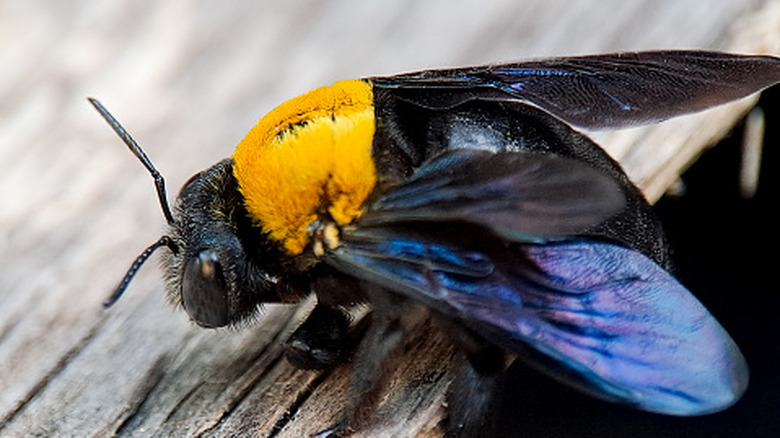
Between their calm demeanor and help with pollination, there are plenty of reasons to be happy about seeing cute carpenter bees in your garden. Unfortunately, the adorable insects are also notorious for boring holes into wood to lay eggs and raise larvae. This can damage everything from weathered soffits and siding to unpainted patio furniture. One popular DIY strategy for dealing with destructive carpenter bees is to use WD-40. Many homeowners report success with putting the thin straw that comes with the lubricant into the carpenter bee's hole and spraying WD-40 into the opening.
Considering WD-40 can help with everything from maintaining your lawn mower to keeping your garden tools clean, it's perhaps no surprise people have found yet another way to employ this versatile product around their yard. While there are several ingredients in WD-40 Multi-Use Spray, it's likely the product's petroleum content that makes it so effective against carpenter bees. Petroleum products have been found to quickly damage and kill cells in the central nervous system of insects.
While WD-40 may kill adult bees upon contact, it's possible that larvae or eggs within the holes will survive thanks to the curved shape of the burrow and the barriers between each tunnel chamber. When those larvae mature, they can then use the same hole for laying their own eggs. To decrease the chance of any larvae surviving, use the straw that comes with your WD-40 can to make sure any barriers within the burrow are broken open before spraying.
How to handle carpenter bees in your wood structures using WD-40
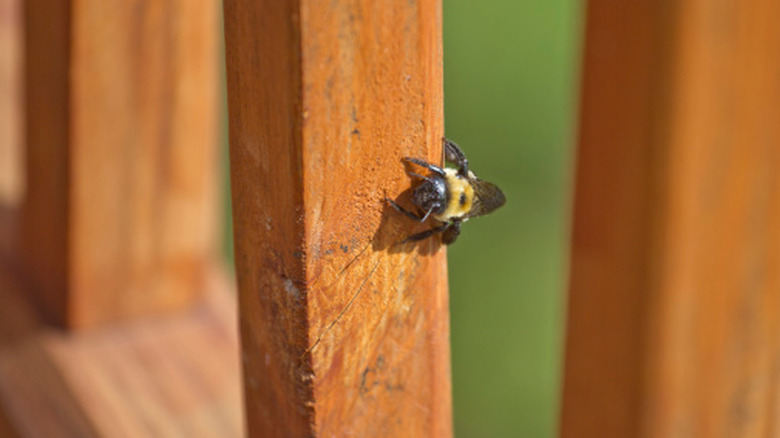
While WD-40 spray might yield immediate results against adult bees, the effects wear off after a few weeks, and new ones may then start using the existing holes. So you'll need to repeat your applications regularly to keep them away long term. Even professional exterminators, after all, sometimes need to treat carpenter bee holes multiple times to ensure all eggs and larvae are destroyed.
Spray the holes at night during the early spring or fall, when adult bees are more likely to be in the tunnels. Follow up a couple of days after the final treatment (if you choose to do multiple applications) by filling the holes with a product like Gorilla All Purpose Wood Filler and then painting or staining the wood. This is generally the best long-term method for repelling carpenter bees and keeping them from boring holes in your structures.
It's important to note that WD-40 spray might discolor the wood structure you're trying to protect. Do a small patch test in a less visible area first to make sure it won't cause unsightly stains. Alternatively, you may want to consider using a powder insecticide specifically designed to eradicate carpenter bees instead of reaching for this spray. If you're not sure how best to deal with carpenter bees invading the wood in your garden, or if you're concerned they may have caused serious damage, have a professional exterminator examine and treat your structure. And, of course, be careful while working around these insects; even though they aren't generally aggressive, females have been known to sting on occasion.