

What To Do When Carpenter Bees Are Invading The Wood In Your Garden
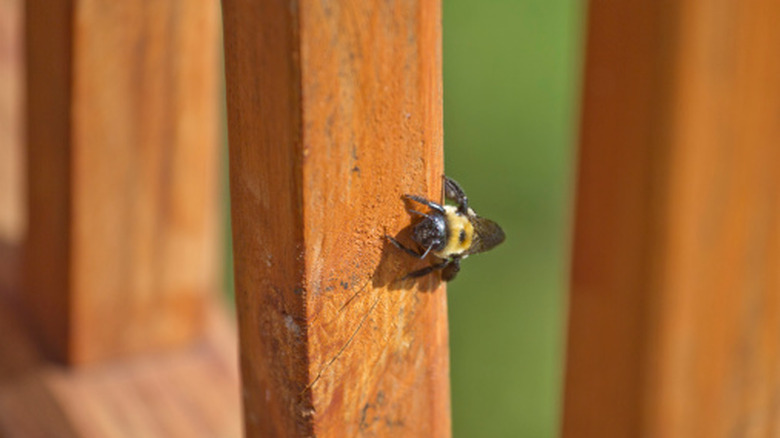
Many of the crawling critters you might encounter in your yard or garden come with a "pros" and a "cons" column. Spiders can bite and may even be extremely venomous, but they are essential for pest control; some wasps can deliver a painful sting, but they're important pollinators; ants are annoying at times, but they're also excellent at aerating soil. In the same vein, carpenter or "borer" bees are pollinator extraordinaires — and generally friendly neighbors to boot — but they can do a lot of damage to wooden structures when they burrow in to build their nests. To keep carpenter bees from scouting your old-fashioned fences, sheds, and other garden structures for potential real estate, preventative measures are often the best defense, with insecticides best left for extreme cases.
Before you start looking for ways to get rid of these borer bees, you might want to double-check and make sure they are even carpenter bees. It's very easy to confuse bumblebees for carpenter bees, as they look similar in many respects. Though the two are similar in size and both are fuzzy, carpenter bees' abdomens are bald and shiny, while bumblebees are fuzzy all over. They also behave differently: where bumblebees are social insects that live in small underground colonies, carpenter bees are solitary nesters. You can do a bit of detective work to determine whether there's carpenter bee activity occurring in your garden or not. Look for round, almost perfect circles bored into wood surfaces, often with accompanying sawdust piles below them.
Prevention is the best way to deal with carpenter bees
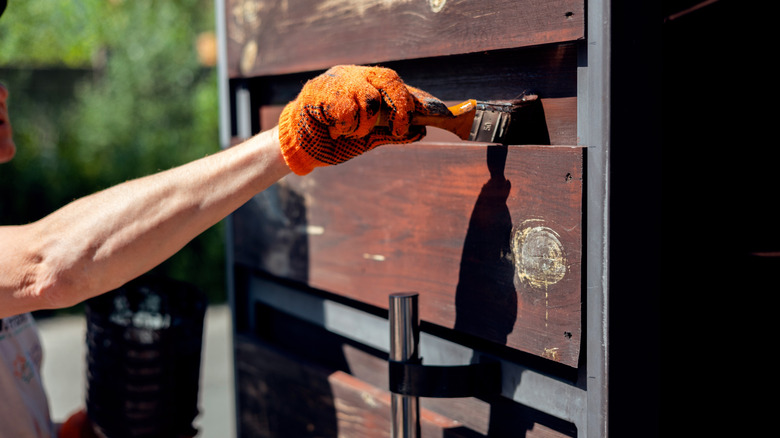
Unlike termites, carpenter bees don't eat wood, but build their nests in it. After overwintering in these tunnels, the solitary male and female bees emerge and mate in the spring, at which time they start either renovating old tunnels or constructing new ones in preparation for eggs and larvae. Keep an eye on the condition of wood structures in April and May, especially: carpenter bees favor old, weathered, unpainted wood for their nest tunnels. They also look for wood that already has faults in it, like nail holes or cracks, as this gives them an easier start on the job.
Although it's unclear why exactly they seem to eschew stained or painted wood, finishing wood surfaces and caulking any holes may make structures less appealing to carpenter bees. A seasonal application of almond oil can also deter carpenter bees while preserving a "natural" look. Take on this "do no harm" approach to these valuable pollinators in late summer after the young bees emerge and before they all return to hibernate.
If they have already set up shop, you can kill these boring bees by applying bee and wasp aerosol insecticides or powdered carpenter bee insecticide lightly inside and around the tunnel (too much and they may just look for a new surface nearby instead of getting enough of a dose). After a week of treatments, you should still make sure you finish the surfaces properly, or bees may come back at some point.