

Save Hostas From Slugs & Snails With 5 Natural Solutions
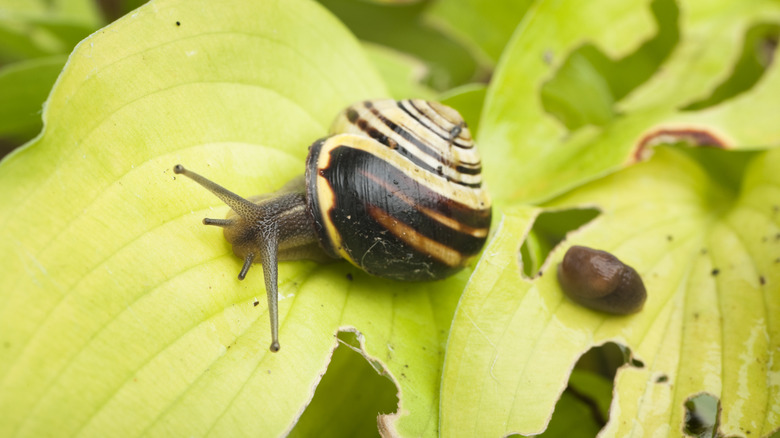
If you're a gardener with a penchant for hostas, few sights are more infuriating than waking up to large, ragged holes chewed through yesterday's perfect leaves. Unfortunately, as much as you love these shade-loving plants, marauding mollusks love them too, albeit for different reasons. Slugs and their shelled relatives, snails, are partial to feeding on low-growing plants in cool, sheltered settings. While you can utilize chemical control methods like pesticide baits to deal with them, it's probably best to avoid such extreme measures unless all else fails. Building traps, creating barriers, and modifying the surrounding habitat are just a few options for controlling and discouraging these pests.
Before you commit to a plan to keep snails and slugs out of your plant roots and leaves, it might be best to do a bit of investigating to make sure they are actually the responsible parties. One of the surest clues is the shiny trail of dried mucus they leave on the foliage and soil. The damage they inflict on plants is another telltale sign. It typically takes the form of large, ragged, uneven holes on your hosta leaves.
Create irresistible traps
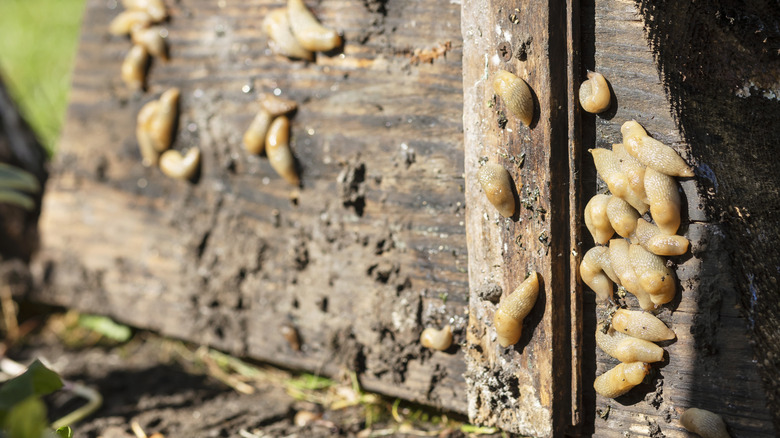
Snails and slugs require moisture to survive, and typically prefer dark areas, just like your hostas. You can take advantage of this preference by creating a super-simple shelter trap. All you'll need is a wooden board or flower pot. Place the board flat on the ground in your garden, or the flower pots upside down with the lip propped up so the pests can get underneath. Snails and slugs seeking daytime shelter will congregate beneath these items and can then be easily collected and dealt with. Overturned grapefruit halves or roofing shingles can be used, as well. To make these traps even more tempting, add a slice of apple or potato beneath the shelter.
You can also try making a trap that capitalizes on these slimy pests' attraction to yeast and sugar. To make a beer trap, find a fairly deep container with vertical sides and a lid (like a coffee can or a plastic margarine container), then bury it partway in your garden. Fill it with a little bit of beer or a mixture of yeast and sugar water, then cut holes in the lid and cover the container. Snails and slugs will crawl in the holes in search of the bait, get trapped, and drown. The lid will somewhat help to keep the liquid from evaporating, but you will need to replenish it every so often.
Hands are your best tools
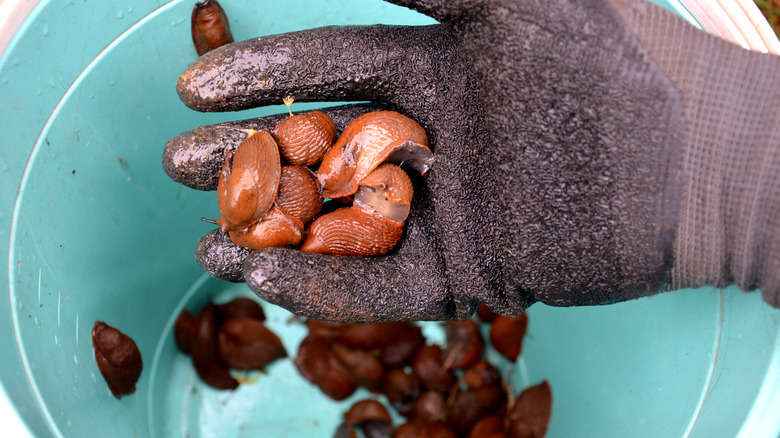
The hand-picking control method may not be the best fit for the squeamish gardener, but it is effective. Water your garden in the late afternoon to bring the snails and slugs out of hiding, then get some latex gloves and a flashlight and wait for night to fall. Once it's dark, illuminate the area, pick the snails and slugs off your plants with gloved hands, and drop them into a plastic bag or a bucket of soapy water. Pay particular attention to hiding spots like the undersides of your hosta leaves or beneath rocks. You'll likely notice progress in controlling the infestation with daily hand-picking sessions after about a week.
While you're looking for adult slugs and snails, you should also keep an eye out for their eggs, especially in late summer and fall. You'll generally find these tucked just beneath the surface of loose, moist soil or in dark, damp hiding spots that adults also favor. The eggs are white, spherical, and generally found in clusters; slug eggs are translucent and jelly-like, while snail eggs are more opaque. Expose any clusters you find so birds and other predators can reach them.
Make your hosta bed less inviting
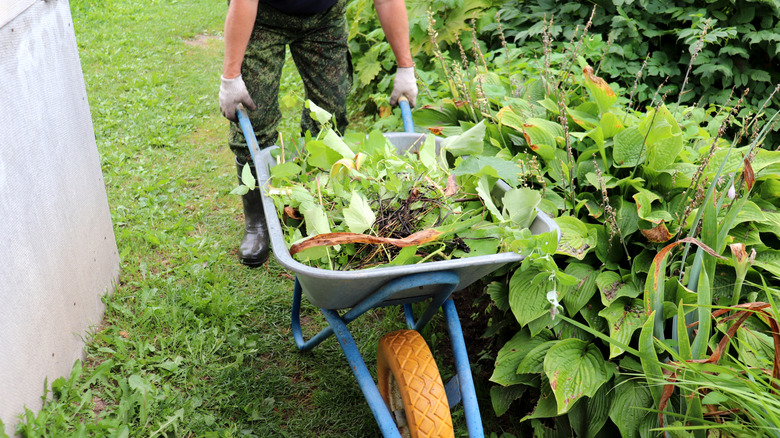
Snails and slugs depend on certain kinds of hiding places to survive; making sure they can't find those spots in your shade garden may encourage them to slither elsewhere. It's possible your plants are crowded too close together, creating an area with poor air circulation that holds onto moisture from dew and rain — an irresistible hideaway for slimy pests. Keeping 1 to 3 feet between your hostas will help prevent disease and ensure the leaves dry out properly, as well.
Neatening up the area immediately around your hostas is another good way to make sure there's no attractive real estate for mollusk pests. Remove any nearby debris that slugs and snails might like to hide beneath, and keep up with regular lawn mowing and weeding. If nearby trees and shrubs have low-hanging branches, keep them pruned or staked off the ground. Remove excessive mulch and avoid the temptation to leave leaves where they fall; take them instead to your compost pile.
Create barriers
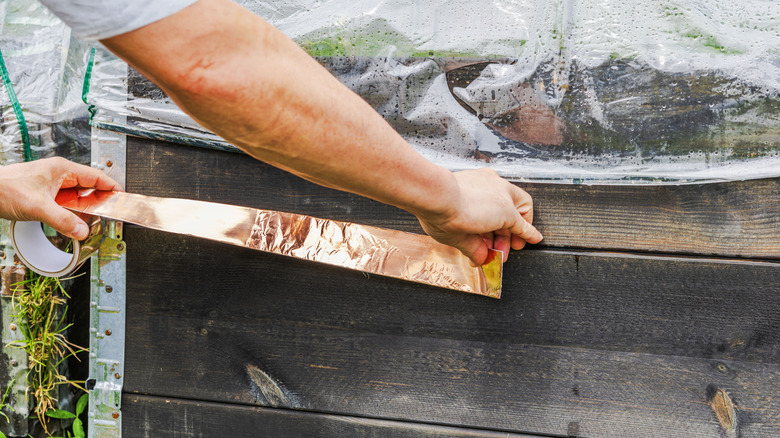
A fence can keep larger herbivores away from your hostas, but there's no real way to put one up for snails and slugs — or is there? Snails secrete mucus from their feet to adhere to and climb up smooth surfaces, so it's hard to keep these invaders out. However, there are certain textures and materials they're reluctant to cross. Diatomaceous earth (DE), a fine dust created from fossilized algae, can abrade, adhere to, and desiccate the soft bodies of these mollusks. Apply a band of DE about an inch wide to the ground around your hostas, keeping in mind this method is most useful in dry settings, as water will make it ineffective.
Another potentially effective barrier material is copper. Essentially, copper is thought to react with the snails' and slugs' mucus, creating a nervous system reaction not unlike getting an electric zap. To be effective, the barrier needs to be wide enough to accommodate the pest's entire body. You can make strips of copper sheeting or put up standing copper screens, with a couple of inches buried beneath the soil. This method may leave sharp edges around your hosta plants, though, so make sure little hands or furry friends won't be in danger of getting hurt.
Call in nature's experts
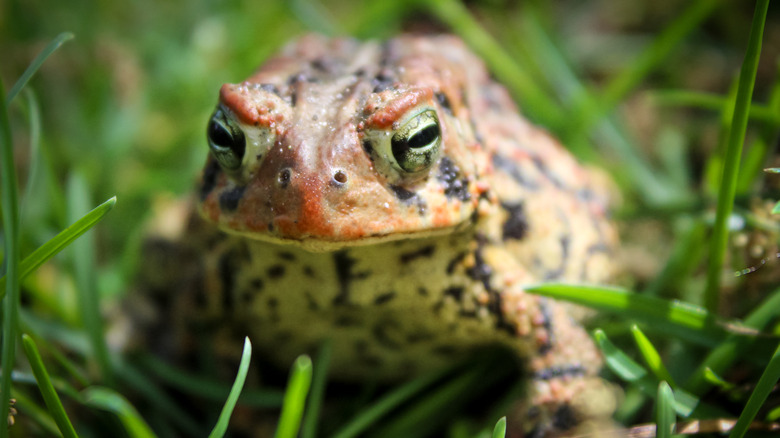
Before you reach for chemical solutions to protect your hosta beds, take advantage of the animals that already consider slugs and snails dinner. Birds, toads, turtles, garter snakes, and ground beetles love snacking on the mollusks. As part of your control regimen, try encouraging these predators to frequent your yard. You can start by avoiding chemical pesticides, as toads and frogs are highly sensitive to them due to the permeability of their skin. Adding a small pond to your landscape can draw snakes, frogs, toads, and other wildlife seeking a drink. Rock piles can serve as garter snake hotels, and toad houses can be made from clay flowerpots.
Chickens, ducks, geese, and guinea fowl can also make quick work of slugs and snails, though you may want to supervise the proceedings around your hostas so they don't help themselves to your seedlings and mature plants. If you don't want to commit to the hassle of a chicken coop, there are services that will bring livestock birds to your yard for a couple of hours to tackle your pest problem. Or maybe you have a friend who wouldn't mind bringing their pet duck over for a backyard brunch!