

What To Do If Snails Are Invading The Roots Of Your Plants
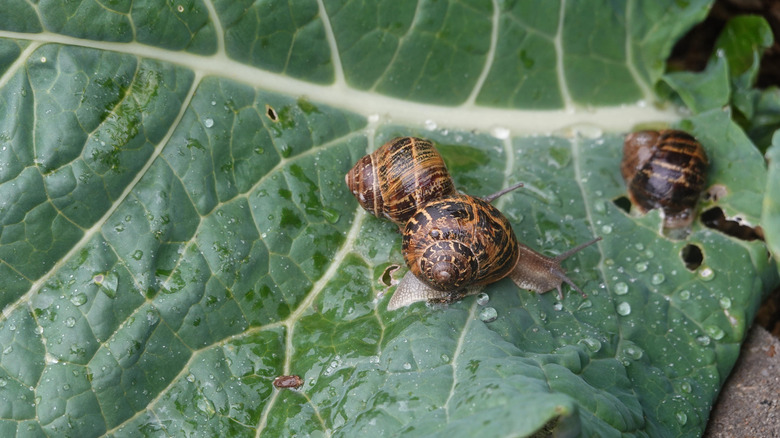
Slimy, destructive, and unpleasant to accidentally encounter barefoot, snails are the mortal enemy of many gardeners. Snails and slugs are fundamentally similar; the main difference between them is that snails have a shell and slugs don't. Just like slugs, snails love eating plants, both dead and living. In addition to the damage they can cause by feeding on plants, snails may spread plant diseases. Even so, before you reach for chemical snail-control measures, it's worth trying some non-pesticide methods of getting rid of snails naturally, including easy homemade traps, mechanical barriers, and cultural practices.
Snails are not insect pests but mollusks, closely related to shellfish like clams. Seeing one does not necessarily mean that your garden is about to be a mollusk salad bar, though, as not all snails are a threat to your plants. Non-native species, especially the brown garden snail, are often among the worst offenders when it comes to plant damage, while native snails are necessary to the local ecosystem and generally won't bother your garden. In fact, some, like the rosy wolfsnail, may just be there to snack on other species! If you aren't certain what type of snail you're seeing, send a photo to your local university extension service for identification.
Snails are best known for feeding on tender leaves and seedlings, scraping away plant tissue with their tongue-shaped mouthpart called a radula. Foliage isn't their only target, though. Some snails are known to feed on roots, as well. The root damage caused by snails can weaken plants by reducing their ability to absorb water and nutrients, making them more susceptible to stress and disease. This is why when you see above-ground signs of snails in your garden — slime trails and irregularly shaped holes in your foliage — it's time to take action.
Protect your plant roots from snails with traps and cultural control methods
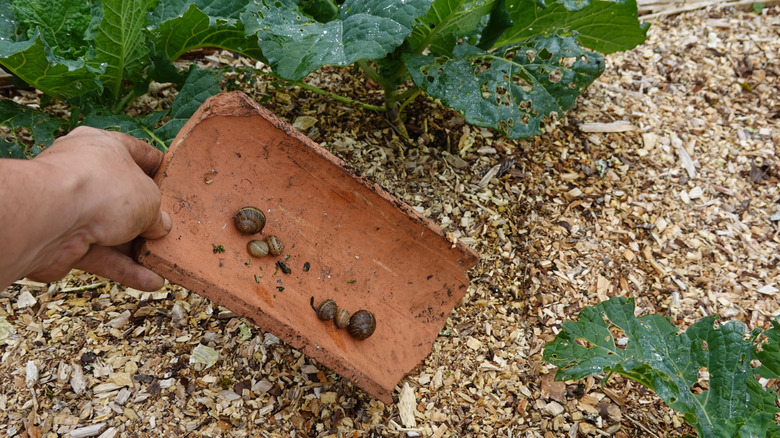
Ever heard of a beer trap? Basically, a beer trap for slugs and snails is a partially buried container with high sides and a top with beer at the bottom as bait; snails and slugs, attracted to the sugar and yeast, crawl inside and are unable to escape. Another trap only requires a piece of cardboard. Just lay it down in your garden and let the shade-seeking snails congregate on the underside during the heat of the day, then pick the cardboard up later.
If you've noticed damage concentrated around certain plants — snails and slugs are especially fond of hostas — you can try putting copper flashing, screens, or tape around the base of the affected plants. When their slimy bodies touch the copper, snails receive an unpleasant shock to their nervous system. A sprinkled barrier of abrasive diatomaceous earth may also deter them. One thing you do not want to sprinkle around your garden for snail control is salt, as this will cause collateral damage to your plants by burning them.
In much the same way as certain features can attract snakes to your yard, certain aspects of your garden may be drawing in snails, and removing these may encourage snails to move on. Some of their favorite cool, moist hiding places include excessive mulch, dense ground cover, and bricks or boards. If you can, try to remove hiding spots and thin out dense plant cover to allow air circulation and sunlight to dry things out a bit. This will help ensure your garden's foliage and root systems stay snail-free from the start.