

The Beautiful Shade Flower That Can Attract Hummingbirds To Your Garden
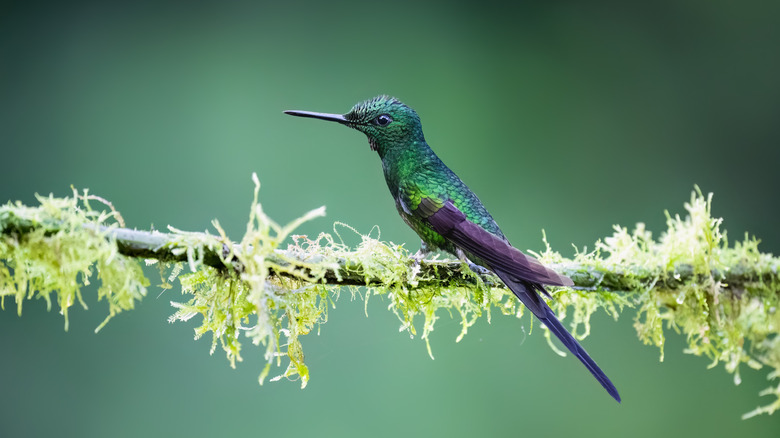
Whether you think its name is off-putting or cute and whimsical, you might find that the somewhat underappreciated toad lily (Tricyrtis spp.) has a lot to offer the shadier spots in your garden. In fall, when your garden may not be at its most colorful, toad lilies' gracefully arched stems offer a welcome display of intriguing blooms that somewhat resemble orchid flowers. Even better, those eye-catching flowers produce nectar that can attract hummingbirds, giving you both late-season color and a chance to enjoy more feathered visitors.
Native to East Asia, there are 18 or so species of toad lily and a wide selection of hybrids and cultivars. Historically one of the more commonly available species, T. hirta, the hairy toad lily (what a name!), comes in a rainbow of bloom and foliage colors, including variegated varieties. The ideal USDA Hardiness Zone for this flower varies somewhat by species and hybrid; while hairy toad lily is hardy to zone 4, others may only be hardy to zone 5 or 6, so make sure you do a bit of research before choosing a variety for your garden.
These herbaceous perennials are great plants to grow with hostas, hellebores, lungworts, and other plants that favor moist settings. Because the flowers are relatively small and intricately marked, plant them somewhere you can easily see them, such as along a path or near a seating area. For best effect, choose a spot where their beauty can be admired up close, since the blooms' complexity might be missed from further away. That close placement also gives you a better view of hummingbirds as they hover around the colorful plant. That said, they may be toxic if ingested, so savor with your eyes, not with your mouth!
Toad lilies flourish in woodland conditions
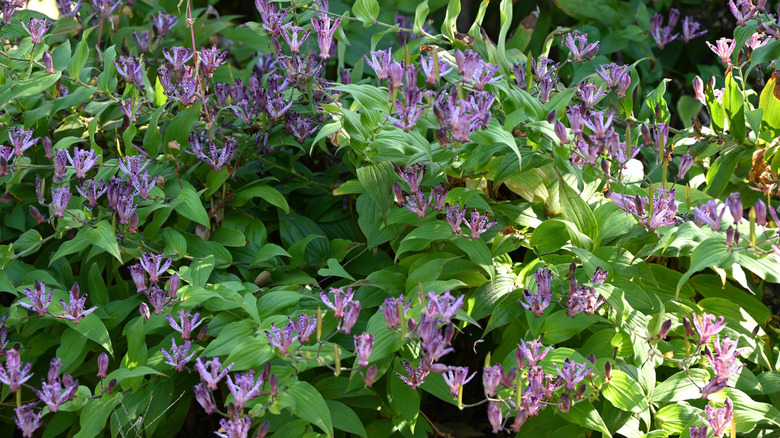
In the wild, you'd find toad lilies in the cool shade beneath forest eaves or cliffs, or possibly along the banks of a stream. Hairy toad lilies in particular thrive in understory settings, preferring moist, well-draining soil that has plenty of organic matter, making them ideal plants for a shade garden. That shade preference makes them especially useful for hummingbird gardens where you want to create layers of habitat, since these feathered creatures visit flowering plants around sheltered areas. If you live somewhere prone to early fall frosts, you may want to cover them for protection when you suspect a light cold snap is on its way, or your blooming period could be cut short. Protecting late flowers can be worthwhile if you're trying to stretch the season of available nectar sources. If conditions are to their liking, these flowers might reproduce on their own (though, depending on the cultivar, they may not come true to seed).
It bears repeating that moist soil is very important to the health of toad lilies, and you should avoid letting them dry out if at all possible. If the soil lacks moisture, the leaves may go brown and mottled, and the plants might go dormant too early and not bloom at all. That can mean fewer flowers — and fewer opportunities for hummingbirds to find nectar. A layer of mulch can help the soil retain moisture and keep roots cooler during dry spells. Also, do your best to water only the base, not the leaves, as wetting them can invite fungal disease. Luckily, toad lilies don't have many pest problems, with the exception of some potential attention from slugs and rabbits. Deer, fortunately, don't enjoy these flowers.