

The Fragrant Herb That's Almost Impossible To Kill
Between their fresh flavor and irresistible scent, herbs can make amazing additions to any garden. But while some, like thyme, can be surprisingly finicky, others seem determined to grow no matter what life throws at them. One of the most resilient herbs around is the humble and ubiquitous mint (Mentha spp.).
Depending on the specific species and cultivar of mint plant you grow, these beauties can be hardy down to zone 3. They can tolerate a range of soil conditions and, unlike many herbs, grow well in part shade. In fact, the plant is so resilient and easy to grow that gardeners often avoid growing it in the ground because it can quickly take over a landscape and is surprisingly difficult to control.
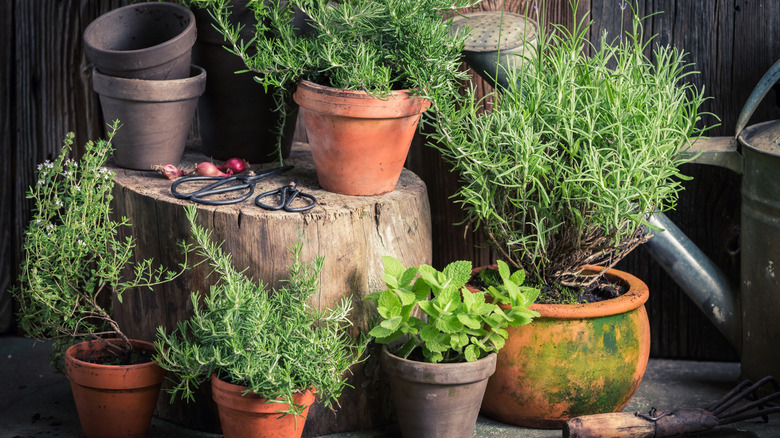
This doesn't have to be a huge problem, though. Skip planting it directly in the garden bed and grow it in a container instead. Be sure the pot or planter is on a surface like stone or cement so the mint can't sneak out through the drainage holes. It's also a good idea to check occasionally for stems that reach over the edge and root nearby, since mint can spread by creeping stems as well as underground growth. Growing your mint in containers also makes it easy to bring it inside if you want some fresh leaves to enjoy during the chilly winter months.
How to care for your resilient mint to get the best harvest possible
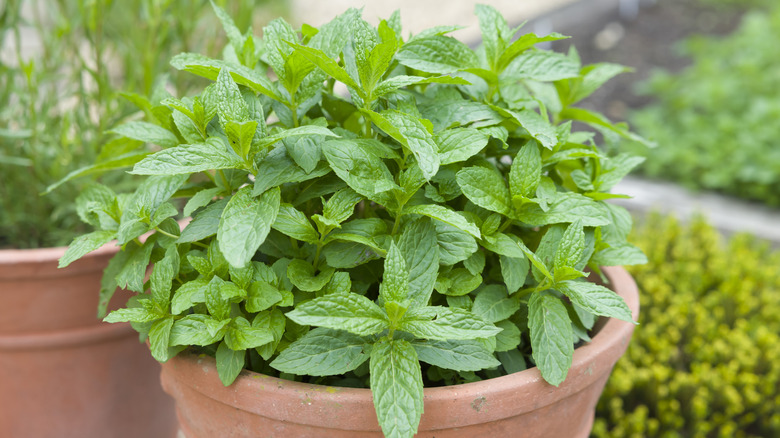
Depending on the type of mint you want to grow, you can either start from seeds or by purchasing a young plant at a local nursery. Because you'll likely want to grow it in a container, make sure you have a pot or planter with drainage holes and a good potting mix. While the herb can handle a range of conditions, it prefers a moist and fertile growing medium. It grows well in both full and part sun, and if your plant lives in a container, it should be easy to move it around to find the perfect spot. Just don't forget that potted plants generally need more water and fertilizer than plants grown in the ground. So be sure to regularly check the soil's moisture levels.
This tough herb generally doesn't have problems with pests or diseases, though some insects, like aphids and leafhoppers, can attack mint plants. So be sure to examine your plant carefully if you decide to bring it indoors as a houseplant for the winter, to avoid any unwanted hitchhikers. Mint should grow well indoors as long as you have it either under grow lights or by a bright south-facing window.
If you decide to grow it outdoors, be prepared for just how hardy and persistent it can be. It spreads vigorously through underground rhizomes, allowing it to bounce back and establish itself quickly. If you plant your mint outside, consider keeping it contained in a raised bed and checking regularly for runners and new shoots. It's much easier to encourage than to get rid of.