

Why Do Gardeners Hate To Grow Mint In The Ground?
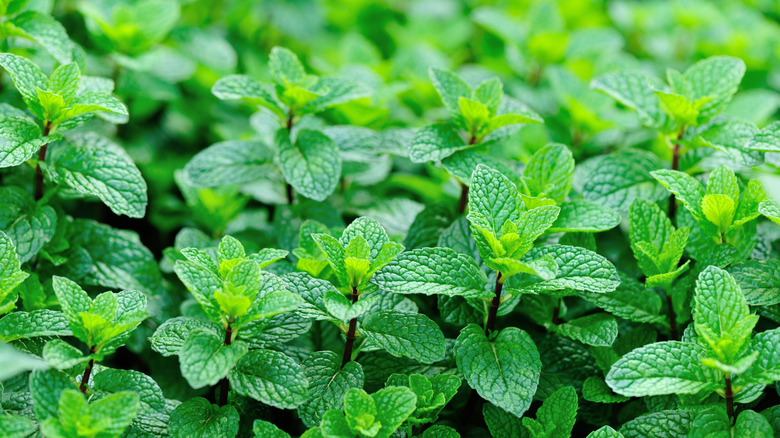
Mint is a tasty and fragrant plant that has a range of uses in the garden and kitchen. So you might be surprised to learn that so many gardeners have a negative opinion of it. There's a good reason for this, though: Mint is an extremely aggressive grower and can quickly take over a garden or even an entire yard if you're not careful with it. While you can mitigate this problem by never growing your mint in the ground, you still need to be careful even when growing it in containers.
Mint grows so aggressively because it can spread via stolons (runners) or rhizomes (underground stems), each of which has the potential to grow into a new plant. While this makes mint a snap to propagate, it means that it can easily escape a garden bed and take over your landscape. In ideal conditions, a single mint plant can spread several feet in just one growing season, which is why even experienced gardeners treat it with caution. It doesn't play well with other plants either, as it can choke out nearby crops. Its network of stems and roots can monopolize space, water, and nutrients, leaving neighboring plants with little room to thrive. So be careful planting it near vegetables if you don't want to ruin your harvest.
If your mint does escape its designated area and start to spread, it's not easy to deal with. Just pulling it won't be enough. You'll need to dig up the area and remove all the rhizomes and roots to keep it from regrowing.
How to enjoy mint without it taking over your garden
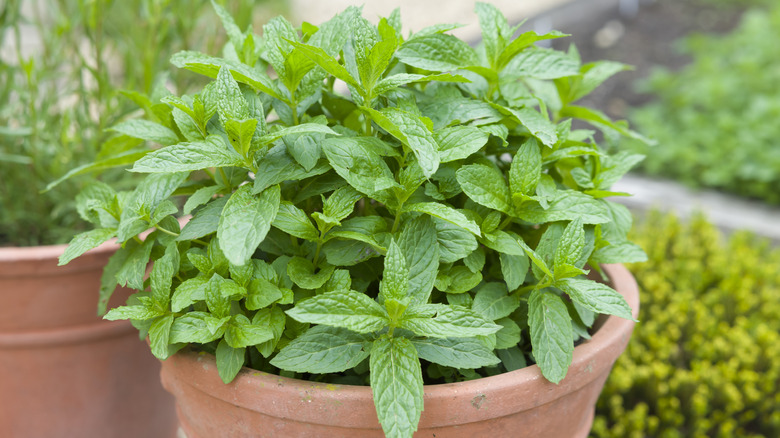
Just because mint can be extremely aggressive or even invasive doesn't mean you have to give up on growing it completely. After all, it's a great herb for adding to drinks and desserts, and the smell is amazing. The trick to growing mint is to keep it contained. This doesn't just mean growing it in a container, though. You'll also need to make sure your mint's roots don't escape the planter via the drainage holes. The best way to ensure this is to keep the container on top of a hard surface like concrete or stone. Be aware that mint can also self-sow on occasion, so to be safe, consider removing flowers before they can set seed.
It's not just mint plant species like peppermint (Mentha x piperita) and spearmint (Mentha spicata) that can become quite aggressive. There are also some plants you might not even have realized are mints that need to be kept contained. This includes some plants in the Lamiaceae or mint family like lemon balm (Melissa officinalis). The beautiful but invasive ground cover weed creeping Charlie (Glechoma hederacea) is also a Lamiaceae plant. Its ability to spread by its stolons and rhizomes is a large part of why it's such a challenge to remove. Other popular culinary herbs, including oregano, thyme, rosemary, basil, and sage, also belong to the mint family, although they generally lack mint's notorious spreading habit.