

If You See This On Plant Leaves, Check For Aphids Immediately
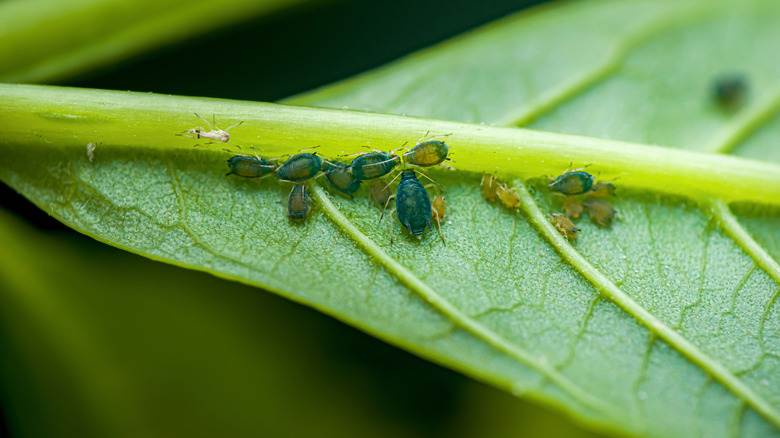
Aphids can be infuriating pests thanks to their ability to damage a wide range of shrubs, vegetable crops, and trees. Some plants can actually attract them into your garden, believe it or not. If you don't notice any of the tiny bugs, you might assume your beds are safe. Take a closer look, though. They often leave behind an easy-to-spot calling card: a sticky substance called honeydew. If you notice this clear sugary waste product on leaves, stems, or surfaces beneath your plants, check for them immediately.
Honeydew isn't just secreted by aphids; other insects that suck sap may also produce it. But regardless of what pest you're dealing with, finding this is a good reason to inspect the plant closely. The bugs are likely to be gathered close to or just above where you find the residue.
Ants are one of the insects that love honeydew, and they will often flock to the area and even work to protect the aphids from predators. Any areas of your plants with large numbers of ants should be examined for it. Sooty mold is another thing to look out for, as it often forms on the secretion. This ugly black fungus can damage plants if it builds up in large enough quantities. The mold itself isn't necessarily the first problem to address; it's the sap-sucking creatures causing it.
How to deal with aphids and honeydew on plants
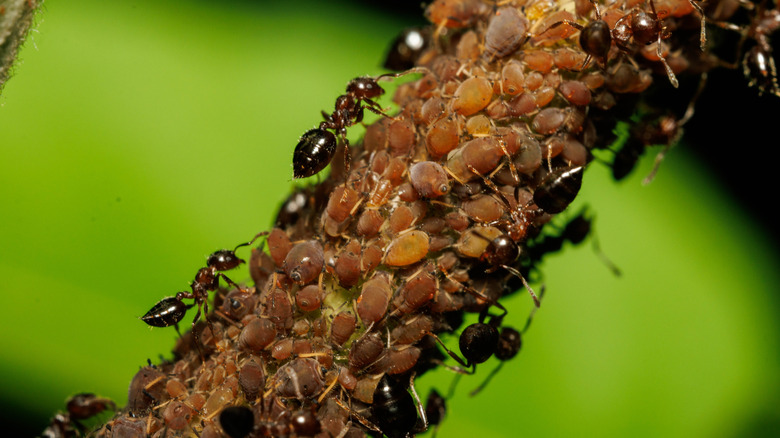
On most established plants and healthy trees, you don't necessarily need to be worried about a few ants and aphids. But in some cases, especially on young vegetation, a large number of these insects, honeydew, and the sooty mold that often accompanies them should be dealt with to prevent damage or the transmission of viruses. Fortunately, you have a few management options.
Growing a garden that attracts many of the aphids' natural predators like ladybugs and lacewings is a good way to keep them to a minimum, but unfortunately, that may not be enough. One easy way to handle mild problems is to simply hose off your plants. Using hose water to knock them off lets you skip potentially damaging chemicals. However, you will likely have to respray them on a regular basis.If your problem is severe enough that it can't be handled with just beneficial insects and water, an insecticidal soap may be a good way to kill the aphids on your flowers or other greenery. Just be sure to follow all instructions on the label to prevent harming your plants, other bugs, and animals. For a safer alternative, neem oil can be diluted and sprayed on a garden as both a preventative and treatment measure.
Even after you've dealt with the pests, the honeydew they leave behind may continue to be a sticky mess on your vehicles, porch railings, and anything else that was exposed to a large number of them. Luckily, scrubbing with soap and water should be enough to wash it off most hard surfaces. Still, if it keeps appearing, don't just clean the mess — check the plants again. Its return can be a sign that aphids or another sap-sucking creature are still active.