

Why Do Most Weeds Grow Faster Than Other Plants?
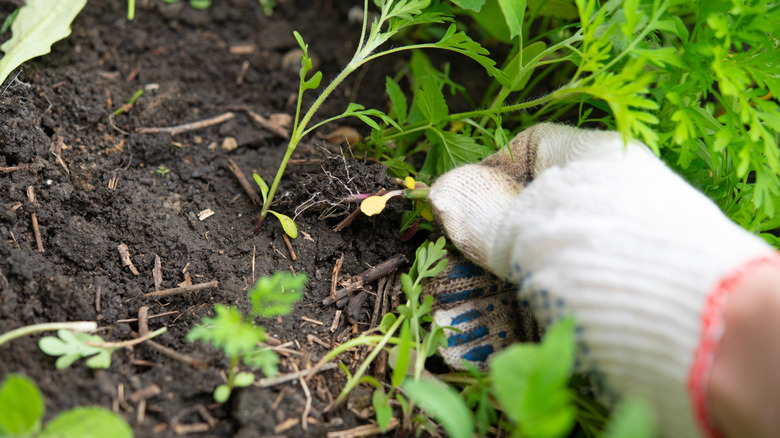
You've likely heard the axiom that weeds are just plants growing in the wrong spot. And while that's true, it's easy to wonder why these unwanted plants grow so well and so fast. There are a few reasons weeds seem to grow more quickly than the plants you're actually trying to cultivate. Some plants we consider weeds have adapted to quickly germinate, grow, and spread seeds as soon as conditions allow. Others are perennials and pop back up from their roots if you don't remove the whole plant.
Your garden soil is likely full of weed seeds that have been blown there on the wind or dropped by animals. This is sometimes referred to as the weed seedbank. Once you start watering and fertilizing your garden, those plants quickly begin growing, often outcompeting the things you were actually trying to grow. If you opt to till your soil, that will also bring older seeds to the surface, where they can germinate thanks to the sunlight. This is part of why many gardeners prefer no-till or low-till gardening. Because new weed seeds aren't constantly being brought to the surface, no-till gardens often have far fewer weeds.
How perennial weeds are often able to grow so fast
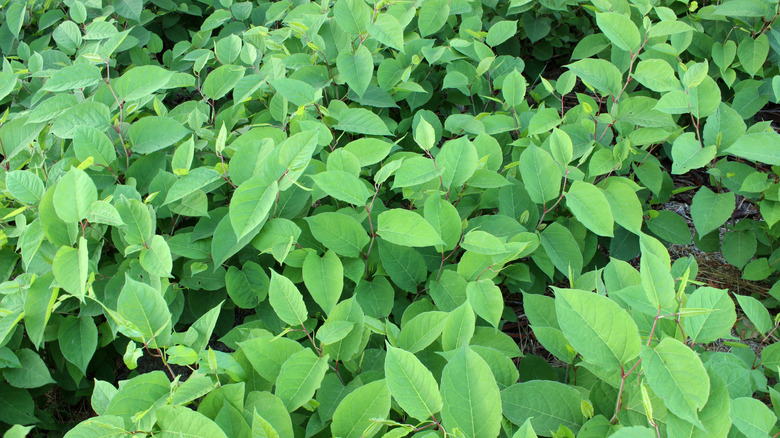
Fast-growing annuals aren't the only weeds that could be outcompeting your flowers or vegetables. Perennial weeds are often also able to race ahead of other crops. This is thanks to their robust root system. When removing these pesky plants, it's important to make sure you completely remove the roots, or they may keep coming back. Japanese knotweed (Reynoutria japonica) and other invasive perennial weeds that spread via rhizomes can be especially challenging to control, as leaving even a small piece of the plant behind can allow it to regrow and destroy all your hard work.
Of course, there are steps you can take to prevent garden weeds from completely taking over. Using cardboard or newspaper to smother the weeds and grass in an area where you're planning to start a new garden can help get you off on the right foot. Dealing with any weeds you see promptly, before they have time to set seed or spread, is also an important step. And if it works well in your area, you may also want to adopt a no-till gardening strategy.
Some fast-growing plants that have long been considered weeds are beginning to receive a reassessment, especially those that are native. Plants like goldenrod (Solidago spp.) and asters have sometimes been seen as just annoying and fast-growing weeds, but they can also be ideal for creating a low-maintenance native garden that looks stunning in the fall. Their aggressiveness and fast growth can be perfect for your garden in the right context.