

How Often Should You Replace Soil In Potted Planters?
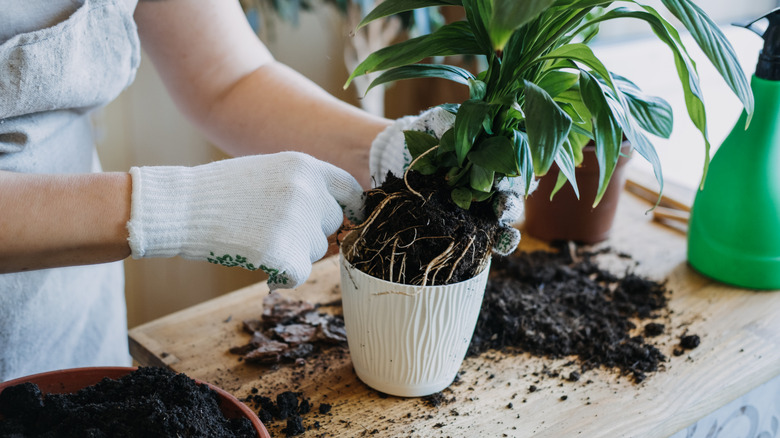
Becoming an indoor plant "parent" can often mean a steep learning curve. Questions of when to water, how much to water, how to finger test soil to find out if it's thirsty, when and if you should fertilize, and myriad species-specific care notes ... it can be a lot to keep track of. Knowing when it's time to repot your houseplants is yet another potential question to keep in the back of your mind, but being attentive to the soil in your potted plants can help you maintain a thriving, happy indoor garden. As for how often you should repot in fresh soil, the answer is ... well, it depends. Some plants can be largely left alone for years, while others may need to be repotted annually.
The good news is, your plants will communicate their needs to you themselves, provided you're paying attention. Take a look at the soil's surface: do you see a salty crust? Do you see roots peeking out of the dirt? Have you noticed the soil drying out particularly quickly between waterings? The plant itself may also be showing little or very slow new growth. If you're noticing a lot of these symptoms, try removing the plant from the pot, roots and all, and take a look and see if the roots are looking especially crowded, to the point where you almost can't see much potting soil at all. Plants becoming a bit "top-heavy" and easy to tip over can also be a good indicator.
How to replace soil in potted planters
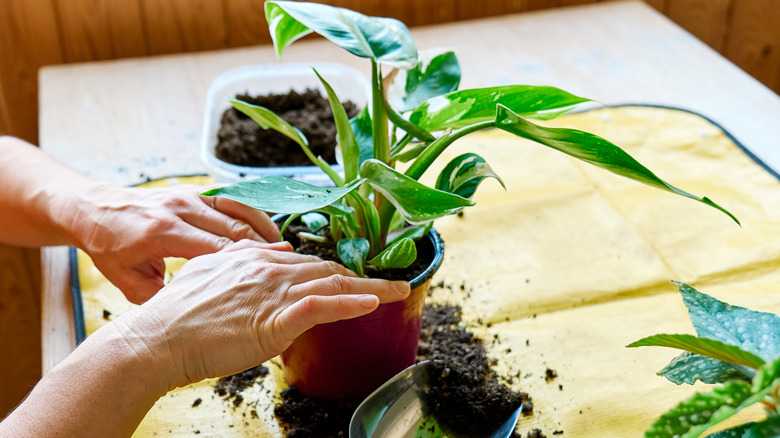
The first step to successfully repotting your plants is to remove the root ball from the old container. If the pot is flexible, you can squeeze the sides to loosen it; if not, you may need to run an object like a knife along the edges to separate them. After that, you'll want to give the root ball a gentle massage. This can help loosen roots that have grown to circle the inside of the old pot so that when you repot it, they will settle more comfortably into the new housing and better absorb nutrients. This is a good opportunity to remove as much old soil as possible and get rid of any dead roots.
After that, you can place the root ball in a new pot that has already been filled with a few inches of pre-soaked soil. Keep in mind that opting for incremental increases and maintaining a smaller pot size can keep your plants at a more manageable size. The material composition of the pot you choose doesn't necessarily matter so much as the very-necessary drainage hole in the bottom — without one, it's almost impossible to water a plant the exact perfect amount without over- or under-watering. Also, remember that there are benefits to using potting soil you buy or mix yourself instead of dirt from outside. Finally, pat the soil in lightly around your plant, keeping about a half-inch or so of space between the soil surface and the pot's lip.