

Is Your Soil Thirsty? The Finger Test Explained
We may receive a commission on purchases made from links.
Deciding whether to water a potted plant or a garden bed can be challenging. While underwatering plants can be damaging, overwatering is actually the more common mistake. A quick look at the soil surface often isn't enough to tell whether your plants need water. One way to ensure you're providing appropriate irrigation for your garden is by using the "finger test".
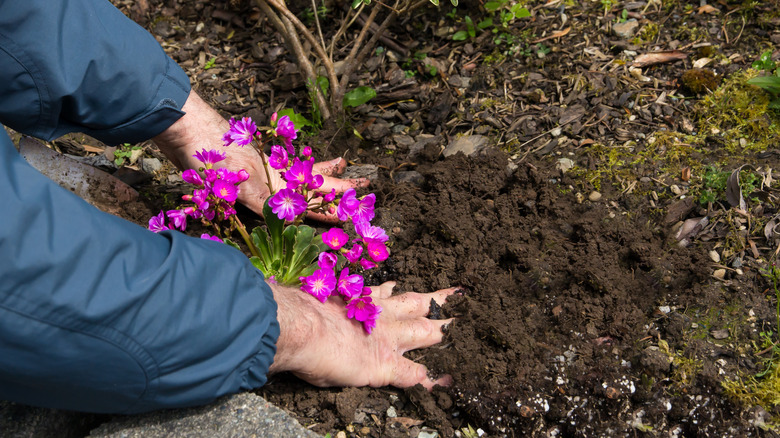
To check your soil's moisture content with your finger, you can't just touch the surface. After all, that's not where your plants' roots are. Instead, dig your finger down a few inches and feel how the soil feels there. If it's moist and cool about 2 inches down, then your plants likely don't need any more water. If you instead feel dry and crumbly soil, then it's time to break out your watering can or hose.
If you're unsure how far into the soil to put your fingers to measure 2 inches, you can first hold them against a ruler or tape measure if necessary. In general, though, 2 inches is roughly from the tip of your index finger to the second joint on the finger. If you prefer not to use your fingers or need to wear gloves for health reasons, there is also a tool called a moisture meter that can be used to check your soil. They are widely available in garden centers and online. Amazon offers a wide range, including the GROWIT Plant Moisture Meter.
How to water your plants and exceptions to the finger test rule
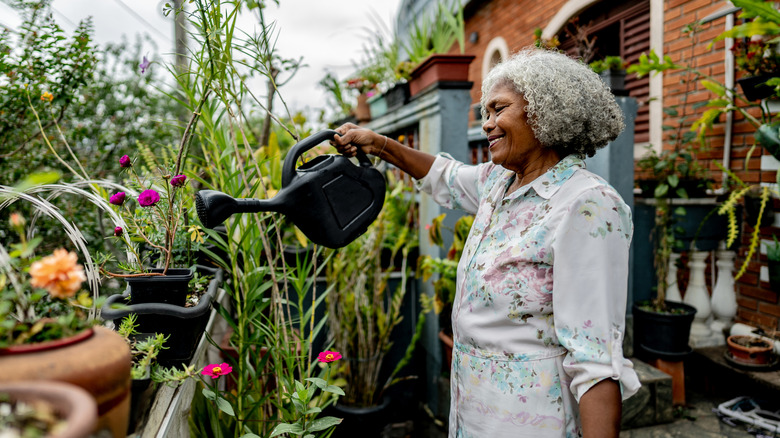
When it is time to water your plants, it's important to water deeply. It's not just the soil surface you're trying to moisten; it's also the growing media a few inches down where your plants' roots are. Make sure to check your soil regularly, especially during hot and dry times of year. And check container gardens more often, as they often need watering daily during summer. You may even want to use a sponge in your containers as a DIY, budget-friendly solution to keep them from drying out so quickly. A layer of mulch on the surface of the garden will also help slow evaporation and keep the soil from drying out.
It's also important to remember that the 2-inch "rule" the finger test addresses is more of a generalization than a true rule. The recommendation for some plants, like succulents and cacti, grown in containers, is to instead let their soil fully dry out before watering, since these plants can survive a long time without water but are quite vulnerable to root rot. Other plants like African violets need their potting mix to stay consistently moist. Once established, many trees and shrubs don't need to be watered until their soil is dry 9 inches down.