

Goodbye, Bradford Pear: Michigan Just Banned This Invasive Plant
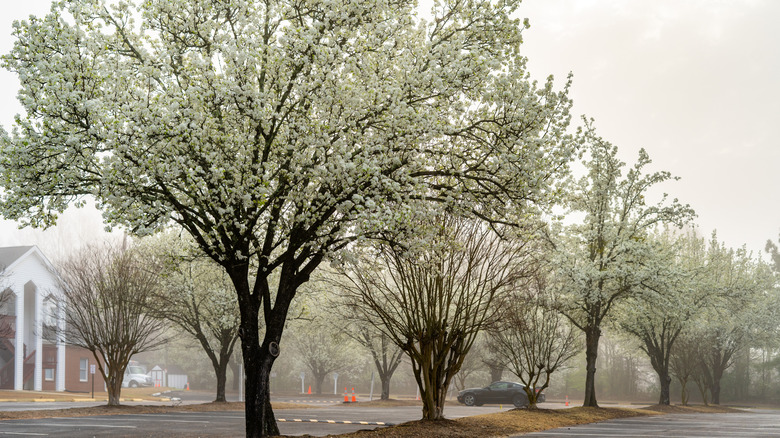
If you've ever smelled a Bradford pear tree in full bloom, there's a good chance you'll approve of the Michigan Commission of Agriculture and Rural Development's recent decision to add this tree to its list of restricted plants. The Bradford flowering pear tree is an ornamental cultivar of Callery pear (Pyrus calleryana), and effective January 1, 2028, it will be illegal to knowingly plant or sell Callery pear in the state of Michigan. The order, handed down Wednesday, May 20, 2026, states that Callery pear, along with Japanese barberry, common buckthorn, and glossy buckthorn, "are non-native, have a high risk of being a major invader, have a high potential to cause harm to human health or to severely harm natural, agricultural, or silvicultural resources, a high or likely climate suitability in much of Michigan," and also notes the established presence of these species in the state.
Originally from Asia, the Callery pear was introduced in the early 20th century with the hope that it would make good fire blight-resistant rootstock for cultivated edible pears. The Bradford cultivar became extremely popular among mid-century city planners for its charming looks and quick, compact growth habit. Even better, they were sterile, so they'd stay where they were planted without unwanted seedlings springing up everywhere — perfect for an orderly suburb! ...Well, not quite. What these planners failed to realize is that, although Bradford pears are sterile on their own, they produce viable, wild Callery pear-type seeds when cross-pollinated with different flowering ornamental pear tree varieties.
Bradford pear is invasive and messy – plant native species instead!
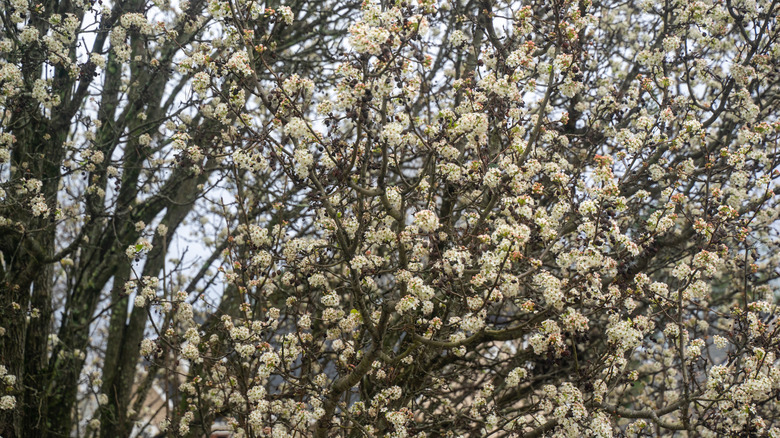
But how bad can it be if a few rogue Bradfords escape the 'burbs, really? Remember that the offspring now display the older genetic traits: unlike the comparatively genteel Bradford, Callery pears spread extremely aggressively through either seed or by sprouting from the roots. Plus, they have huge, sharp thorns! The resultant dense, prickly Callery pear thickets are difficult to remove and can easily choke out native plant species. In all honesty, Bradford pears themselves are unpleasant in many ways, with a short lifespan, spring blossoms that reek of rotting fish or meat, and structurally weak wood and branches that tend to break easily. They aren't even that beneficial to the birds that spread their cross-pollinated seeds far and wide, as the fruit isn't especially nutritious.
If you're looking for something to fill the spot vacated by a Bradford pear or other newly persona-non-grata flowering tree in Michigan, there are plenty of beautiful and location-appropriate options, including U.S. native selections like redbuds, serviceberries, and certain dogwoods. In addition to lovely white flowers, serviceberries (Amelanchier spp.) offer tasty fruits edible to both wildlife and humans. For a pop of color, try the pretty little eastern redbud tree (Cercis canadensis), which bursts with pink blooms in spring that attract all kinds of pollinators. To nourish your songbird and animal friends, you can plant a flowering dogwood (Cornus florida), whose red berries can be an important winter food source for critters.