

Why There's Simply No Need For A Garden Sprinkler Anymore
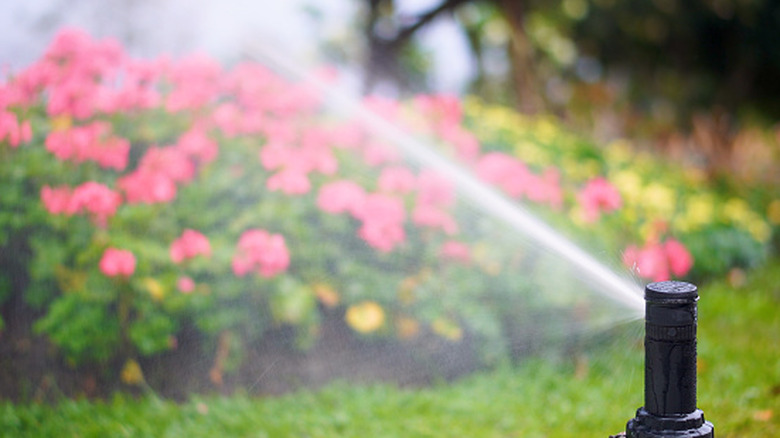
Nothing says summer quite like the whirr of oscillating sprinklers watering flowers or crops in a garden. As nostalgic as these devices are, even spawning the occasional dance craze, they've largely been usurped by garden irrigation systems. That's because a good soaker hose or drip irrigation setup provides all the benefits of keeping your crops hydrated, with none of the disease and weed problems or water waste of overhead irrigation sprinklers.
If you're not familiar with drip irrigation or soaker hoses, they're hoses or tubes that attach to your spigot. Thanks to small holes along the hose (some are simply made of a permeable material), they slowly ooze water all along their length. They are laid through garden beds and borders so plants can receive water close to their roots. You can even set them on a timer, though you'll still want to check your garden regularly to make sure you aren't over- or under-irrigating. The finger test can help you decide whether you need to adjust your watering schedule.
Unlike traditional sprinklers that spray water wildly in all directions, drip irrigation is targeted. You can lay your hoses so that only the plants you are growing receive water, which helps conserve it, keeps your water bill down, and prevents you from accidentally nourishing unwanted weeds. You might be amazed at how much water is lost to evaporation when you use overhead watering, especially when it is windy and sunny out. With a soaker hose or irrigation system, evaporation is much less of an issue.
Benefits and logistics of using drip irrigation in your garden
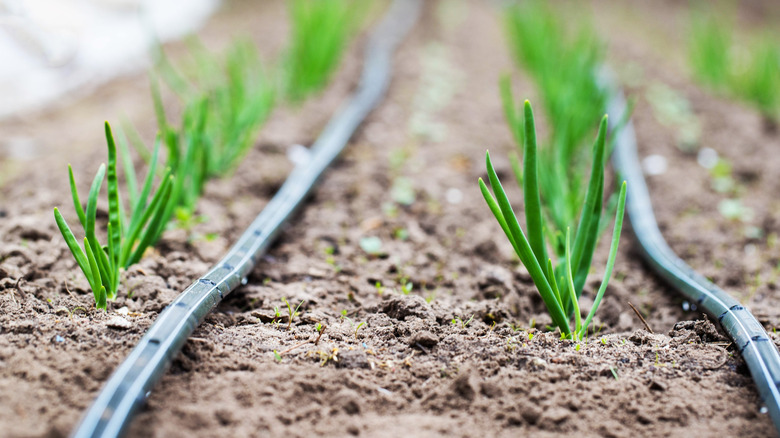
The other major benefit of drip irrigation is that it doesn't wet your plants' leaves, flowers, or fruits. This significantly reduces disease, as wet leaves are vulnerable to fungal problems. By slowly watering your plants at their roots using drip irrigation or a soaker hose, you can make sure the water seeps into the ground and doesn't leave your plants at risk.
Drip irrigation and soaker hoses do take a bit of time to set up at the beginning of the growing season, since you'll want to make sure they are arranged deliberately and run close enough to your crops or landscape plants to keep them well irrigated. There are quite a few different designs and setups you can choose from. You'll also need to do some calculations to decide the flow rate for your drip irrigation. You want to make sure everything is thoroughly watered without any wasteful runoff. The aesthetics of having these pipes and hoses running through your garden may not be your cup of tea, but they can easily be buried by mulch in most cases. Just be sure to check regularly to confirm that none of the holes are clogged or plugged. You'll also need to either pick up and put away your system at the end of the season or take steps to winterize your drip irrigation.