

The One Watering Rule To Keep Your Aloe Vera Happy
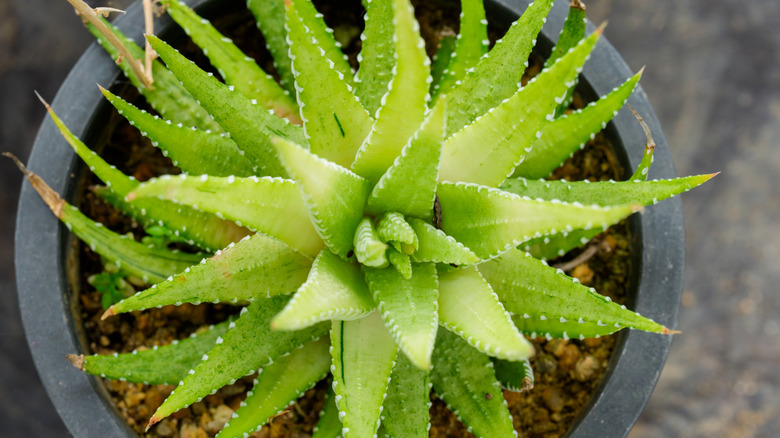
If you enjoy growing unique and useful plants, then you'll love growing aloe vera. Between the plant's unusual toothed appearance and the skin-soothing properties of its juice, it's a great plant to add to your home. Aloe is considered a relatively easy plant to care for, so if you've been having trouble keeping your aloe happy, the issue may come down to your watering schedule. More specifically, you're likely watering too often. It's essential to let your aloe's soil or potting mix dry out in between waterings.
Native to the Middle East, aloe vera plants are succulents and are quite drought tolerant. This makes them perfect as low-maintenance houseplants or as parts of xeriscape landscaping in USDA Hardiness Zones 10 and higher. One thing these plants can't handle though is wet feet. Aloe can easily succumb to root rot if it is left in soggy soil or standing water. While you may be able to fix mild root rot by removing the damaged roots and repotting the plant into fresh soil, it's better to prevent it in the first place by avoiding overwatering.
How and when to water your aloe vera plant
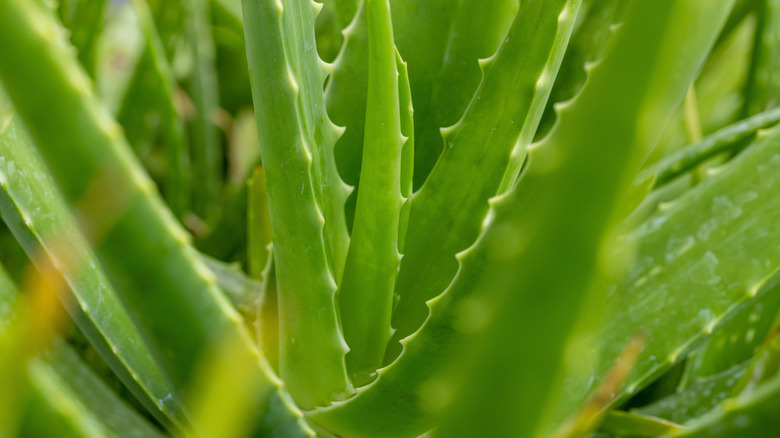
The best way to know when your aloe plant is ready to be watered is to feel its potting mix. Stick your finger in about an inch, and if the growing media below the surface is dry, then your plant is ready to be watered again. This will likely mean you'll need to water your aloe every few weeks, but you should always check the soil first. Iowa State University Extension put it perfectly when they advised growers to "check for water on a schedule, [but] don't water plants on a schedule."
When your aloe's growing medium is dry and you're ready to water it, you should generally water thoroughly. The exception to this is during fall and winter when the plant is dormant. During these times you should water even less often, and take care to only barely moisten the growing medium. Monthly watering is often plenty during these cool seasons.
If your aloe is still showing signs of overwatering like wilting, yellowing, or even rotting, the issue could be with your growing medium and planter. You should grow your aloe vera plant in a well draining growing medium, in addition to following proper watering practices. For houseplants and aloes grown in pots, this can be a potting mix designed for succulents and cacti. The planter should also have plenty of drainage holes. Plants grown in ground in warm regions do best with sandy soil.