

How To Grow Aloe Vera From One Plant For A Lifetime Supply
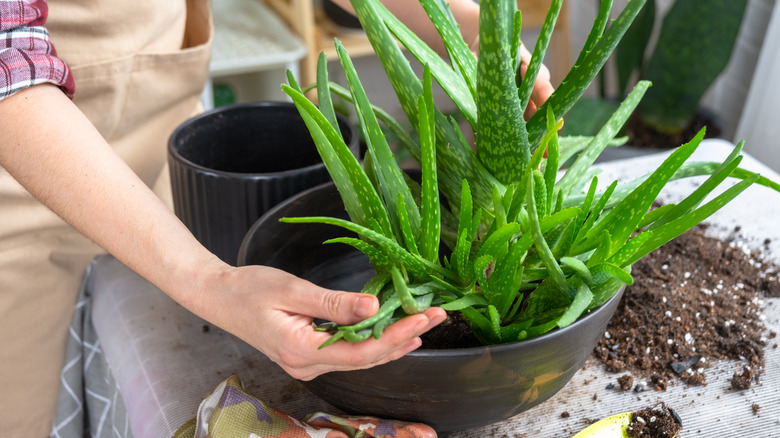
Aloe vera might be one of the world's most popular succulents. Not only does it look great sitting on your windowsill, but the gel inside its thick, spikey limbs treats burns and moisturizes skin. The best part is that you can divide and replant aloe vera again and again to keep you well stocked with its healing gel for years.
You might not know this, but this succulent calls the daylily a cousin because they're both part of the Asphodelaceae family. Most think of it as a houseplant, but for those who live in tropical regions, such as USDA Plant Hardiness Zones 10 or higher, you can grow it outside all year round. When trying to best care for an aloe vera plant, keep its soil on the dry side. This plant thrives in sun or partial shade, but it's not too particular about soil pH, taking either alkaline soil or acidic soil.
Aloe vera is resilient, so known houseplant-killers may want to give it a try. Keep them on your kitchen windowsillwhere you can easily snap off a thick leaf and smooth the gel instantly on a burned finger or hand. It's such a beloved and versatile succulent that it has won the Royal Horticultural Society's Award of Garden Merit. To divide or transplant aloe vera plants, all you need is a knife or pair of garden shears, your plant, sandy soil, and a container.
Plant young aloe vera offshoots to get a whole new plant
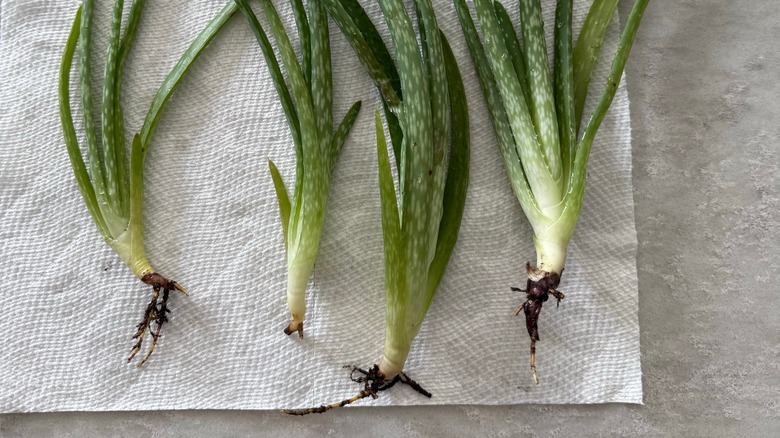
With a little bit of planning, you can transform one aloe vera plant into many. All you need to do is divide and replant the right pieces. As part of the life cycle of an aloe vera plant, this succulent grows offshoots, or mini plants, around its base that are called pups. Typically, this happens at the height of its growing season, usually in the summer.
To propagate your aloe vera, take the plant out of the pot and dust off the soil to get a better look at the roots. Then, pick the pup you want to replant. Always choose a pup that's at least a few inches tall. Take the shears or knife and cut off the pup or pups you want to transplant. Put the mother back in her pot. Then, you can plant the pup in a well-draining container of loam or sandy soil.
Pick a relatively bright spot for your pup, but be careful of adding too much direct sun too early. This plant doesn't like the cold, so make sure the temperature doesn't drop below 50 degrees. While you want to give the new pup a little bit of water, be careful not to water log the soil. Young aloe vera plants have a propensity to develop root rot, which no one wants. Before watering, poke your finger in the soil to make sure that it's dry before adding more water.