

Use Fall Leaves For A Healthier Garden Next Spring — Here's How
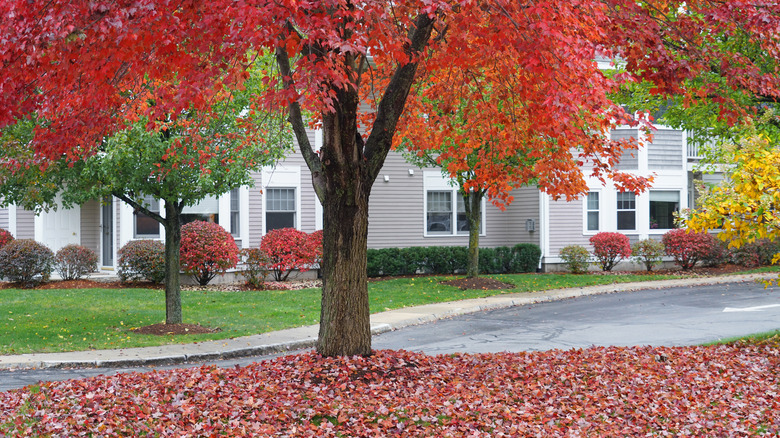
Autumn leaves can be gorgeous with their array of vibrant colors, but once they drop from the trees, they're quickly viewed as an annoyance by homeowners who want a tidy space. The fall leaves in your yard don't have to be just an inconvenience, though. With some patience and technique, they can be the key to a healthier garden. Instead of burning them or taking them to the curb for the city to remove, consider turning them into a valuable soil amendment known as leaf mold.
Leaf mold is basically just decomposed leaves. Although it has some nutrients, its primary benefit for your garden isn't as a fertilizer but as an amendment to prevent soil compaction and improve moisture retention. While you can also just add the leaves to your existing compost pile, leaf mold is created by a different process where the leaves are broken down by fungus instead of bacteria. Leaf mold is also different from mulching, where the leaves are simply shredded. Though over time, your leaf mulch can turn into leaf mold. However, there are ways to speed up the process and enjoy your leaf mold bounty more quickly.
Making your own leaf mold for long-term healthier gardens
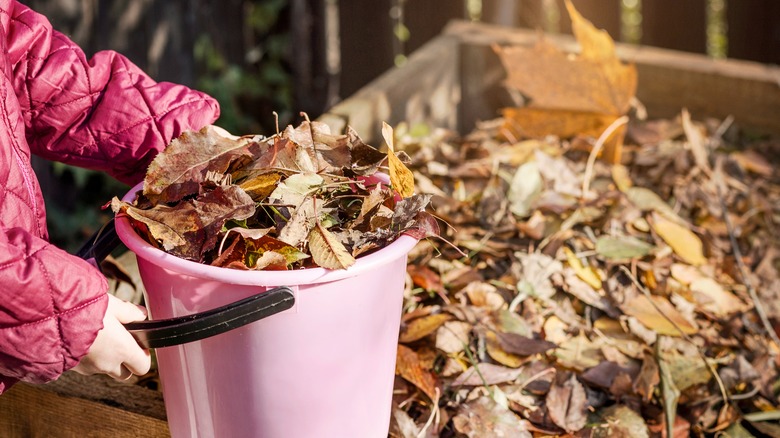
One of the best ways to help your dead leaves decompose faster is by breaking them into smaller pieces with a leaf shredder or lawn mower. Next, you need to decide on a storage solution while you wait for the amazing transformation. Putting the leaves in trash bags is another way to speed up the process of turning them into mold. Don't seal the bags completely, as air flow is important. If you'd prefer, you can also simply leave them in a pile for a couple of years or inside a wire or wooden enclosure. However you opt to store your leaves, make sure they are moist, and then just be patient and wait.
Whether you're raking or mowing the fallen leaves, it generally takes about one or two years for leaf mold to be ready. Depending on how much you've managed to speed up the decomposition process, you may not have your home-made amendment completed by the time spring arrives. Luckily, compost with leaf mold is available to purchase while you wait for your own to finish. To use your leaf mold, spread it about half an inch thick over the soil and then work it in about 6 inches deep. You'll be amazed by how much it can improve your soil's health, going so far as to increase crop yield and reduce disease.