

Raking Or Mowing Fallen Leaves - Which Method Is Better (And More Beneficial)
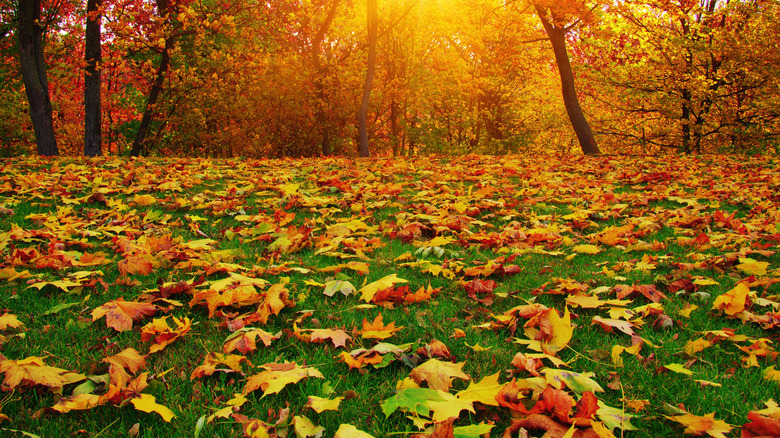
With red, gold, and brown leaves blanketing the lawn, you may be asking yourself how should you best deal with them. It's time to debate the age-old question: Should you rake and bag, or mow? Many gardening experts agree that it's better to chop them up by mowing them. Leaves can help to fertilize the grass and may also provide insulation during cold winter months.
Packing up leaves into trash bags has downsides. First of all, it adds to a growing garbage problem. Not all communities compost yard waste, and some leaves will end up in landfills, where they release more methane than other kinds of trash ... especially as they break down. So, rather than add to that pile, think about mulching with your lawn mower instead. The good news is they might do more good left in your yard than at the landfill, one major reason you shouldn't rake all the fallen leaves in your yard this fall.
Leaf bits can offer nutrients and food for grass, which may help boost soil for greener grass next spring. Mowing your leaves will help make dead leaves decompose faster, too, since the smaller pieces break down sooner. Leaves can also help your grass retain moisture and offer a layer of warmth to help it deal with the fluctuating winter weather. Finally, the leaves also help insects who might be trying to hibernate through winter, including beneficial pollinators such as butterflies and moths.
How to properly mow your leaves for lawn benefits
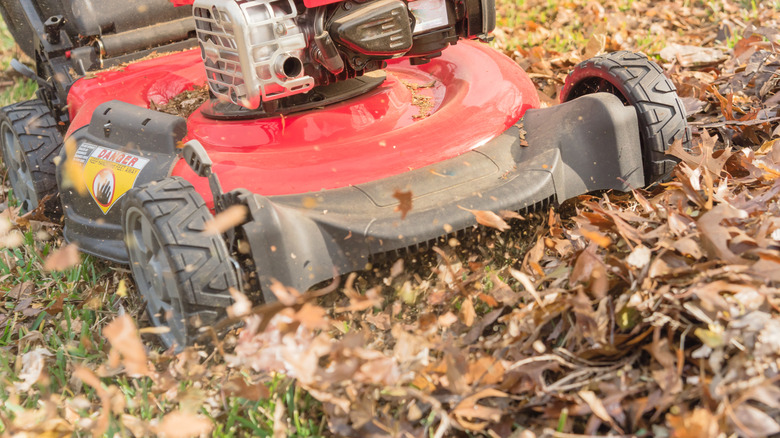
When mowing leaves, there are still a couple of things to keep in mind. First, take a look at some of the foliage for any signs of leaf spot or another fungal infection. You'll want to bag diseased leaves and get them away from your property to reduce the spread of the infection.
Once you're sure what's left in your yard is fine and healthy, then get out the mower. It's best to use a mulching blade or special mulching lawn mower if you have one. These are designed to chop up leaves up to 6 inches thick, which can be particularly helpful if you have a lot of mature trees with big canopies near your property. If you don't have a mulching mower, then raise the mower deck as high as it will go. Mow crossways over the yard. After you mow and mulch, you want to be sure that there's still sunlight reaching the lawn you won't smother it. Grab some mulch from your yard to use as insulation for plants in pots, too.
If you're worried about mulched leaves causing more thatch, don't be. According to the Alabama Turfgrass Association, mulched leaves decompose quickly and don't really contribute to the organic material buildup around grass blades. It's more likely that grass roots are the culprit of increased thatch amounts rather than fallen foliage. Chopping or mulching leaves also will have the added benefit of helping you avoid attracting snakes to your yard this fall, since they love to hide in piles of leaves.