Copyright © 1997-2010 Demand Media. All rights reserved.
The Longleaf Pine (Palustris) is generally described as a perennial tree. This is native to the U.S. (United States) has its most active growth period in the spring and summer . The greatest bloom is usually observed in the late winter, with fruit and seed production starting in the fall and continuing until winter. Leaves are retained year to year. The Longleaf Pine (Palustris) has a moderate life span relative to most other plant species and a rapid growth rate. At maturity, the typical Longleaf Pine (Palustris) will reach up to 120 feet high, with a maximum height at 20 years of 40 feet.
The Longleaf Pine (Palustris) is not commonly available from nurseries, garden stores and other plant dealers and distributors. It can be propagated by bare root, container, seed. It has a slow ability to spread through seed production and the seedlings have high vigor. Note that cold stratification is not required for seed germination and the plant cannot survive exposure to temperatures below -3°F. has low tolerance to drought and restricted water conditions.
Erosion Control: Longleaf pine is a highly recommended species for reforestation of dry, infertile, deep sands in the southeastern U.S. It is has limited potential for rehabilitation of mine spoils.
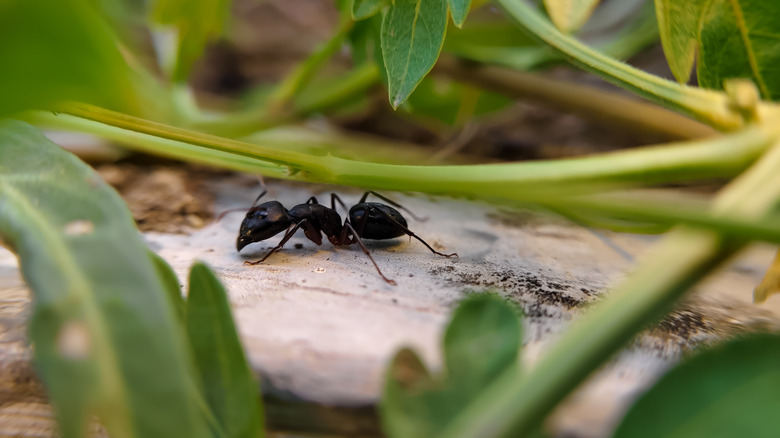
Wildlife: Birds and small mammals eat the large seeds, ants feed on germinating seeds, and razorback hogs eat the roots of seedlings. This species provides excellent habitat for bobwhite quail, white-tailed deer, wild turkey, and fox squirrel. Old-growth stands provide nesting habitat for the red-cockaded woodpecker.
Timber: The wood is often clear, straight, and with few defects and used for timber and ship building.
Recreation and Beautification: Longleaf pine needles are used for mulch. Resin is used in the naval stores industry for gum turpentine and rosin production.
Pinus palustris P. Mill., longleaf pine, is found in the Atlantic and Gulf coastal plains from southeastern Virginia to central Florida and west to eastern Texas, and in the Piedmont region and Valley and Ridge province of Georgia and Alabama. Longleaf pine is a long-lived, native, evergreen conifer with scaly bark. Needles are in bundles of 3; they are shiny, dark green, and 8 to 15 inches long. Cones are 6 to 8 inches long. Mature trees attain a height of 100 to 120 feet and 2½ feet in diameter. Its seeds are the largest of all southern pines. It has extensive lateral roots and a taproot that grows 8 to 12 feet long
Longleaf pine grows best in a warm, wet, temperate climate with an annual precipitation range of 43 to 69 inches. Although the species occurs in a wide variety of upland and flatwood sites, it is common on sandy, infertile, well-drained soils, mostly below 660 feet elevation.
Longleaf pine is distributed throughout the Southeast.
Longleaf pine stands are successfully established by either seeding or vegetative reproduction. Seeds (including dormant seeds if prechilled) can be sown in the fall or spring, pressed into the soil at densities from 15 to 75 seedlings per square foot. Seeds germinate 1 to 2 weeks following seedfall. Germination requires mineral soil. The seed’s large size and persistent wing prevent it from penetrating through the litter. Seedlings are stemless after one growing season and this lasts from 2 to many years. During this grass-stage, the seedling develops an extensive root system, and the root collar increases in diameter. When the root collar diameter approaches 1 inch in diameter, height growth begins. A field-grown seedling grows 10 feet in 3 years once height growth is initiated. Branch production is delayed until the seedling reaches 10 to 16 feet in height.Vegetative propagation is usually done by grafting. If grass-stage seedlings are top-killed, they can sprout from the root collar. Once height growth begins, sprouting ability decreases rapidly.Heavy grazing can reduce tree density, significantly reducing establishment and causing crop failure.
Longleaf pine is intolerant to both shade and competition. With frequent fire, uneven-aged pure stands form park-like savannahs. Because longleaf pine regenerates in openings created by dead trees, small clusters of trees of the same age are dispersed throughout the stand. In the absence of frequent fire, the species is replaced by hardwoods and other southern pines; this hastens the decline of mature longleaf pine. Lightning ignited fires are pivotal to perpetuation of longleaf pine on a site indefinitely. Excessive grazing reduces young tree density.
Pests and Potential Problems The main disease of longleaf pine is brown-spot needle blight (Scirrhia acicola). Other diseases include pitch canker, annosus root rot, and cone rust. Insects that attack longleaf pine include black turpentine beetle, bark beetles, and seed bugs.
Cultivars, Improved, and Selected Materials (and area of origin) No cultivars are currently recommended. Seeds and seedlings are commercially available from woody plant seed companies. The number of seeds per pound ranges from 3,000 to 7,000.
| Category | |
|---|---|
| Growth Rate | Rapid |
| General Type | Tree |
| Growth Period | Spring, Summer |
| Growth Duration | Perennial |
| Lifespan | Moderate |
| Plant Nativity | Native to U.S. |
| Commercial Availability | No Known Source |
| Bloom Period | Late Winter |
|---|---|
| Displays Fall Colors | No |
| Shape/Growth Form | Single Stem |
| Drought Tolerance | Low |
| Shade Tolerance | Intolerant |
| Height When Mature | 120 |
| Vegetative Spread | None |
| Flower Color | Brown |
| Flower Conspicuousness | No |
| Fruit/Seed Abundance | High |
| Fruit/Seed Seasonality | Fall Winter |
| Seed Spread Rate | Slow |
| Propagations (Ways to Grow) | Bare Root, Container, Seed |
|---|---|
| Moisture Requirements | Medium |
| Cold Stratification Required | Yes |
| Minimum Temperature | -3 |
| Soil Depth for Roots | 40 |
| Toxic to Nearby Plants | No |
| Toxic to Livestock | No |
| After-Harvest Regrowth Rate | Rapid |
| After-Harvest Resprout Ability | No |
| Responds to Coppicing | No |
| pH Range | 6–7 pH |
|---|---|
| Precipitation Range | 40–40 inches/yr |
| Planting Density | 430–1200 indiv./acre |
| Soil Textures | Coarse, Medium |
| Soil Depth for Roots | 40 |
| Minimum Frost-Free Days | 250 day(s) |
| Salinity Tolerance | None |
| CaCO3 Tolerance | Low |
| Leaf Retention | Yes |
|---|---|
| Palatability | Low |
| Fire Resistant | Yes |
| Causes Livestock Bloating | None |
Source: USDA, NRCS, PLANTS Database, plants.usda.gov.
National Plant Data Center, Baton Rouge, LA 70874-4490 USA
Re-doing Flower And Herb Beds
Zone 8 | Caring
Planting Early Winter Crops
Zone 7 | Planting
Chives In Bloom
Zone 5 | Blooming
Red Brandywine Tomato Has Frui…
Zone 5 | Caring
Pruning And Maintenance
Zone 10 | Pruning