

How To Grow Strawberries In Alabama
Things Needed
- Compost
- 10-10-10 fertilizer
- Shovel
- Slug and snail bait
- Mulch
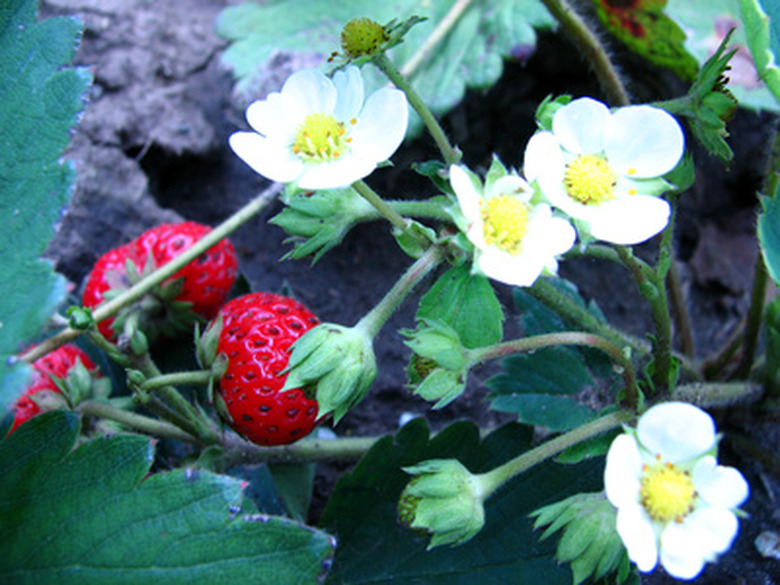
Strawberries are one of the easiest plants to grow, and will reward your efforts with delicious fruit in the late spring or early summer. The fruit can be eaten right after picking, frozen or made into jams. This low-growing plant can be grown in zones 2 to 11 and can be planted in containers or grown in the ground. In Alabama's humid summers, early varieties of strawberries do better, as they are susceptible to mold and mildew.
Step 1
Select strawberry plants from a reputable source. Cardinal and Earliglow are two varieties of strawberries that thrive in Alabama's humid climate.
Step 2
Choose a planting location in your garden that receives at least six hours of sun every day. In Alabama, strawberries are planted in September or October for harvesting the following year.
- Strawberries are one of the easiest plants to grow, and will reward your efforts with delicious fruit in the late spring or early summer.
Step 3
Loosen the garden soil with a shovel to a depth of 12 inches and amend with compost to improve drainage. Strawberries need well-drained soil. Sprinkle a 10-10-10 fertilizer over the ground and work in well. Rake smooth.
Step 4
Dig a hole deep enough for the strawberry roots. The crown of the strawberry plant should be above the soil line. Plant your strawberries in rows 12 to 18 inches apart, as they will develop runners that will produce new plants.
- Loosen the garden soil with a shovel to a depth of 12 inches and amend with compost to improve drainage.
- The crown of the strawberry plant should be above the soil line.
Step 5
Water thoroughly to collapse any air pockets in the soil, then spread an organic mulch, such as straw or pine bark, around the plants so the berries do not touch the soil. Fertilize in late summer with a 10-10-10 fertilizer and water well to ensure the nutrients reach the strawberry roots.
Step 6
Cover your strawberries in the fall with mulch before the first expected frost to protect the plants from the damaging cold.
Step 7
Check often for slugs and snails, which will feed on newly ripe fruit. Hand pick or use a snail and slug bait.
Warning
Strawberries are generally only productive for two to three years before they require replanting.