

Care Of Angel Trumpets
Things Needed
- Container
- Peat moss
- Potting soil
- Fertilizer
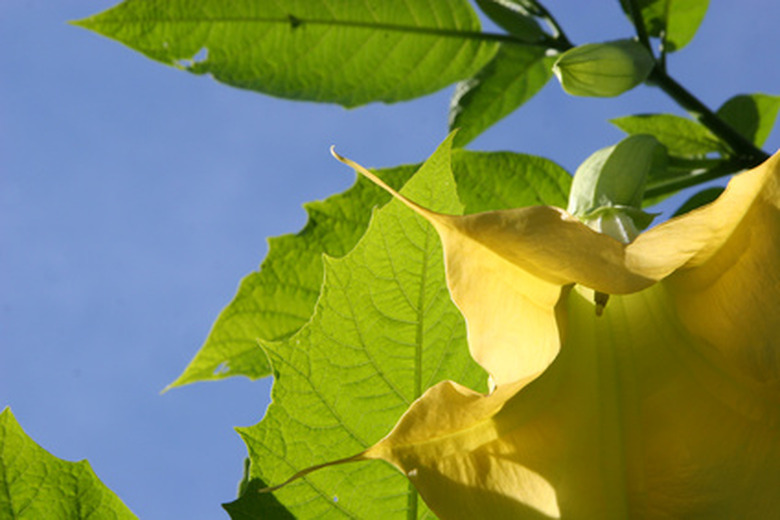
Angel trumpet, also known as brugmansia, is a perennial tree commonly grown for its large, pendulous flowers, glossy foliage and ease of care. The plant flowers during spring, summer and fall, producing multiple white, yellow or pink trumpet-shaped blossoms, hence the common name. Native to South America, angel trumpets require warm growing conditions to flower and thrive. Gardeners in temperate regions typically grow the plants in containers for easier transfer indoors when temperatures drop. Outdoors, angel trumpets thrive in USDA hardiness zones 10 and 11, which includes the extreme southern part of the country only.
Step 1
Plant angel trumpets in a container filled with a growing medium made of one part peat moss and two parts potting soil to provide adequate drainage and fertility. Keep the plant in a location that receives at least five hours of bright sunlight each day.
- Angel trumpet, also known as brugmansia, is a perennial tree commonly grown for its large, pendulous flowers, glossy foliage and ease of care.
- Native to South America, angel trumpets require warm growing conditions to flower and thrive.
Step 2
Keep the plant at a constant temperature of 60 to 80 degrees F for optimal growth. Angel trumpets cannot tolerate temperatures under 40 degrees F, so bring the plant indoors before temperatures drop below this point and place in a warm, sunny location.
Step 3
Water angel trumpets once per week to keep the soil consistently moist, but not wet or soggy. Decrease the frequency of watering to once per month during winter, when the plant is not actively growing and requires less moisture to survive.
Step 4
Feed plants once every two weeks using a water-soluble, complete 10-10-10 NPK fertilizer. Apply according to the instructions provided by the manufacturer for the best results. Water lightly after applying to dissolve the fertilizer into the soil.
- Keep the plant at a constant temperature of 60 to 80 degrees F for optimal growth.
- Decrease the frequency of watering to once per month during winter, when the plant is not actively growing and requires less moisture to survive.
Step 5
Re-pot angel trumpets once every one to two years or whenever the plant becomes crowded in its current container. Increase the size of the new container by 3 to 5 inches to provide plenty of room for new growth, and provide fresh potting soil.
Tip
Keep angel trumpet plants indoors when the temperature is above 100 degrees F or below 40 degrees F to prevent cold or heat damage. Grow angel trumpets in the soil in zones 10 and 11 only. Water once every five days, fertilize once per month and prune during late winter to maintain a compact growth habit.
Warning
All parts of the angel trumpet plant are highly toxic. Do not plant in a location accessible to small children or animals, and always wash your hands after handling the plant.