

How To Care For Epiphyllum
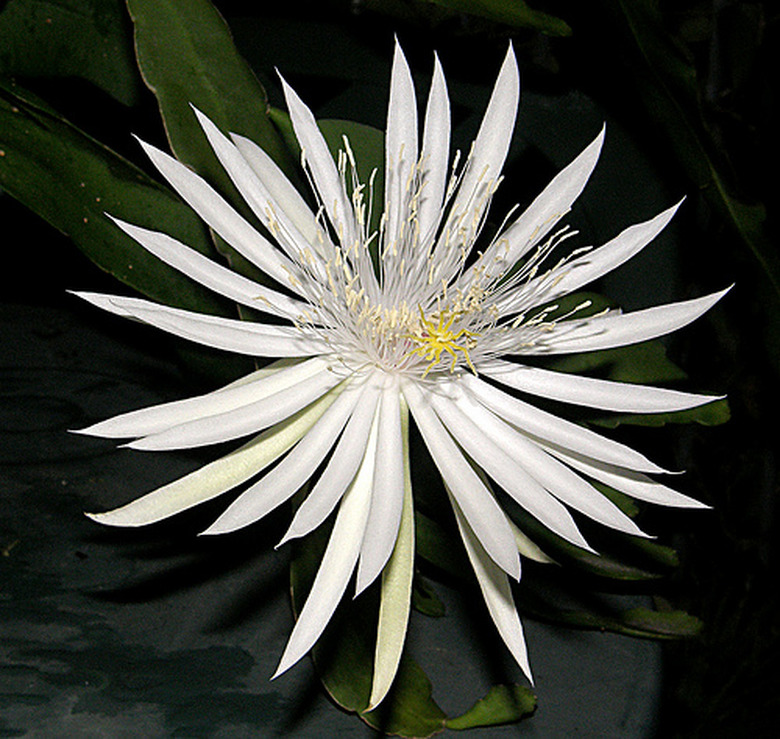
Epiphyllums (Epiphyllum spp.) are members of the cactus family. Unlike arid cacti, these cacti are tropical and native to the rainforests of Central America and South America. Also known as orchid cacti, the night-blooming flowers of these plants open for just one night.
Epiphyllum species can survive winters in U.S. Department of Agriculture plant hardiness zones 10 and 11. In cooler climates, they can be cultivated indoors.
Growing Epiphyllum Cacti
In their native habitat, epiphyllums are epiphytic, which means they grow attached to trees and get their nutrients from water and air.
However, in cultivation, they can be grown in pots and hanging baskets as houseplants using a potting medium formulated for cacti and succulents. These cacti are propagated using cuttings to grow new plants.
When choosing a container for your epiphyllums, keep in mind that these plants will flower best when they are rootbound—that is, when the roots have no more room to expand inside the pot. Therefore, planting epiphyllums in a small container can result in faster blooming.
The most widely grown type of epiphyllum is the Queen of the Night (Epiphyllum oxypetalum, zones 10 to 11), which is also known by the common name Dutchman's pipe cactus and is native to Mexico and Central America. It has oversize white flowers that are extremely fragrant.
Tip
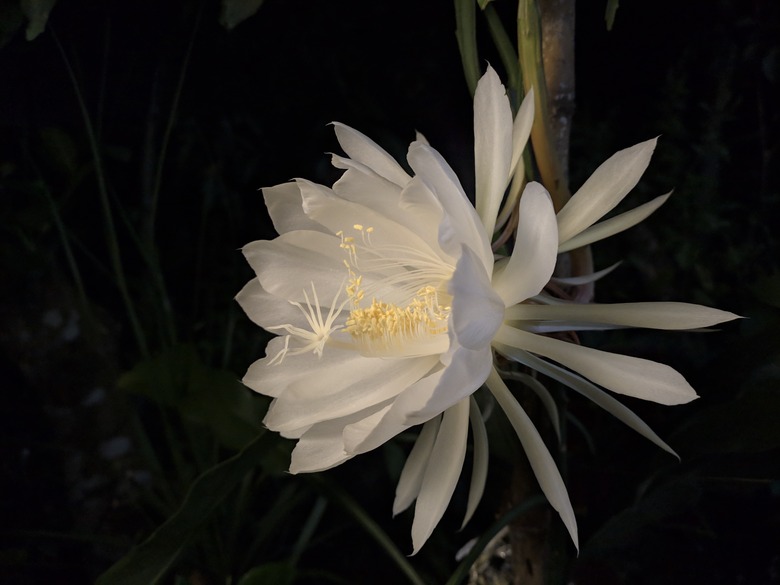
Epiphyllums have fragrant flowers that open for a single night.
Epiphyllums, sometimes referred to as epis, have also been crossed with other tropical epiphytic cacti, such as those in the genera Selenicereus and Disocactus, to create epiphyllum hybrids. This type of plant (regardless of genus) is sometimes referred to as "night-blooming cereus."
 AvishekNaskar
Care of Epiphyllum
Let's take a look at how to keep an epiphyllum cactus thriving in a container.
Light
Epiphyllums should be grown where they receive partial shade or bright but indirect light.
Watering
When growing an epiphyllum plant, keep the root system moist but not waterlogged, as these plants are sensitive to overwatering. You should water epiphyllums when the top third of the soil feels dry, or about once a week.
Fertilizing
Epiphyllums can be fed with a balanced 10-10-10 fertilizer, though you should avoid fertilizers with a high nitrogen content.
Repotting
Epiphyllum plants may need to be repotted approximately every seven years. It is best to repot epiphyllum about a month after they are finished blooming. Newly repotted epiphyllums should not be watered for the first week.
Tip
When repotting an epiphyllum cactus, keep in mind that these plants produce flowers when they are rootbound. Therefore, repotting into a much larger pot might delay blooming.
Pruning
In containers, epiphyllums can have a height of up to 10 feet and a width of about 3 feet. In some cases, the leaves of the plant (which are actually flattened stems) can become top heavy, and if so, they should be trimmed back, or the plant should be repotted in a container that is either larger or heavier.
Winter Care of Epiphyllum
If grown outside of their hardiness range, epiphyllum cactus plants can be kept outdoors during the summer and in the bright indoors during the winter months. Bring these plants inside once the temperature drops to about 35°F.
During their winter rest period, epiphyllums should only be watered once a month.