

How To Care For A Tuberose
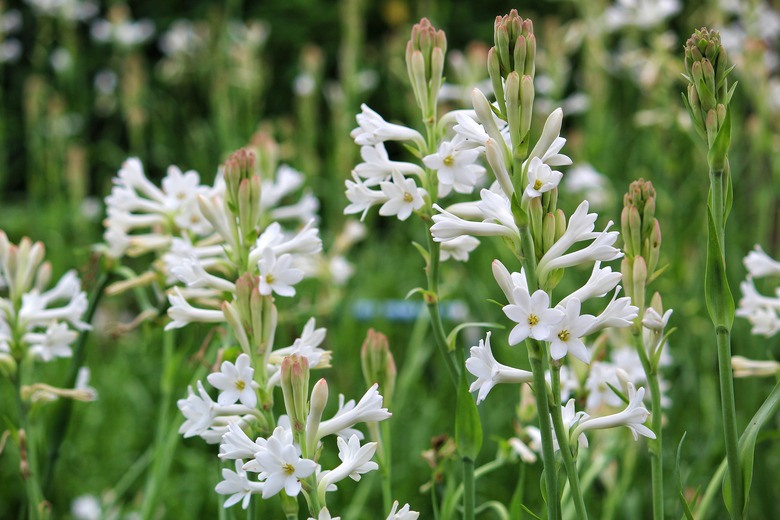
With its luxurious white petals and graceful form, the tuberose also packs a fragrance punch, perfuming the air with its powerful scent.
Native to Mexico, the tuberose (Agave amica) thrives in full sun and won't tolerate temperatures below 50°F. So if you live in zones 7 to 10, you're in luck because the tuberose is a lovely addition to any landscape. In colder zones, grow these beauties in containers and bring them indoors to winter. If you don't know your growing zone, use this USDA Plant Hardiness Zone Map.
About the Tuberose
Common Names
A rose is a rose by any other name, and a tuberose is no different. Previously categorized botanically as Polianthes tuberosa, taxonomists have now identified the tuberose as an agave, i.e. a part of the Agavaceae family with the botanical name of Agave amica.
Gardeners will recognize it by a range of common names, however, including:
- Polyanthus lily
- St. Joseph's staff
- Amole
- Mistress of the night
- Omixochitl
- Silverleaf
- And, of course, tuberose
Plant Description
The tuberose is a cactus, or succulent, specifically. This means it is also perennial. It is a graceful, tall plant that flowers in summer or fall, and it makes an excellent cut flower.
Here's a brief summary:
| Size | 3 to 4 feet tall; 1 to 3 feet wide |
| Type | Succulent |
| Leaves | Deciduous, green, smooth and waxy |
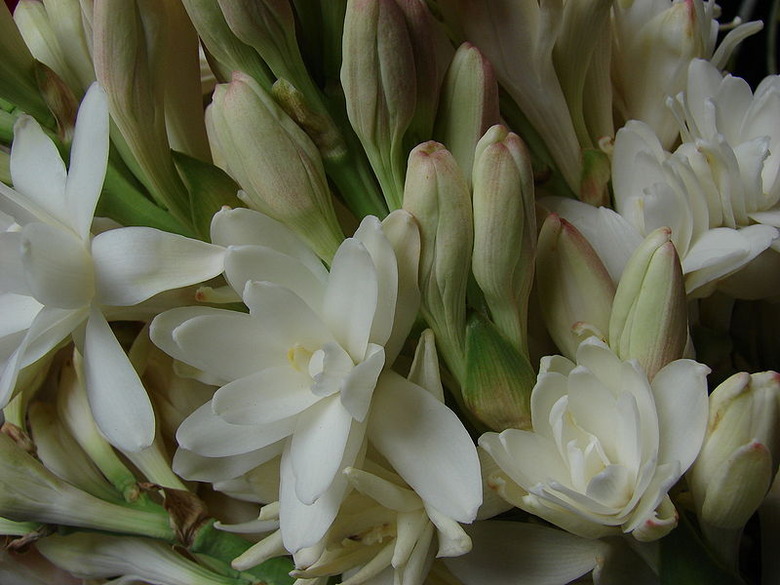
| Flowers | White or golden/yellow and very fragrant with a tubular or funnel shape. Blooms in fall and summer, appearing atop tall spikes. |
| Form | Erect |
Planting a Tuberose
As a Mexican native, tuberose needs a warm location and some pampering if you live outside of the colder part of its zone, which some experts peg at USDA hardiness zone 7. Others say zone 8, however, so be prepared to bring it indoors in winter if you live in a colder climate.
Choosing a Location
Tuberoses grow best in full sun, which means 6 or more hours of direct sun daily, although they can withstand some partial shade. Like most plants, they require a well-draining location. So if your garden has some low spots in which water tends to pool or the ground is soggy, look elsewhere before preparing the hole.
Planting Your Tuberose
Tuberoses are available in nurseries as either plants or bulbs. Whichever you have, wait until after the last frost in your location before planting, and make sure that daytime temps remain at least 70°F. In a full-sun location that has good drainage, dig the soil to a depth of about 8 inches, removing any hard lumps of soil or rocks.
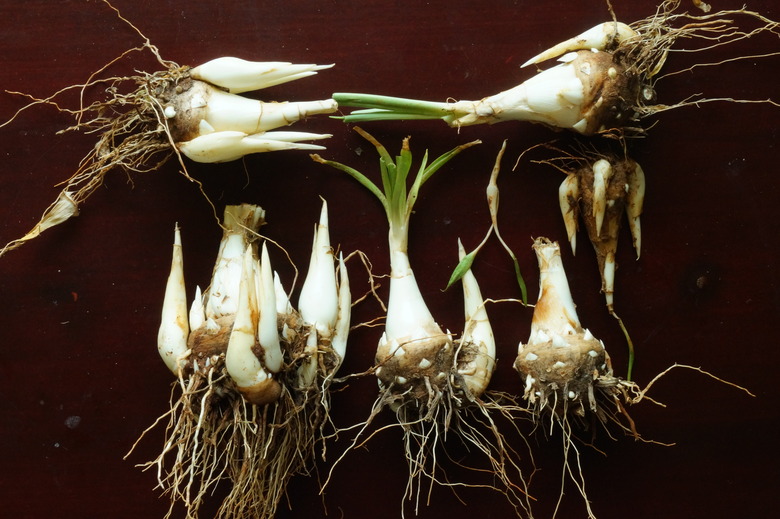
Dig a hole for each plant or bulb about 6 inches apart on all sides. Add compost to enrich the hole; then plant bulbs 3 inches deep with the pointed side-up, or nestle plants into the hole so that they are at the same depth in your garden as they were in the pot. Gently press down the soil, and water thoroughly.
 Forest & Kim Starr
Tuberose Care Throughout the Seasons
Basic tuberose care includes regular watering and fertilizing during the growing season.
- Irrigation: Never let your tuberose dry out, so monitor it carefully in warm weather and water it regularly. If your soil drains particularly well, it will need more frequent water.
- Fertilization: Every two weeks, provide it with a 50/50 solution of diluted liquid, slow-release fertilizer. Avoid over-fertilizing, which can result in root rot. After the plant dies back, stop fertilizing.
- Mulch: Maintain an organic mulch around the plant, but don't let it touch the roots. Mulch helps retain moisture and ward off weeds.
- Weed control: Regularly weed around your tuberose plants so they do not have to compete with hardier plants for nutrients and water.
- Protect the plants from cold weather:
In climates colder than zone 7, dig out the bulbs and store them over the winter; then replant in spring.
Pests and Diseases
Tuberose can develop a range of fungal diseases, including Alternaria leaf spot, bacterial leaf spot and botrytis. To ward off these diseases, avoid overhead watering to keep the foliage dry, and don't water at night.
Trim leaves if the plants have become too crowded to improve circulation. For bacterial leaf spot and botrytis, you should remove any infected plant parts.
Tip
It's a good idea to periodically explore your garden at night or in the early morning to make sure no pests are attacking your tuberoses.
Pests that may target tuberoses include microscopic root knot nematodes, which cause galls to form on the roots, resulting in wilted or stunted plants. These nematodes infect the soil, so if your plant has developed this problem, you will need to dig it out and discard it; then replant the tuberose in another area of your landscape.
Aphids and slugs can also attack tuberoses. You can hose off aphids, spray the plants with insecticidal soap or introduce natural predators, such as ladybugs or wasps. To control slugs, use cornmeal or beer traps, or try placing a barrier around your plants. Exploring your garden at night or early morning can reveal these critters so you can dispose of them.
 SKsiddhartthan
Propagating a Tuberose
The best methods to propagate tuberose are through either stem cuttings or bulb division.
Stem Cuttings
A stem cutting is just a section of stem that has leaves or buds attached to it. During the growing season, clip off a 3- to 5-inch part of a tuberose stem; remove the upper leaves; then dip the bottom end into a rooting hormone mix. Place it into a pot with sanitized potting mix, and locate the pot in a bright area with indirect sunlight. Ensure the cutting retains moisture until it forms roots.
Dividing Bulbs
While most experts refer to the tuberose casually as a bulb, it's not actually a true bulb, so it needs more care when dividing its roots. After the plant has died back, carefully dig out the bulbs, and use a sharp knife to cut the bulbs apart, making sure each section has a few growing "eyes." Replant the bulb sections in a new garden bed at the same depth as they had been growing.