

Superstitions About Weeping Willow Trees
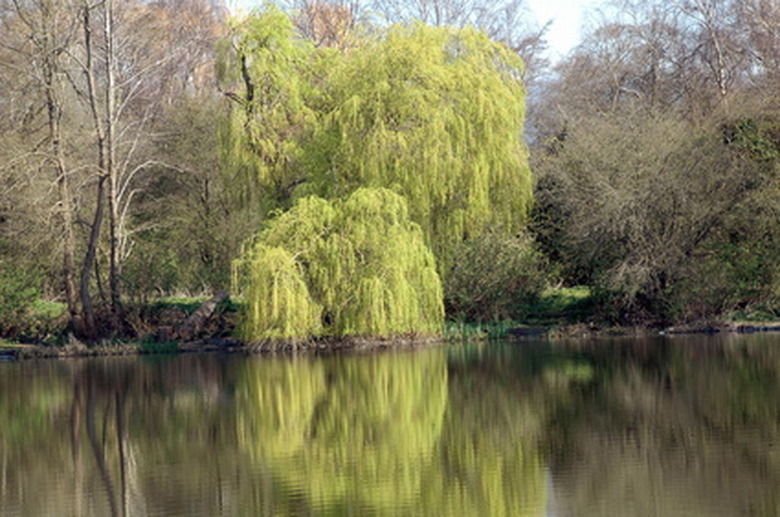
Weeping willow trees belong to the genus Salix, which contains between 250 and 300 species. Willow species are mostly native to the northern hemisphere and are widely distributed. The weeping types, which include varieties of Salix alba, Salix babylonica and Salix pendulina, acquired the nickname because the long slender branches bend gracefully toward the ground. Like other willows, the "weepers" prefer damp places and are often seen growing by water.
Weeping willow trees belong to the genus Salix, which contains between 250 and 300 species. Willow species are mostly native to the northern hemisphere and are widely distributed. The weeping types, which include varieties of Salix alba, Salix babylonica and Salix pendulina, acquired the nickname because the long slender branches bend gracefully toward the ground. Like other willows, the "weepers" prefer damp places and are often seen growing by water.
Religious Lore
Psalm 137 in the Old Testament makes reference to the Israelites in captivity weeping and hanging up their lyres on the branches of a willow tree "by the waters of Babylon" as they remembered their homeland. According to legend, this caused the trees to "weep" or bend their branches ever after. In English churches, willows sometimes stood in for palms for the commemoration of Palm Sunday.
- Weeping willow trees belong to the genus Salix, which contains between 250 and 300 species.
- The weeping types, which include varieties of Salix alba, Salix babylonica and Salix pendulina, acquired the nickname because the long slender branches bend gracefully toward the ground.
Mourning and Willows
From ancient times, weeping willows have been associated with death and mourning. The willow motif is sometimes seen on gravestones, especially those made during the Victorian period in America. Sometimes mourners wore a willow sprig to signify their loss. The willows were sometimes planted in cemeteries and were featured in art devoted to themes of death and mourning.
Willow in the Ancient World
Hecate was a Greek underworld deity, with authority over the moon, water and willows. She was reputed to practice magic and her priestesses used willow wands in their rituals. In Greek myth, Orpheus, a poet, took willow branches with him to the underworld.
- From ancient times, weeping willows have been associated with death and mourning.
- The willows were sometimes planted in cemeteries and were featured in art devoted to themes of death and mourning.
Willows and Immortality
The willow's ability to regrow when the top is cut off or coppiced, coupled with the ability of willow twigs to sprout readily, has given the tree an association with renewal and immortality in some cultures, including the Chinese.
Willow Medicine
Willows have been revered in many eras and cultures because the bark has been processed into herbal medicines to provide pain relief. In 1828, the active ingredient, salicin, was isolated from the bark. This led to the development of modern aspirin.
References
- "Brother Cadfael's Herb Garden"; Rob Talbot and Robin Whiteman; 1988