


Archive for September 2020
Back to Archive IndexFlowers (11)
-

-

-

Stages Of A Hibiscus
Stages of a Hibiscus. Hibiscus flowers are immediately recognizable to many people by their large, lush blossoms in bright red, paper white or canary yellow. It’s possible to grow hibiscus indoors and outdoors. If you’d like to enjoy healthy hibiscus plants around your house, learning the stages of the hibiscus life cycle can help you provide targeted care for the plant.
Read More -

Are Roses In The Golden Ratio?
Are Roses in the Golden Ratio?. The golden mean, golden ratio or golden proportion is essentially "phi." One way to see the ratio is from the division of a rectangle such that a square is formed. The golden ratio is formed when the proportion of the smaller part to the remainder is the same as the smaller to the whole. This proportion can be found in the human arm: The ratio of the forearm to the hand is identical to the ratio of the hand to the whole arm from the elbow down. This ratio is nature's efficiency scale and is at the foundation of all life.
Read More -

Venomous Spiders Native To Wyoming
Venomous Spiders Native to Wyoming. Myths and misinformation cause an irrational fear of spiders for some people, but the truth is that most spiders fear humans and attack only when threatened or provoked. Different species of spiders, some extremely venomous, inhabit every state. Most spiders native to Wyoming pose no risk, but two potentially dangerous ones live in parts of the state.
Read More -

The Difference Between A Shrub & A Bush
The Difference Between a Shrub & a Bush. With all the common names plus the Latin names for plants in your garden, it can get a bit confusing when disussing what's going on with the plants around your house. Terms like "bush" and "shrub" may seem straightforward, but, if anything, they might be more confusing due to a lack of specific definition used across the board.
Read More -

Black Spots On Azalea Leaves
Black Spots on Azalea Leaves. Black spots on the foliage of the azalea shrub often indicates a pest infestation. Both the azalea whitefly (Pealius azaleae) and the azalea lace wing (Stephanitis pyrioides) feed on the sap of the shrub by piercing its foliage with their sharp mouths and sucking the nutrients. The azalea whitefly prefers the snow azalea (Azalea ledifolia alba) but does occur on other varieties.
Read More -

The Leaves On My Gardenia Bushes Are Turning Brown On The Ends
The Leaves on My Gardenia Bushes Are Turning Brown on the Ends. Gardenias are a member of the large coffee family of plants (Rubiaceae). They are subtropical and have shiny, dark green leaves and fragrant flowers. They can suffer from nutritional deficiencies that can cause leaf tips to turn brown.
Read More -

Is Alstroemeria Poisonous To Cats?
Is Alstroemeria Poisonous to Cats?. Bright flowers are the main draw of alstroemeria plants. These hardy perennials have flowers resembling lilies, adding interest and visual contrast to gardens. Native to Brazil and Chile, these plants are cultivated around the world and appear in cut-flower arrangements. Despite their pleasant appearance, alstroemeria plants posses toxins that are poisonous to cats.
Read More -

How To Get Rid Of Thrips On Roses
How to Get Rid of Thrips on Roses. As rosarians eagerly anticipate their first rose blossoms of the growing season, a common garden pest may disrupt the beautiful rose display. Thrips, tiny winged insects that gorge on blossoms and leaves, prefer light-colored roses and often make their presence known in a garden by causing unsightly brown blemishes on the rose blossoms or even preventing them from opening. Get rid of thrips on roses to stop the infestation and protect future blossoms.
Read More -

How To Winterize Tree Roses
How to Winterize Tree Roses. If you have tree roses, also known as rose standards, in your garden, you need to give them lots of insulation from cold winters. Although tree roses can thrive in colder U.S. Department of Agriculture Hardiness Zones, they won't last through the winter without a little help from you. Start your tree rose winterization project in late autumn, before temperatures drop below freezing.
Read More


Lawn Care (27)
-

How To Replace A Briggs & Stratton Crankcase Gasket
How to Replace a Briggs & Stratton Crankcase Gasket
Read More -

-
How To Fix The Idler Spring On A Zero-Turn Mower
How to Fix the Idler Spring on a Zero-Turn Mower. Zero-turn riding mowers operate with a zero turning radius, cutting so close to trees and other obstacles that little follow-up trimming is required. Most can pivot a full 180 degrees without leaving behind any uncut grass. All zero-turn mowers are rear-wheel drive. The wheels are independently powered by a hydrostatic transmission, and steering is controlled by a pair of joysticks that regulate the speed of each wheel. Models such as the Toro Commercial Z Master series use a single drive belt to operate the twin blades in the cutting deck. The belt is tensioned by a spring-loaded idler arm. Belt slippage caused by insufficient tension may result from a weak idler spring.
Read More -
How To Change The Drive Belt On A 2008 Super Bronco Troy Bilt Lawnmower
How to Change the Drive Belt on a 2008 Super Bronco Troy Bilt Lawnmower. The Troy Bilt Super Bronco is a 42-inch riding lawn tractor suitable for mowing residential properties up to 1.5 acres. Driven by a 20-inch Kohler engine, the Super Bronco features a side-discharge mowing deck with five height adjustments. A single deck V-belt drives all cutting functions. It should be replaced if signs of excessive wear are apparent. Replace the Super Bronco drive belt with a Troy Bilt OEM replacement only.
Read More -

How To Replace A Toro Z Master Clutch
How to Replace a Toro Z Master Clutch. The Toro Z Master series is a selection of riding lawn mowers manufactured by Toro that feature their zero-turn technology to make cutting in confined spaces easier and to provide more mower maneuverability. These mowers feature Briggs & Stratton engine assemblies that include a clutch shaft that can become damaged or faulty to the point where full replacement is necessary. Fortunately, you can disassemble the necessary parts of your Toro Z Master mower to access and replace your clutch without any professional assistance.
Read More -
How To Replace A Belt On A Honda Lawn Mower
How to Replace a Belt on a Honda Lawn Mower. Unlike most self-propelled lawnmowers, the self-propelled mowers manufactured by Honda utilize a rear-wheel drive system rather than a front-wheel drive system. Although the drive wheels are on the opposite end of the mower, the process for replacing the drive belt that controls the speed of the transmission remains relatively straightforward. The only time you need to replace the drive belt is when you can no longer adjust the belt tension with the tensioning screw located on the transmission. This means the belt has stretched too far for continued use.
Read More -
How To Change The Drive Belt On A Craftsman Zts 7500 Riding Mower
How to Change the Drive Belt on a Craftsman Zts 7500 Riding Mower. The Craftsman ZTS 7500 is a zero turn lawnmower. This means, all four wheels pivot to allow the mower to spin on its axis. This allows for tight cornering and less trimming with a push mower. Although the deck rests below the engine, the deck itself still uses a pulley system and a drive belt to run the mower blades. Just as the belt on a lawn tractor wears out, the belt on the ZTS 7500 also wears out and requires replacement.
Read More -

How To Add Transmission Oil To A John Deere 314
How to Add Transmission Oil to a John Deere 314. The John Deere 314 was produced from 1979 to 1983. The 314 was equipped with a 14-horsepower Kohler one-cylinder diesel engine. The transmission on the 314 is located at the rear of the mower, and is accessed via a drain tube beneath the transmission housing, and a fill tube. The 314 was fitted with a 38-inch or optional 46-inch mower deck. The 314 was available with a 50-inch rotary mower deck and had a hydrostatic transmission with infinite forward and reverse gears. The transmission requires 5 quarts of fluid to fill completely.
Read More -
How To Replace The Pull Cord On A Craftsman Weed Trimmer
How to Replace the Pull Cord on a Craftsman Weed Trimmer. The pull cord on a Craftsman weed trimmer operates the starter mechanism so the operator can get the combustion process started. The pull cord allows the operator to turn the flywheel by hand until it spins fast enough and the engine takes over the process. This cord can get pulled off from excessive tugging when the engine won't start or it may get ripped or frayed, forcing the operator to replace the cord before he can start trimming again.
Read More -

The Best Weed Killer For Spotted Spurge
The Best Weed Killer for Spotted Spurge. Spotted spurge is an annual weed that invades lawns and flowerbeds. Gardeners may identify spotted spurge growing in the yard by its dense low-growing characteristics, according to the University of California, Davis, website. It is important to remove the weed from the yard with the correct type of weed killer to prevent harming your grass or ornamental plants.
Read More -

The Correct pH For Grass
The Correct pH for Grass. Proper soil conditions are essential for healthy grass. One of the most important factors in healthy lawn establishment and growth is the soil pH level. Test your soil before establishing your lawn, and change the soil pH only if necessary. Your county extension office can assist you with soil testing. A pH level above 7.0 indicates alkaline soil, and a pH level below 7.0 indicates acidic soil. Factors that influence soil pH include fertilizer use and rainfall.
Read More -

How To Neatly Edge A Sidewalk
How to Neatly Edge a Sidewalk. If you have a sidewalk or driveway in your yard, edging is one of last steps that you perform when cutting the grass. Edging is the process of creating a neat cut line along the edge of the lawn, which prevents the grass from growing over onto the sidewalk. Edging, typically completed using an electric or gas-powered string trimmer, is mostly for aesthetic purposes to improve the appearance of the landscape.
Read More -
How To Install A Ryobi 790R Brush Blade
How to Install a Ryobi 790R Brush Blade. The Ryobi 790R is a combination trimmer and brush cutter. Unlike most trimmers, the 790R does not use a bump feed button on the bottom of the trimmer spool. When cutting through tall weeds or overgrown areas, it is necessary to use the brush cutting blade. Installing a Ryobi 790R brush blade involves locking the shaft of the trimmer so the head does not move. Before installing the blade, locate all the parts. The blade comes with a 5/8-inch nut to attach it to the trimmer. Replacement blades along with the necessary hardware are available at home improvement centers.
Read More -
How To Check Compression In A Weed Eater
How to Check Compression in a Weed Eater. Compression drives the piston in a Weed Eater's cylinder, turns the crankshaft and pushes fuel through its circuit. Without compression, the engine will not run properly and may not start. Low compression generally occurs when an air leak springs somewhere in the internal engine components, such as the gaskets or seals around the crankshaft, piston or carburetor. Symptoms of low compression include hard starts, erratic idling and low power when the engine heats up. Checking the compression on a Weed Eater requires a special tool called a compression gauge.
Read More -

The Starter Relay And Why A Mower Won't Start
The Starter Relay and Why a Mower Won't Start. A lawnmower requires several amperes of electrical current to start the engine. For safety reasons, a lawnmower (and other electric-start internal combustion powered vehicles) contains two parts to the starting circuit: a start switch circuit and a relay circuit. Since an electromechanical relay can only be used for a specified number of cycles before failure, a faulty starter relay can prevent a lawnmower from starting.
Read More -
How To Set 032 AV Stihl Chainsaw Ignition Points
How to Set 032 AV Stihl Chainsaw Ignition Points. There are two points of ignition on a 032 AV Stihl chainsaw: the spark plug and the ignition module. The spark plug's gap can easily be fixed by replacing the spark plug. The gap, or point, on the ignition module is much more precise and needs to be set by hand. This point is the distance between the magnets on the flywheel and the ignition module. When the flywheel's magnets align with the module, the charge is sent up to the plug. If this distance is improperly set, the magnets will not align and no ignition will take place.
Read More -
How To Replace The Front Wheel Bushing In A John Deere L130
How to Replace the Front Wheel Bushing in a John Deere L130. The John Deere L130 is a riding lawn mower with a 23-horsepower V-twin engine. All four wheels have two plastic pieces in the center called bushings. The bushings make direct contact with the axle and protect both the axle and wheels from wear. After regular usage of the mower, the bushings will wear down, causing the mower to ride unevenly. When the bushings are worn, it is important to replace them with new bushings to prevent damage to the axle and wheels.
Read More -

What Do Grass Carp Eat?
What Do Grass Carp Eat?. Freshwater ponds, lakes and rivers often see an influx of aquatic plants that may negatively affect the quality of the water. Grass carp, who eat just about anything green growing in the water, offer a natural method of controlling plants.
Read More -
How To Replace A Tecumseh Primer Bulb
How to Replace a Tecumseh Primer Bulb. The primer bulb on your lawn mower's Tecumseh engine delivers fuel to your carburetor when you press the bulb with your fingers. A bulb that has cracks or is otherwise defective requires replacement. Replacing a Tecumseh primer bulb is slightly different than with other types of small engines. The retainer ring is a solid ring rather than a C-clip. Replacement bulbs are available at Tecumseh authorized dealers.
Read More -

How To Cut Weeds With A Machete
How to Cut Weeds With a Machete. Weeds that have grown over six feet high and over 20 feet thick, or ones with equally disturbing proportions, may not respond well to your little set of clippers. You’re going to need a real tool to hack these things down, something as fun as a machete. A machete will not only slay tall weeds in a single swoop, but you’ll also get a very poignant point across to your neighbors that you are someone not to be messed with. You can cut weeds with a machete with an easy to learn technique.
Read More -
MTD 139 CC OHV Engine Specs
MTD 139 CC OHV Engine Specs. The Yard Machine Co. began in 1975 when it was purchased by Machine Tool and Die Co. MTD liked to purchase companies that were foundering and revive them. Yard Machine had been owned by Montgomery Ward, and the brand would have disappeared had MTD not purchased the company. Thanks to MTD, Lawn Machine was able to continue making its walk-behind mowers and branch out into riding mowers as well. The11A-41MB029's 139 cc OHV engine has specs that help explain the success of the company.
Read More -

How To Determine The Horsepower Of A Line Trimmer
How to Determine the Horsepower of a Line Trimmer. Line trimmers are typically rated in cubic centimeters (CC) instead of horsepower (HP). While CCs and HP are not directly related, there are some general conversions that can be calculated to give you an estimate of the total horsepower of your line trimmer based on CCs. If the owner's manual lists total foot-pounds per second (ft-lb/sec) that number can be more effectively converted to HP.
Read More -
How To Rewind The Pull Starter On A Homelite Chainsaw
How to Rewind the Pull Starter on a Homelite Chainsaw. The pull starter on Homelite chainsaws is connected to a pulley and a recoil spring cassette just underneath the starter cover. The recoil spring allows the pull rope to automatically retract after you let go of it. The spring can become disengaged or overstretched if you pulled too hard on the rope, and this can cause your pull starter not to automatically retract. If your recoil spring cassette is damaged, you will need to replace it with a new part.
Read More -

How To Load A Ryobi 105R String Trimmer
How to Load a Ryobi 105R String Trimmer. Your Ryobi 105r electric string trimmer could be the next best thing to a goat, when it comes to keeping the weeds under control around your lawn and garden. Nevertheless, string trimmers have healthy appetites for new string while chewing through the weeds. Loading new string into your trimmer should be a simple job, once you become familiar with the procedure. One labor saving feature of the Ryobi 105r trimmer is that you do not need to remove the bump knob to load new string onto the inner reel.
Read More -

How To Put A Belt On A Scotts S2546 Mower
How to Put a Belt on a Scotts S2546 Mower. The Scotts S2546 riding lawnmower tractor was made by the John Deere company until 2001. It was designed and marketed as a residential mower with 25 horsepower and a 46-inch deck. The mower drive belt requires replacement when the belt has failed or is failing; this manifest as the mower blades not rotating, heavy vibration of the mower or even clogging of the discharge chute.
Read More -

How To Adjust The Drive Cable On A Craftsman Lawn Mower
How to Adjust the Drive Cable on a Craftsman Lawn Mower. Craftsman cable-actuated lawn mowers provide users with a wide variety of mower cutting speeds in order to meet almost all home mowing requirements. The cable setting is factory adjusted at the time of manufacture, but periodic maintenance may still be required due to normal wear and tear of components if you cannot easily shift into all 6 speeds. Fortunately, Craftsman has made adjusting the speed mechanism very easy to do. It can be accomplished by most operators in under 10 minutes by following a few simple steps.
Read More -
How To Install A Mower Mulching Blade
How to Install a Mower Mulching Blade. Lawn mowers normally use two types of blades. Most commonly, a mower uses a cutting blade. This blade cuts grass and ejects it through a chute out the side of the mower. Also used is a mulching blade. This is designed to cut the grass multiple times and turn the grass into fine particles. These particles fall to earth under the lawn mower and act as a layer of mulch for the grass. Installing a mower mulching blade is something most any home gardener can do using tools available at home or at any home store.
Read More


Produce (22)
-
-
-

How To Grow Mehndi Plants
How to Grow Mehndi Plants. Mehndi is a traditional body art using the natural dye of henna plants, scientifically named Lawsonia inermis. The green henna leaves, particularly their central vein, are the source of a reddish-orange dye used for makeup, hair dying and body art. This plant is native to extremely hot regions and will tolerate periods of drought. It is ideal as a houseplant in cooler regions or may be grown as a large, flowering shrub for the landscape. In the wild, henna plants grow near desert oasis and semiarid regions.
Read More -

The Effects Of Light On The Growth Of Bean Plants
The Effects of Light on the Growth of Bean Plants. Sun is the vital element that helps plants harness the energy they need to grow, so full sun is key for vegetables like beans to thrive and produce a large harvest. Beans grow quickest and produce the most under unfiltered, direct sunlight. Outside of a natural outdoor growing environment, variations of light intensity, direction and spectrum can alter the chemical and physical traits of bean plants.
Read More -

Does Frost Damage Pea Plants?
Does Frost Damage Pea Plants?. Peas are frost-hardy, cool-season vegetables that can be grown in areas where there is a long, cool growing season. Peas can be classified as garden peas, snap peas or snow peas. Since peas are a cool-season vegetable, they will be fine if exposed to a light frost, although a hard frost may damage the blossoms.
Read More -

Companion Plants For A Queen Palm
Companion Plants for a Queen Palm. Queen palms are popular landscaping trees that professionals often plant in groups of three for visual effect. A queen palm can grow to a height of 50 feet. The tree's trunk is high and narrow, and leaf scars are its only markings. At the top of a queen palm is a canopy of feathery fronds. The palm has a shallow root system and grows best in acidic, well-drained soil. Choose companion plants that share the same growing, fertilizing and watering preferences.
Read More -

Black Spots On Leaves Of Sunflowers
Black Spots on Leaves of Sunflowers. Sunflowers are easy to grow and they've been cultivated as a crop for around 3,000 years. However, they are susceptible to at least 30 different diseases caused by fungi, bacteria and viruses. The five most serious diseases are all caused by fungi and, of those, three of them cause black spots to appear on the leaves.
Read More -

Yellow Leaves & Brown Spots On Gardenias
Yellow Leaves & Brown Spots on Gardenias. Gardenias are temperate climate shrubs and ornamentals, favored for their cold weather resistance and white blossoms. Yellow leaves and brown spots on gardenias are a symptom of various fungal and bacterial diseases that threaten the vitality of the entire plant. Identification of the specific pathogen, prevention and early control are vital for treating these diseases.
Read More -

Puffballs Are Growing In My Yard
Puffballs Are Growing in My Yard. Puffballs describe mushrooms of a particular shape: domed and round. This is not one particular type of mushroom but rather a collection of mushroom species that appear similar. Many of these puffball mushrooms are edible. They are a common sight, often appearing on lawns as well as in forests.
Read More -

How To Grow Entada Rheedii
How to Grow Entada Rheedii. Entada rheedii is the scientific name of a species of woody, flowering vine commonly referred to as African dream herb. It grows to 40 feet in height if left unpruned, producing a twining mass of vines lined with glossy, bluish-green foliage and a summertime display of fuzzy, upright flower clusters. The flowers mature into 2-foot-long seed pods filled with exceptionally large seeds, which germinate readily to grow new vines. Growing Entada rheedii presents few challenges since the seeds grow easily once scarified, but the plants will only survive outdoors in U.S. Department of Agriculture hardiness zones 10b to 11.
Read More -

How To Grow A Bee Tree
How to Grow a Bee Tree. Bee-bee tree, or Tetradium daniellii, is often referred to as Korean evodia. This broadleaf, deciduous tree forms a rounded, umbrella-like canopy and normally grows to 30 feet with an equal-sized spread. Bees cannot resist the small, fragrant blossoms that appear in clusters in the summer. The bee-bee tree is native to Korea and China and grows best in U.S. Department of Agriculture hardiness zones 4 to 8. Typically, it is very hard to find these trees at local nurseries. You can plant bee-bee tree seeds outdoors in the fall and hope they germinate or you can stratify the seeds indoors first.
Read More -
Night Blooming Cereus Propagation
Night Blooming Cereus Propagation. Night-blooming cereus (Epiphyllum oxypetalum) isn't a particularly attractive plant, with its long, jointed stems that are flat, floppy and rather vinelike as they trail over the sides of the pot. The reward for growing night-blooming cereus comes when the plant blooms, producing stunning, sweet-smelling flowers. The blooms appear for just one night and fade by the next morning. Night-blooming cereus is a type of cactus that, like most cactus, is easily propagated.
Read More -

How To Grow A Frazier Fir From Seed
How to Grow a Frazier Fir From Seed. Abies fraseri is a species of fir tree with various common names such as Fraser fir, Frazier fir and Southern Balsam fir. It is native to the Appalachian Mountains in the eastern United States and its distribution in the wild is limited to this area. Tree farmers commercially cultivate Frazier fir for Christmas trees and gardeners also grow individual trees for their ornamental value. Frazier fir seeds require a period of cold temperature known as a cold stratification period in order to germinate.
Read More -

How To Grow Helichrysum
How to Grow Helichrysum. Helichrysum is a native plant of Europe, Asia, Australia and Africa. Common names include curry plant, starflower, licorice plant, dwarf everlast and immortelle. In the United States, helichrysum can be grown as a half-hardy annual in U.S. Department of Agriculture zones 2 to 10, or cultivated to grow as a perennial in zones 5 to 10 where the weather is warmer. Colors range from yellow to white, red to orange and pink. Helichrysum is a popular choice for use in dried floral arrangements.
Read More -

Are Leaves Good As A Fertilizer For A Garden?
Are Leaves Good as a Fertilizer for a Garden?. When it comes to flower and vegetable gardens, gardeners must follow a specific set of guidelines for site, soil and nutrition. An important aspect of any garden is using organic mulch like grass clippings and leaves to both mulch and mix the soil.
Read More -

How To Make Rosemary Insecticide
How to Make Rosemary Insecticide. Gardeners have been using herbal insecticides as a safe alternative to chemical based insecticides for thousands of years. Though many herbs, including rosemary, ginger and bay leaf, can kill and deter insects in your garden, they are generally safer for small children and pets than commercial, chemical-based insecticides. Preserving the herb in a plant-based oil both maintains the beneficial properties of the herb and creates a compound that can be sprayed, spread or mixed easily.
Read More -

How To Keep Wasps & Hornets Away From Screen Doors
How to Keep Wasps & Hornets Away From Screen Doors. Wasps and hornets can be troubling creatures, especially when they won't leave you alone. Screened-in porches are optimal environments for these pests because there is plenty of room to roost, build nests, burrow, find food and avoid harsh weather. But to get into a properly sealed screened in porch, wasps and hornets must find a way in. This typically happens right through the screen door, which is why these pests tend to congregate there. There is an inexpensive, practical way to keep wasps and hornets away from the screen door.
Read More -

How To Grow Variegated Ivy
How to Grow Variegated Ivy. Ivy grows quickly and can climb as high as 100 feet from the ground. Ivies can be found on all the major continents of the planet and are used primarily as decorative plants to cover bare tree trunks and unsightly walls. Variegated ivies are considered the more aesthetically pleasing--their leaves are usually several hues. This is actually due to a lack of chlorophyll in the leaves and can make growing them a little more difficult than non-variegated ivies. For that reason here is an instructional guide on how to grow variegated ivy.
Read More -

How To Calculate The Drainage Area
How to Calculate the Drainage Area. Drainage area is an alternate term for drainage basin. In simplest terms, it is an area of land where water from natural sources, such as melting snow or rain or melting ice, pool and join another existing body of water, such as a river or lake. In the field of hydrology, calculating drainage area is a critical element in many practical applications. In determining the peak runoff of watersheds, the drainage area is needed. Calculating drainage density or calculating storm drainage for secondary roads begins with the drainage area. This concept reaches into many fields of engineering.
Read More -

Idaho Soil Types
Idaho Soil Types. Idaho has a diverse landscape in which there are a variety of different soils. Soil type is determined by a number of factors. Idaho has a variety of material available to create soil types, ranging from rock to volcanic ash. In addition, precipitation and climate play a role in the formation of soil types. Idaho's precipitation ranges from 8 to 60 inches a year in various parts of the state. These differences result in different pH levels, mineral content and organisms living in the soil.
Read More -
How To Kill Cycad Blue Butterfly Larvae
How to Kill Cycad Blue Butterfly Larvae. Cycad blue butterfly larvae can wreak havoc on cycad plants. A particularly bad infestation can cause the plant to wither and die. Treating the plant with the right kind of insecticide at the proper time can reduce the number of cycad larvae and thus prevent irreparable harm to your garden. To prevent the larvae from emerging and eating your cycad plants, apply the insecticide before the eggs hatch.
Read More -

How To Grow And Use Cinnamon Basil
How to Grow and Use Cinnamon Basil. If you enjoy herbs and spices, combine the two and grow cinnamon basil (Ocimum basilicum), an herb that features the taste and aroma of basil with overtones of cinnamon. Like other types of basil, it grows outdoors as an annual in all parts of the United States, or you can grow it as a potted plant outdoors or indoors for easy harvest all year long. It's quite easy to grow when given basic care and a little extra attention now and then.
Read More


Structures (29)
-
Do Deck Footings Have To Dry?
Do Deck Footings Have to Dry?. Most local building codes require that decks rest upon concrete footings. They are piers created by placing forms or mold in the ground and pouring cement in the form. The codes typically set a minimum diameter and a depth for the footings. In cold climates, the code may also require that the footings extend below the frost line.
Read More -
How To Make Foundations On A Slope For A Shed
How to Make Foundations on a Slope for a Shed. The ground on which a shed is built does not have to be perfectly level. The foundation for that shed must be. A shed should not be situated, however, on a very steep slope, which would be subject to heavy rain runoff and erosion, unless you plan to build poured concrete stub walls such as are used on house foundations. A more typical shed foundation can be built on unlevel ground using concrete blocks.
Read More -

Should Stair Treads Be Glued?
Should Stair Treads Be Glued?. Stair treads are attached to the stair risers in different ways. Gluing is one of the more common methods, but it depends on several factors. Using adhesive helps reduces sounds on the stairway, such as wooden treads creaking because of loose nails or screws. A water-free adhesive helps prevent the tread from warping because of moisture.
Read More -
Best Ways To Level The Ground For A Shed
Best Ways to Level the Ground for a Shed. A shed is a great addition to a yard. It can provide space for potting plants and storing garden accessories or storage for tools, toys, out of season items or other objects. A shed can be a 4-by-4-foot tool bin or a 12-by-16-foot workshop. A shed can be built almost anywhere; the ground does not have to be perfectly level, but the foundation must be. Check building regulations; larger sheds will require permits.
Read More -

How Thick Should An Asphalt Driveway Be?
How Thick Should an Asphalt Driveway Be?. An asphalt driveway is a practical, long-lasting choice for a home. Similar to concrete, asphalt is composed of sand and stones and liquid asphalt that binds the two together into a solid surface. The thickness of an asphalt driveway typically ranges from 2 to 4 inches, but the pavement's strength is determined by the stability of the subsoil and the depth of the gravel base beneath.
Read More -

How To Fix A Sinkhole In The Driveway
How to Fix a Sinkhole in the Driveway. Sinkholes form in driveways when underground moisture wears away the gravel foundation underneath, causing the pavement to sink into the cavity. As the hole expands, damage to the pavement and the resources required to repair it will increase. Fixing a sinkhole entails pumping grout into the hole to raise the driveway and replace the missing foundation.
Read More -

How To Build A Foundation For A Carport
How to Build a Foundation for a Carport. A carport is a simpler and less expensive alternative to building a garage. If all you want is to protect your car from the weather, a carport performs the same basic function. There are a variety of carport designs from which to choose, but no matter which plan you select, you need to first set down a solid foundation. A sturdy foundation will ensure that your carport stands strong in foul weather and that it will last for as long as possible.
Read More -

How To Put In Drainage For An Asphalt Driveway
How to Put in Drainage for an Asphalt Driveway. If an asphalt driveway has poor drainage, standing water will cause cracks, pits and other damages that affect the function and appearance of the driveway. Putting drainage in a driveway is a labor-intensive project that involves cutting a path through the surface to install underground drainpipes. The project takes about a weekend to complete but permanently solves drainage issues and reduces maintenance.
Read More -
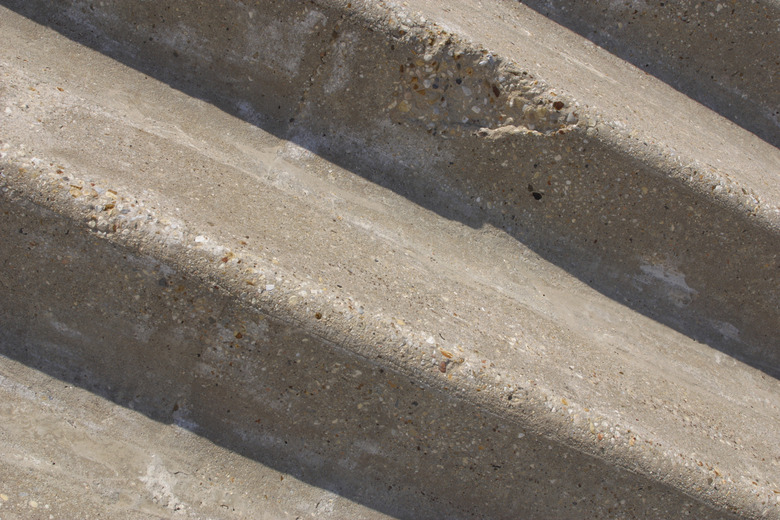
How To Build Steps For My Back Door
How to Build Steps for My Back Door. Some homes have a back door that is several feet higher than ground level, requiring a staircase at the foot of the door. You can build a staircase out of wood, but the constant exposure to the elements can cause the wood to splinter, crack or rot. Another option is to build the steps with concrete. A well-built concrete staircase will last for decades, providing a safe, durable way for your family to enter and exit through your back door.
Read More -

How To Weld Aluminized Steel
How to Weld Aluminized Steel. Aluminized steel is used in the manufacture of automotive exhaust parts and other items due to its heat- and corrosion-resistance. Since the aluminum is a coating on steel sheet metal, there is the possibility that the aluminum will begin to wear over time. MIG welders are used when welding aluminized steel and and can either be purchased or rented from tool stores.
Read More -
How To Attach A Shed To The Ground
How to Attach a Shed to the Ground. Not all sheds need to be attached to the ground. Many wooden sheds will rest solidly on concrete blocks or similar foundations, even beams set on compacted gravel. But lighter sheds, especially those of metal or vinyl, usually need to be attached in some way and many homeowners are more comfortable with sheds that are solidly secured into the ground. There are three basic ways to attach a shed to the ground: concrete slab, pier and beam foundation or ground anchors (also called tie-downs).
Read More -

How To Cut Roots Under Pavers
How to Cut Roots Under Pavers. There is a simple solution to removing roots that are uplifting your walkway or patio pavers, but it isn't always an easy job to execute. Roots from trees or even shrubs can grow large enough and near enough to the surface to dislodge pavers made from most any material, making the paver surface uneven. In addition to marring the aesthetics, it also creates a tripping hazard. When it comes to invasive roots, the problem will not get better with time and should be corrected at the earliest opportunity before more damage is done.
Read More -
How To Mortar Limestone Blocks
How to Mortar Limestone Blocks. Limestone and other natural stone blocks make elegant garden borders, walls and other decorative accents in your yard. While the blocks are quite heavy, laying and mortaring them yourself requires no special knowledge. To ensure that the mortar sets properly, work on a dry day when no rain is forecast. Ensure that temperatures will not dip below 32 degrees Fahrenheit for 24 to 48 hours after you complete the job, since the cold will affect the mortar.
Read More -

How To Connect Multiple 55 Gallon Drums
How to Connect Multiple 55 Gallon Drums. 55-gallon drums are often used in as water storage barrels in rain harvesting projects. Those who wish to collect and store more than 55 gallons of rainwater may choose to use bigger storage tanks or to use multiple 55-gallon drums connected together. This type of water storage can be done as a do-it-yourself project with a few basic plumbing supplies and tools by someone who has some basic plumbing skills.
Read More -

How To Glue LVL Beams Together
How to Glue LVL Beams Together. Knowing how to glue laminated veneer lumber (LVL) beams together can make the difference between creating your own wooden masterpieces and having a stranger recreate your dream from your memories. LVL beams are long pieces of lumber that are usually used for grand windows and wide doorways. With wooden LVL beams, you must use extremely adhesive glue; not using strong enough glue will cause your wooden structures to collapse.
Read More -

How To Fill Cracks In Concrete To Keep Ants Out
How to Fill Cracks in Concrete to Keep Ants Out. Typically, ants aren't destructive. They are mainly a nuisance. The ants you see inside your home are called worker ants. They are searching for food. Once they find it, they'll invite more ants in by leaving a pheromone trail for them to follow. If they are entering through a crack in concrete, and the opening is left unchecked, you can soon have an ant invasion. That's why it's a good idea to seal those cracks up. It's not a difficult task or expensive to do.
Read More -

How To Reuse Chain Link Fence Posts
How to Reuse Chain Link Fence Posts. If you own a chain link fence, you may decide that you want to move it. Whether the fence is over your property line, or maybe the fence was installed badly, you can actually pull chain link fence posts and reuse them. Though it isn't technically challenging to dig out a fence post, it can be hard work, especially if your posts are set in concrete. Just be sure to avoid damaging the posts if you try to remove the concrete anchor that holds them in place.
Read More -

How To Calculate The Outside Perimeter Of An Acre
How to Calculate the Outside Perimeter of an Acre. Land may be measured in square feet or acres, depending on the size of the plot. Acres are generally used to delineate rectangular or square plots of land that cover an area too great to view from the ground. Because acres can vary in shape, the outside perimeter of a plot can vary. Knowing the outside perimeter of your acre of property would come in handy if you want to, say, build a fence around it. A distance measuring wheel and a simple formula can help you calculate the outside perimeter of an acre.
Read More -

How To Build A Wood Seawall
How to Build a Wood Seawall. A seawall is a barrier that is constructed to prevent water from eroding the front of property that sits on a body of water, such as a lake. Typically, a seawall is installed during fall or winter as some lakes that are water-controlled have their water level lowered. Seawalls are can be constructed of materials such as stone or concrete. However, you can also build a seawall using water-resistant wood boards.
Read More -

Types Of Concrete Block Fences
Types of Concrete Block Fences. The variety of concrete block fences today is staggering. Concrete fencing projects are limited only by imagination and budget. There are four basic types of concrete block wall components, each with their own design capabilities: basic concrete block, mortar block, non-mortar block, and pre-cast concrete walls. All blocks are constructed the same way; concrete poured into a mold and allowed to cure. The purpose of the wall and the available budget will determine which type of components and installation process should be used.
Read More -

How To Remove Redwood Stains From Concrete
How to Remove Redwood Stains From Concrete. Redwoods are beautiful, shade-providing trees that can add drama and impact to your backyard landscape. They can drop a foliage and small limbs into your yard. Redwood also contains a high amount of tannin, which can stain your concrete patio a dark, unsightly color. If you are having problems with redwood staining your concrete, don't worry. With a few simple items and a little elbow grease you can remove those stains and restore the look of your patio.
Read More -

How To Build Railroad Tie Steps
How to Build Railroad Tie Steps. Railroad ties are often discarded after repair work on railroads, which gives you a prime resource for making your own outdoor steps. The railroad ties are robust and weather-proof despite a lifetime of structural use and will make a great addition to your lawn or garden. Some care will have to be take to properly seat the ties, as just placing them in the ground can lead to significant drift when dirt is eroded by the weather.
Read More -

How To Connect A Pond Pump To A Filter
How to Connect a Pond Pump to a Filter. A pond can make a perfect garden sanctuary to chase away the troubles at the end of the day. For the best-looking ponds, you need to employ a pump and filter to clear out impurities in the water. There are two main kinds of filter and pond connections: an integrated pump and an external pump connection. Connecting a pond pump to a filter in either one of these situations isn't a difficult water gardening task.
Read More -

How To Cut Pavers With A Compound Miter Saw
How to Cut Pavers With a Compound Miter Saw. Compound miter saw heads, which can turn from side to side, are designed to make angled and beveled cuts. When fitted with a blade designed for dry masonry cutting, the saw can be used on concrete pavers the same way it is used on wood. The masonry blade is made of a hardened material such as carbide and may have diamond-encrusted cutting teeth, capable of cutting into paver materials. The blades' cost are determined by their material, so you can find a blade to fit any budget.
Read More -

How To Move A Utility Pole
How to Move a Utility Pole. Utility poles are designed to carry electricity to properties on the same street. Sometimes, utility poles need to be moved; they are either obstructing the footpath, located in a resident's garden, or perhaps blocking someone's driveway. Moving a utility pole requires preparation, planning and careful execution to avoid damaging the utility and surrounding property. Because of this, this operation must be carried out by a properly trained contractor, and never attempted by an inexperienced person.
Read More -

How To Stabilize A Pergola
How to Stabilize a Pergola. Construction of any structure requires stabilization from the ground up, starting with the footing. Outdoor pergolas encounter winds, rains and storms that can sway or topple them if they are not structurally sound. Using large posts in larger postholes provides area for concrete in the footing to hold the posts in place. Additional lengths of vertical posts in the ground also add sturdiness to a pergola.
Read More -

How To Remove Drain Cap On Hayward Filter
How to Remove Drain Cap on Hayward Filter. Hayward Industries, Inc., manufactures a wide range of pool-maintenance products including filters. Whether you're using a Hayward cartridge, D.E. (Diatomaceous Earth) or sand filter for pool water filtration, eventually you must drain the filter for cleaning or winterizing purposes. Hayward filters feature a drainpipe with either a drain plug, referred to interchangeably as a drain cap, or a drain valve. The pipe and cap models are threaded. As a result, you need only unscrew the cap to remove it from the pipe.
Read More -

How To Set Stone Pavers With Mortar
How to Set Stone Pavers With Mortar. Stone pavers are a commonly used material for flooring patios and walkways and require a generally straightforward installation process, compared to other patio materials. Not only are pavers usually associated with a simple installation, but they also offer a stable and durable surface suitable for most traffic and weather conditions, and are available in a seemingly endless combination of colors and shapes. Installing stone pavers over mortar instead of just sand offers a foundation that can last much longer and withstand more abuse.
Read More -

How To Dig A Footer For A Garage
How to Dig a Footer for a Garage. Garage slabs rarely just sit on the ground. They are typically supported by a footer and stem wall system. The footer acts like an "anchor" for the building. It is a low, broad and thick concrete form that is poured below the frost line to prevent the building from moving with frost heaves and helps to support the weight of the finished structure. A stem wall may rise from the center of the footing to the level of the slab is the footing is too far beneath the slab to support it. You can dig a footer for a garage typically in a day.
Read More


Trees (13)
-

California Pine Cone Identification
California Pine Cone Identification. Conifer trees produce male and female cones. The small male cones produce pollen and often stay on the trees for only a few weeks. The more prominent female cones contain the tree seeds. A cone usually consists of tightly packed woody scales that protect the seeds inside. It may take several years for female cones to mature on the tree. During that time the cones change color and size. Of the numerous conifers in California, 12 trees are common forest trees with widely varying cones.
Read More -

What Causes A Palm Tree To Fall?
What Causes a Palm Tree to Fall?. Palms trees have adapted to their hot climate conditions in remarkable ways. They are drought-tolerant and can withstand exposure to salt air and soil. They thrive in sandy soils and often withstand hurricane winds. They are not immune to damage, however, and a number of environmental and disease conditions can cause palm trees to fall, creating risks to people and property.
Read More -

What Is Yew Wood?
What Is Yew Wood?. True yew wood is harvested from trees of the genus Taxus. In the United States, wood sold as yew is Pacific yew or Western yew, from the species Taxus brevifolia. Yews are coniferous trees, related to pines and other softwoods. Botanists classify another species sold under the trade name "New Zealand yew" in a different family from true yew. Yew trees are generally small and irregularly shaped, which makes lumber cut from the trees scarce and relatively expensive.
Read More -

When To Prune Eucalyptus Trees
When to Prune Eucalyptus Trees. Native to Australia, eucalyptus trees can form impressive landscape giants or perform as elegant backyard shrubs. The mature size of eucalyptus trees varies by type; the silver gum eucalyptus can reach a height of 50 feet, but can be grown in shrub form at 6 to 8 feet tall. However you want to prune your plant, there's only one suitable time frame for trimming.
Read More -

Are Weeping Willow Trees Good Firewood?
Are Weeping Willow Trees Good Firewood?. Weeping willows are fast-growing trees that thrive in wet conditions but will also grow well in drier soils. The trees have a short lifespan, typically around 30 years. When the trees decline in vitality, they may split, fall or lose limbs. One way to get rid of a fallen willow is to chop it into firewood. Willows are softwood trees that are easy to cut into firewood logs. But like all softwoods, weeping willow does not burn well.
Read More -

Caterpillars & Birch Trees
Caterpillars & Birch Trees. Several caterpillars use birch trees as sources of food during their larvae stage. The caterpillars eat the leaves of the trees while they grow big enough to go into their pupate stage before emerging as moths.
Read More -

What Is The Correct pH Level For A Peach Tree?
What Is the Correct pH Level for a Peach Tree?. Peach trees need a variety of factors to be just right to accomplish optimum growth and fruit production. One important consideration is pH, which measures the acidity or alkalinity of soil.
Read More -

Are Cedar Trees Poisonous To Dogs?
Are Cedar Trees Poisonous to Dogs?. One particular deciduous species, known as the white cedar, melia azedarach, is poisonous to dogs. It has several other names: the Ceylon cedar, bead tree, Japanese bead tree, China ball tree, paradise tree, Persian lilac, pride-of-India, chinaberry tree and the Texas umbrella tree. By whatever name, dogs can become quite ill after ingesting any part of a white cedar tree and it may even lead to death.
Read More -

Bore Worms On Trees
Bore Worms on Trees. Bore worms, also referred to as borers, are serious tree pests. Borers are the adults and larvae stage of many insects that tunnel into tree wood and bark, creating sawdust and sap-filled cavities. Extensive borer infestation weakens trees, often killing them.
Read More -

How To Tell If A Backyard Walnut Tree Is Dead
How to Tell if a Backyard Walnut Tree Is Dead. Walnut trees are notoriously tough, tall and long-lived. From the towering black walnut (Juglans nigra) to the English walnut (Juglans regia), these trees can grow to heights of more than 100 feet and live for more than 200 years, according to the University of Minnesota Extension. Though they are generally drought and pest-resistant, there are a few things that can cause a walnut tree to die, including girdling of the trunk's bark, insect borers, fungus, root disturbance and simple old age.
Read More -

How To Trim A Cypress Tree
How to Trim a Cypress Tree. Cypress trees are fast-growing trees that do well on their own or can be planted in rows for privacy screening. Cypress trees require little in the way of pruning each year, but they do grow best when some trimming is done. Cypress growing in rows often get to be 30 feet tall and ones growing individually can get almost twice that tall, so it is important to decide early just how tall you want your cypress to be, and top the tree when it gets that height. You can top cypress by simply cutting the main trunk straight across at the height you want your tree.
Read More -
How To Replace A Leader On Spruce Trees
How to Replace a Leader on Spruce Trees. The leader is the top branch on a spruce tree. It provides the vertical growth for the spruce tree, which is generally a fast-growing tree. When the leader is damaged or threatened from weather or insects, a new leader can be established. This will help the tree to continue to grow well.
Read More -

How To Kill An Established Weeping Willow
How to Kill an Established Weeping Willow. For most trees if you want to remove them, it is generally enough to cut down the tree and then pull up the stump. Weeping willows, however, are not most trees. In fact, this tenacious variety of tree can send most people into fits as even the smallest of roots left in the ground can, and often do, sprout into another tree. Thus, it becomes necessary to break this cycle by taking certain steps during the initial removal of the tree to assure that it will be gone for good.
Read More


