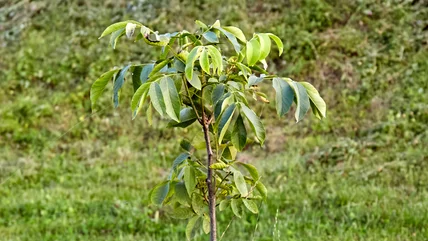
How To Start A Walnut Tree From A Cutting
You can start a walnut tree sapling from a cutting by following these tips.
Read More

Garden Guides uses a knowledgeable team of editors, writers, and experts to create all our content. We dive deep into the ever-evolving conversations surrounding gardening and landscaping, striving to deliver the most current and helpful tips, strengthened by expert insight and tutorials from our talented team.
As we cover many fields of expertise, we make it a priority to ensure every beat remains fresh and comprehensive. Additional information on our editorial process available here.
You can start a walnut tree sapling from a cutting by following these tips.
Read MoreMold on Peat Pots. Many gardeners plant seeds in peat pots because of the ability to retain moisture that is essential for germination. Made from compressed organic matter, peat pots are environmentally friendly and usually planted directly in the soil. Mold that is every gardener's bane thrives in moist conditions and shows up as fuzzy white mass on the sides, base or rim of peat pots.
Read MoreHow to Kill a Tree With Roundup. Although nobody wants to harm or kill a tree, there are situations when removing it becomes absolutely necessary. These may include shading your lawn and stunting plant growth, deeply embedded roots that sabotage your house's foundation or because you want to clear the area for something else. Whatever the reason, a bottle of Roundup or glyphosate will kill the tree and save you the lengthy back-breaking process of chopping it down. The efficiency and effectiveness of this poisonous herbicide makes it a favored choice of professionals and home gardeners alike.
Read MoreHow to Use Lime to Make Pink Hydrangeas. Hydrangeas shrubs produce large, deep green foliage and big clusters of flowers that range in color from pink, blue and white to red and purple. The type of soil and its pH plays an important role in determining bloom color. Increase the pH of your soil by adding lime to it in early spring or late fall to produce pink or red hydrangea blooms. While adding lime to potted hydrangeas may be simpler, you can also incorporate it in your garden soil to produce a bed of beautiful pink French hydrangeas.
Read MoreHow to Grow Grass Under Cedar Trees. Cedar trees enhance the beauty and appeal of the surrounding landscape and provide plenty of shade during hot, sunny days. However, these large ornamental trees often prevent grass or other vegetation from growing underneath, often creating bare patches in the soil. The roots of cedar trees compete for water and nutrients in the soil, and the heavy, dense boughs prevent sunlight from reaching the ground, thus making it all the more difficult for grass to grow underneath. However, with careful grass selection and proper care techniques, you can grow a dense carpet of grass under a cedar tree.
Read MoreIndoor Growing Tips for Ornamental Grass. Ornamental grasses are durable, versatile and exhibit attractive color, which is why they are used indoors as container plants. These grasses spruce up a dull setting and add color to it. With a little knowledge of grass care, almost anyone can grow ornamental grass indoors for a visually soothing and calming effect.
Read MoreVegetable Gardening Near a Pine Tree. With needles instead of regular leaves and cones, pines are popular landscaping evergreen trees that give a stately look to the area and add color to the garden even during the winter. Planting near a pine tree is slightly tricky as the soil directly below and around is acidic, shady and dry. Gardeners planning on growing crop near the pine trees should consider appropriate vegetables and plan accordingly.
Read MoreDisease in Water Lilies. Water lilies are showy, fragrant water flowers that gardeners plant in ponds for a decorative touch. Although considered hardy and naturally-resistant to most pests and diseases that damage terrestrial flowering plants, few varieties of water lilies are susceptible to diseases that cause severe damage. Knowledge of the different diseases equips the gardener to diagnose their plants' ailments appropriately and restore the floating flowers back to health.
Read MoreHome Remedies to Kill Grass. Use household products to kill unwanted grass instead of purchasing commercial grass killers. Not only are store-bought ones harmful for the environment, they are dangerous if you have children or pets, and cost more as well. Among various household products, homeowners commonly use newspapers, vinegar and water to kill invasive or unwanted grass.
Read MoreEasy Ways to Kill Elm Trees. Elm trees feature 30 to 40 varieties of deciduous and semi-deciduous trees, some of which grow up to 100 feet tall and provide excellent shade underneath. Sometimes killing elms becomes necessary because the deeply embedded roots of these invasive trees compete with surrounding vegetation for nutrients and moisture and weaken foundations of homes. Several methods of effectively killing elm trees exist.
Read MoreLong Stem Rose Varieties. Long stem roses are used throughout the world in bouquets and floral arrangements. There are hundreds of rose varieties, but not all are long-stemmed. Long stem roses feature stems at least 6 inches long and blooms 5 inches wide. Although most people buy these roses from florists, growing them at home is easy, convenient and cheaper in the long run.
Read MorePonderosa Pine Diseases. The multipurpose ponderosa pine (Pinus ponderosa), or western yellow pine, is susceptible to a number of diseases that cause severe damage unless treated immediately. While some diseases damage the roots or needles, others rot the heart or inner section of the tree and cause branches to fall. Treat the disease plaguing your ponderosa pine immediately so the tree regains its natural health and vigor.
Read MoreThe Best Flowers for Corsages. A corsage, also called a "mini-bouquet," is an arrangement of flowers, with or without foliage, worn around the wrist or lapel. Girls and women wear corsages to special occasions such as prom night, dinner parties, birthdays, weddings and anniversaries. A corsage is usually comprised of three to five flowers that complement the dress or the theme of the occasion. When making a corsage, use hardy flowers that last several hours before wilting.
Read MoreHow to Make Compost in Your Garage. Composting is the process of recycling kitchen and yard scrap to create compost, a dark rich matter that improves the quality of garden soil. Composting has gained a lot of popularity in the recent past, with more and more homeowners adopting this method of reusing waste in their backyards. If for some reason you cannot make compost in your garden or yard, you can do it in a heated place such as a garage. You can also add worms to your compost bin so your compost is ready sooner.
Read MoreHow to Fertilize Persimmon Trees. Native to China where summers and winters are moderate, persimmon trees are now renowned and grown throughout the world for their succulent fruit. These trees grow up to 25 feet tall and produce pulpy persimmons provided they receive adequate amounts of sunlight, water and fertilizer, and are planted in the right type of soil. Fertilizing a young persimmon tree is essential to provide it necessary nutrients so it produces good quality fruit. With a little attention toward proper fertilizer application, you will have a good supply of persimmons you can use for baking or as a snack.
Read MoreMain Characteristics of Flowering Plants. Flowering plants, or angiosperms, have existed for more than 130 million years and make up more than 90 percent of the plant kingdom. These plant species have adapted to every habitat on Earth including dense forests, grasslands, meadows, deserts and alpine summits. Flowering plants have a set of distinct characteristics that separate them from gymnosperms, or non-flowering plants.
Read MoreHow to Kill Grass With Household Products. Although most homeowners work very hard to own a lush, green lawn, you may opt to clear the area to replant fresh grass, or install tile, stone or brick that is easier to maintain. You may also want to remove undesirable grass growing in cracks in driveways, landscaped areas or patios as opposed to an entire lawn. Although a broad spectrum herbicide kills unwanted lawn grass easily, it is costly and leaves behind toxic chemicals in the soil that are harmful for children and pets. Use household products for a cheaper and safer alternative to killing undesirable grass.
Read MorePest Control for Japanese Maples. Native to Korea, Japan and China, the Japanese maple (Acer palmatum) is prized for its foliage that turns yellow, orange, red or purple in fall. Depending on the cultivar chosen, it ranges in height from 15 to 25 feet and usually has a round shape. Pests such as aphids and spider mites are attracted to this deciduous tree and cause severe damage until controlled chemically, biologically or culturally.
Read MoreHow to Kill Cypress Trees. Cypress trees are fast-growing coniferous evergreens commonly used as landscape borders, privacy screens and garden accents. Some types grow up to 30 feet high, while others reach 60 feet or more. Cypress trees feature strong, thick roots that spread in every direction underground. These invasive roots threaten the foundation of buildings, underground water pipes or nearby structures and also compete with nearby plants for nutrients in the soil. Partially destroying or cutting down a cypress tree is of no use as it grows back even thicker. Kill and remove all roots to eradicate a cypress tree from your property.
Read MorePineapple Plant Fertilizer. Unlike most other plants that require fertilizers up to two times a year, pineapples benefit from a regular and scheduled program that includes well-balanced fertilizer, iron treatments in accordance to the pH value of the soil and occasional doses of micro-nutrients. This sun-loving, exotic fruit cannot survive freezing temperatures and prefers well-drained, slightly acidic soil.
Read MoreHow to Kill Dormant Bermuda Grass. Bermuda is a hardy and persistent warm-loving grass that thrives in Southern United States. Homeowners in different parts of the country also grow it because it is easy to grow and maintain, is not particular about a certain soil type, spreads quickly and is inexpensive. However, sometimes Bermuda grass extends its boundaries due to its rapid growth rate to become an invasive weed. For best results, kill Bermuda grass in the winter, when it is dormant and weak.
Read MoreHow to Kill Leyland Cypress. Leyland cypress (Cupressocyparis leylandil) or Leylandii is a rapidly growing evergreen tree primarily used as hedges and privacy screens in landscaping. This hardy tree grows 3 to 4 feet every year to reach a height of 35 to 50 feet and spreads 15 to 25 feet wide. Although the Leyland cypress has somewhat shallow roots that do not necessarily threaten the foundation of nearby structures, sometimes a homeowner has no other option but to kill it and remove it from his or her property.
Read MoreHow to Transplant Spruce Trees. Spruce trees are large evergreens that reach up to 100 feet high when mature, with a 30- to 35-foot spread. Landscapers favor these majestic, hardy trees because they are disease resistant and stand out in any landscape, enhancing interest and attracting attention. Your spruce tree may have to be transplanted to another spot or to a new location altogether. With careful planning and some preparation, this task can be properly executed to prevent the tree from going into transplant shock.
Read More


