

Dirt Vs Soil: Here's The Actual Difference
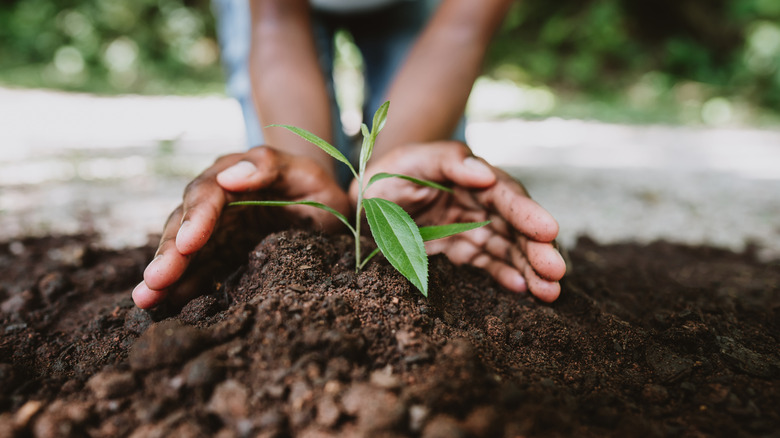
Who doesn't love to play in the dirt? Or is it soil? While the two words are often used interchangeably, they aren't quite the same thing. There are a few ways they are differentiated. "Dirt is soil that's in the wrong place," explained former president of the Soil Science Society of America (SSSA), Dr. Harold van Es., to Atlas Obscura. So by this definition, your garden is full of precious soil to help nourish your plants, but the mess that was tracked across your floor is dirt. Another common way to distinguish between dirt and soil is the explanation given by the Colorado State University Extension that describes dirt as lifeless, while soil is full of life. It's not just a bunch of mineral particles. So either way you look at it, the stuff in your garden is soil, not dirt.
Plants can't grow in just dirt. And many plants even struggle to grow in poor soil. That's why gardeners put so much effort into improving and amending their growing media and adding more of the organic material that is so essential to soil and plant health.
What soil is made of and how it helps your plants grow
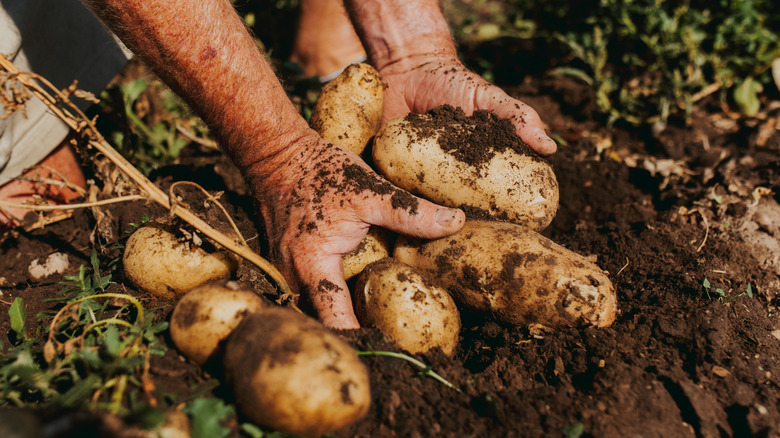
So if soil is more than just minerals, then what else does it contain, and why are these things so essential for your garden? In addition to the mineral components, soil is also full of living and dead organic material, water, and plenty of gaps for air. The living organisms in the soil can include everything from worms to bacteria and create a complex food web that benefits the soil and environment. But the dead and decomposed material is just as important. Without enough organic matter in your soil, the structure suffers. Luckily, you can often enhance your garden's soil structure, as well as its fertility, by amending it with compost. This helps ensure properly sized spaces between the minerals for water, nutrients, and air to pass through and makes it possible for those essential resources to get to your plants' roots.
While there are a wide range of ways to check in on the makeup of your own soil, the most comprehensive option is to get a professional soil test. Alternatively, you can also test your soil at home using an old pickle jar to find out what size of mineral particles are predominant in your garden's growing media. While it's important to have plenty of organic matter in your soil, ideally, you also want a balanced mix of small clay particles, larger silt particles, and even larger sand particles. If your tests reveal that you're gardening in clay soil or very sandy soil, adding more organic matter through compost applications is a great way to combat any associated issues, like bad drainage, compaction, or poor nutrient and water retention, etc.