

How To Tell If The Holes In Your Yard Are From Rats

We may receive a commission on purchases made from links.
Even small holes popping up in your backyard can be an eyesore and a tripping hazard. And if you don't know what's causing them, then the damage can be even more frustrating and difficult to prevent. While a range of animals could be creating these holes in your lawn, you can often identify a rat's burrow by its relatively shallow depth and diameter of about 3 inches.
Not only can rats make a mess of your yard, but if the burrows are close to your home, you may need to worry about rats sneaking inside your walls as well. While rats are rarely aggressive, they have the potential to carry diseases and can also damage insulation and electrical wiring, so promptly noticing and dealing with a rat problem on your property is essential. While both Norway rats and roof rats can cause damage in your home and yard, Norway rats are far more likely to be the culprits creating the frustrating holes in your landscape or garden.
How to identify and deal with rat holes in your yard
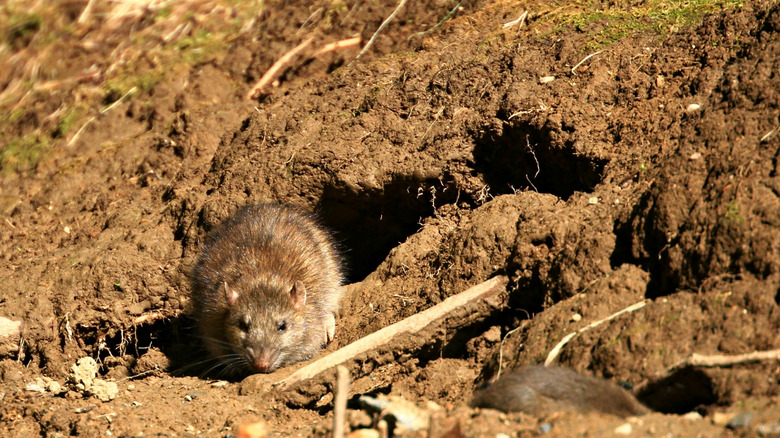
Unlike animals such as moles whose tunnels tend to be extremely extensive and long, rat burrows are usually only around 1 ½ feet deep at most. They don't tend to have a large mound of excavated dirt surrounding them either. Instead, near their 3- to 4-inch entryway, you might find the remains of the rats' recent meal, such as shells from seeds or nuts. Rats generally prefer to put their burrows in places that have a bit of cover, like against your home's foundation or under yard debris or bushes. Of course, rats could also be making holes in your yard or garden not to create a burrow but to simply dig their way towards food sources, like scraps in a compost heap.
If you've determined that your yard damage is being caused by rats, you have a few options on how to deal with them. While you can use a variety of different types of traps or even poisons to handle the pests, simply removing nearby sources of food could be enough to persuade them to move along. Check that the rodents don't have access to any food left out for pets or wild birds. And make sure that all your garbage cans and compost bins are properly secured. If you build your own compost bin or pile, consider putting hardware cloth below it so the rats can't burrow in. If you do need to resort to traps, snap traps are probably the cheapest option, like these Bigfoot traps or plastic traps from Amazon.