

Does Mulch Ever Turn Into Soil?
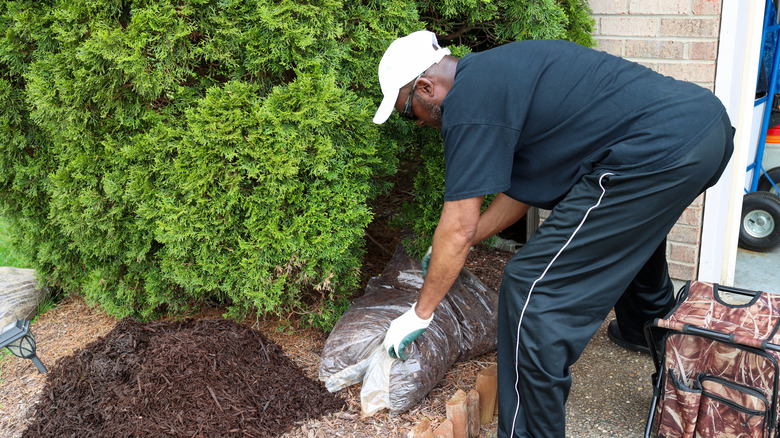
You probably put down a fresh layer of mulch in your garden almost yearly to help prevent erosion and limit weed growth. But despite all that mulch you apply, over time, it disappears to seemingly nothing. So it's understandable to wonder, does it turn into soil? And the answer is yes: As long as you're using mulch made of natural materials like wood chips or straw, it will eventually decompose and become incorporated into the soil. But soil is made of more than just broken-down plant matter. So it's more accurate to say that old mulch eventually decomposes into compost and amends your soil. Or, that it becomes a component of soil.
While it might be frustrating that the lifespan of mulch in flower beds is rarely more than a few years, it's actually great for your garden when your mulch breaks down. All that organic material incorporated into the soil doesn't just increase fertility, it also improves the structure and drainage. While there are inorganic mulches available like gravel and shredded rubber mulch, which won't break down as quickly, they lack this ability to feed and amend your soil. And in the case of rubber mulches, they may even contaminate your soil with plasticisers or heavy metals.
The elements of soil and how mulch contributes
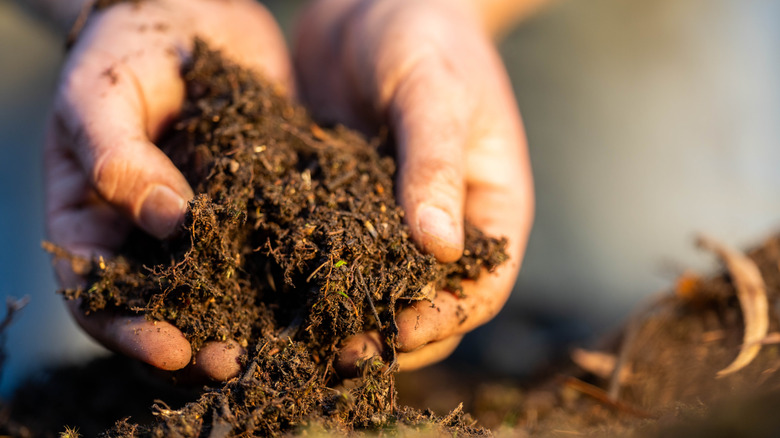
Soil is a complex mixture of small bits of minerals, in addition to both living organisms and decomposing organic material. The smallest mineral particles are clay, while the largest are sand. Healthy soil also needs to be able to hold air and water, and have some spaces (or pores) between the particles. While mulch, of course, can't break down into the clay or sand particles, it does add to the organic material in soil over time, and this helps to ensure the necessary spaces in the soil structure. Decomposing mulch can also increase the number of beneficial soil microbes.
So, if you're concerned your soil is lacking in organic material, regularly applying mulch is a great way to help it along — while getting all the other benefits like insulation from temperature extremes and reduced water loss. Straw mulch breaks down faster, usually within a couple of seasons, while wood chips can take up to four years to decompose.
Of course, you don't have to rely solely on spreading a layer of mulch and waiting years for it to break down. For a fast injection of organic matter, you can buy and add compost, either bagged, or by the cubic yard from nurseries or landscape yards. You can also make large quantities of compost yourself at home. After applying compost, you'll still want to spread mulch over the amended soil to keep it and the plants growing in it protected.