

Woman DIYs A Dreamy Backyard Transformation With Home Depot Artificial Turf
We may receive a commission on purchases made from links.
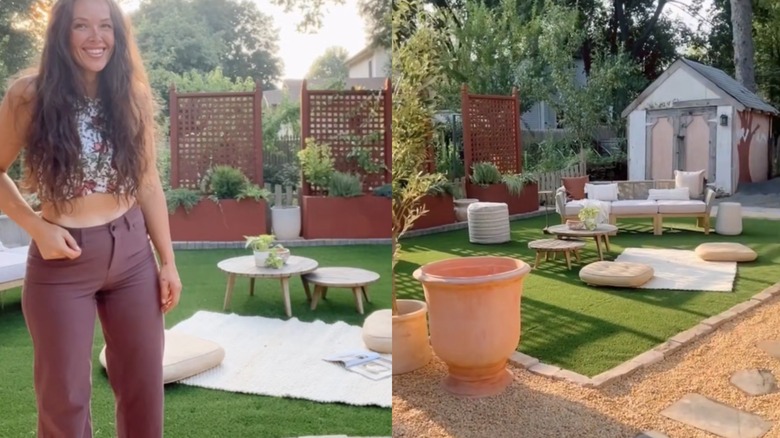
Lush and beautiful grass takes a lot of time and effort to maintain. One way to avoid all that mowing and fertilizing is by opting for a synthetic alternative instead. That's what TikToker CaraNewhart decided to do when she ditched her weedy and wild yard for artificial turf from Home Depot. And once she finished installing the turf onto the prepared spot in her yard, she was left with a no-mow yard that looks like a dreamy oasis.
Instead of laying the turf like a traditional lawn, and butting it onto her porch, CaraNewhart did something more inspired: She installed the turf almost like an area rug within the center of the yard, bordering it with bricks and then an surround of crisp gravel and pretty planters. The result? An upscale courtyard effect, with a large patch of green that looks irresistably lounge-worthy.
CaraNewhart used the Lifeproof Premium Pet Turf from Home Depot and according to her the hardest part of the project was loading it onto her truck. To replicate this project in your own yard, you'll also need some turf nails (like the Tinsky 6-Inch Turf Nails) or landscape staples, and artificial grass infill. Not only does the infill help to hold the artificial grass in place, but some types (like Envirofill) are also antimicrobial and can discourage mold growth. To prep the area where you're planning to put your turf you might also need some landscape fabric and a load of class II road base from a landscaping supply yard to create a 3-inch thick base below the turf. As far as tools go, you'll want some scissors or a box cutter, a metal tamper, and a hammer or mallet for pounding in your nails or staples.
How to create an amazing artificial turf yard
Before you can roll out your beautiful and evergreen artificial turf, you first need to clear the area. CaraNewhart opted to use a rototiller to get rid of the weeds and tree roots that were growing. The next step is to lay down some landscape fabric to prevent weeds from growing through the base. Then comes a layer of road base. Make sure it's level and 3 inches thick after you've tamped it down. Without a good base, your turf isn't likely to last as long and will be more prone to problems with drainage.
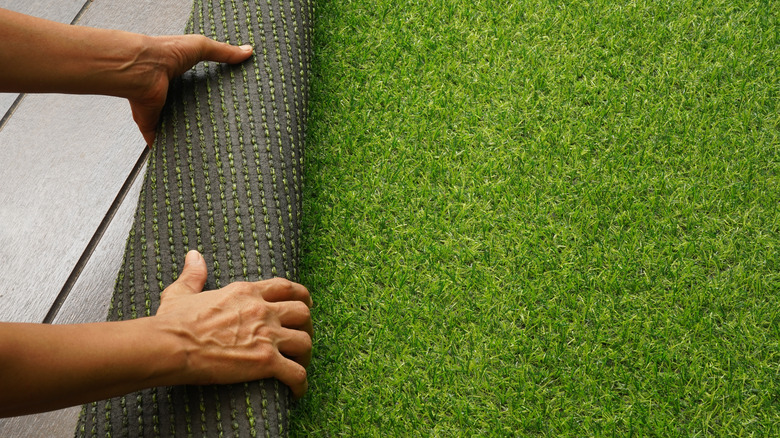
Once your base is set, then you're ready to get to work on the turf itself. Depending on the brand and type you purchased, one roll of turf likely only measures 7.5 feet by 10 feet or less, so you may need to cut and piece a few rolls together. Be sure to line up the turf so there aren't any gaps between the pieces. Additionally, check that all the blades of grass are going in the same direction. Give the turf an hour or two in the sun to warm before adhering it down. After securing your artificial turf, trim off any excess using scissors or a box cutter. Next drive in the landscape staples and/or nails along the edges. After that it's just a matter of spreading your infill. How much infill you should use depends on how thick your turf is and how much you expect to use it. But in general, you'll need between 1½ and 4 pounds of infill for each square foot.
How to keep the gravel edging and artificial turf looking great
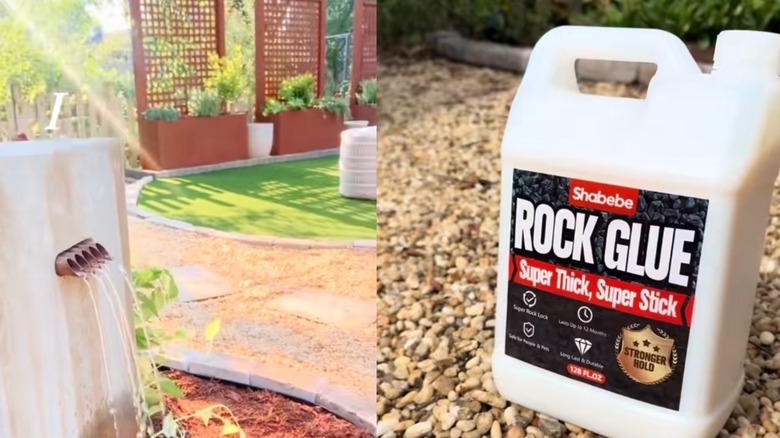
The beauty of CaraNewhart's backyard comes not just from the artificial turf, but also the gravel areas surrounding it. They help to elevate the design from a simple patch of synthetic grass to a cohesive and elegant yard. Unfortunately, CaraNewhart noted in a follow-up video that the paths were surprisingly high maintenance, as they regularly become covered with leaves and dirt. While there are a few ways to clean landscape gravel, CaraNewhart discovered that by using diluted Shabebe Rock Glue in a sprayer to secure the gravel, it was then easy to use a leaf blower to clear away any debris without fear of disturbing the stones. Since the glue should last for about a year, CaraNewhart's paths are now as easy to care for her turf. If you decide to try rock glue on your own gravel areas, make sure to read the label carefully for information on whether or not to dilute the product, and don't forget to start by testing it in a less visible part of your yard to ensure it won't stain.
Speaking of stains, while artificial turf saves you from ever having to mow and ensures that you'll always have a green lawn, it's not entirely maintenance-free. It's important to keep your turf free of leaves and other yard debris, to clean up any pet droppings, and hose away urine. If you notice any stains or marks, you can use a mixture of 1 teaspoon of gentle fabric detergent in a pint of warm water. Staying on top of cleaning can help limit synthetic turf odors and stains. With proper care, it should last a minimum of 8 years, and many brands even offer 15- or 18-year warranties.