

The Case For Putting Straw Over Your Garden During Fall
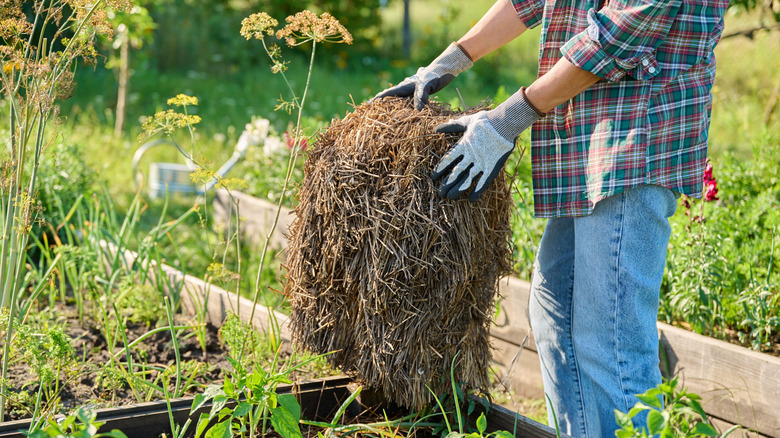
As the days grow shorter, the weather colder, and visits from in-laws more imminent, you may be turning an eye toward protecting both your peace and your plants. While you're completing your fall task checklist and preparing your garden for winter snow, don't forget that your soil can benefit from some protection from the cold, as can the roots of plants like less hardy perennials, new transplants, and bulbs. Though there are several choices for winter mulching materials, straw is particularly well-suited to vegetable gardens and tender plants. A layer of straw mulch can help keep soil temperatures steady, prevent winter weather erosion, soil compaction, and water loss, insulate roots, and protect perennials from frost heave.
Not only is it a superb insulator, but unlike some mulch options (such as grass clippings or unshredded leaves), straw doesn't form a dense mat. It's less likely to smother plants and creates a porous layer that still allows for good airflow. As a bonus, it's generally pretty easy to find and isn't terribly expensive, especially if you can source it from a nearby farm. If you happen to be growing strawberries this fall, straw is an especially smart choice for winter insulation, as not only can it help prevent frost heaving, it'll also protect next year's flower buds from extreme cold.
When and how to mulch with straw for winter
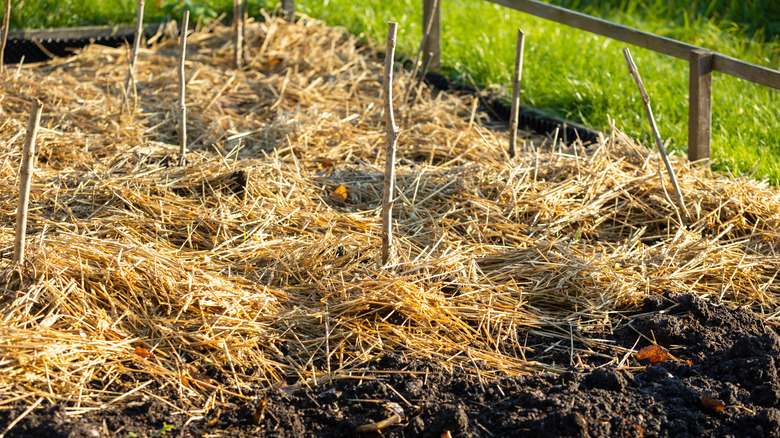
If you're a Type A personality when it comes to completing seasonal tasks, you may need to resist the urge to get your winter mulching done right away: If you apply the mulch too early, you could risk creating conditions conducive to disease or smothering, or trigger spring bulbs to break dormancy prematurely. Wait until the ground starts to freeze, or keep an eye on the weather and mulch in advance of a significant drop in temperatures. When the time comes, apply 2 to 4 inches of protective straw over bare vegetable beds and around perennials that might benefit from the extra protection. Don't mulch the trunks of trees and shrubs, as they may rot due to moisture buildup or suffer damage from sheltering rodents. For strawberries, however, you can protect them from cold temperatures by covering the plants themselves after they go dormant.
Before you get started, make sure you source straw, not hay. Straw is essentially the byproduct of harvested grain: the dry stalks left over once the grain has been cut. Hay, on the other hand, is full of seedheads, so come spring you'll probably have a lot of unwanted plants to pull up. There may still be some seeds in straw, but far less than in hay. If you want to eliminate any remaining seeds, place the bales where you'll eventually want to spread them out and soak them down with water or leave them in the rain, about a month in advance. This will give any seeds time to germinate and die off when you spread the mulch. Just make sure you don't leave the bales too long, or the straw could rot.