

14 Plants That Grow The Most In A Single Week
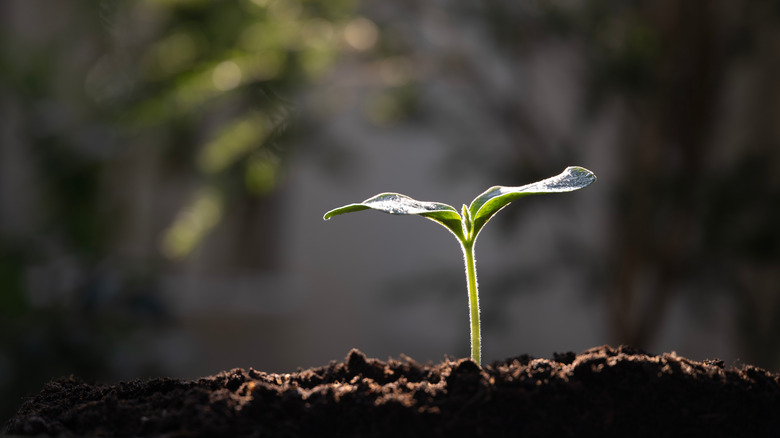
For the gardener, a plant with an exceptionally fast growth rate can be a blessing or a curse —depending on whether the plant is welcome or a weed. Some of the speediest growers can put out not only multiple inches of growth in a single week, but multiple feet! Fast-growing flowering plants, like zinnias and certain hibiscus varieties, can offer a quicker visual payoff for the impatient gardener, filling in empty spots sooner. For edible crops like corn or zucchini, super-speed growth can be a boon not only because the harvest might come earlier, but because they might more easily outcompete weeds and "outrun" inclement weather-related stress and frosts later in the season.
Of course, on the opposite side of the coin, many of the fast-growing plants on this list, like the notorious plant kudzu and the aquatic hydrilla, are problematic or invasive. As a general rule, most (though not all) invasive plants tend to be particularly fast growers, which means they can quickly take up so much physical space and use up so many resources that native plants end up losing the race. In fact, some fast-growing plant species that become invasive outside of their native range can essentially undergo an evolutionary mega-boost and become even faster!
Bamboo
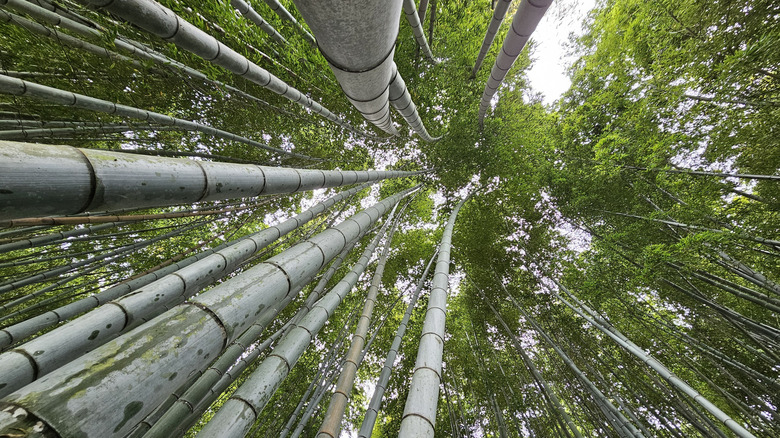
There are over 1,200 species across some 70 genera of bamboo, and some among them hold the Guinness World Record holder for fastest-growing plant on Earth. In fact, some bamboo species can grow as much as a meter per day — that adds up to over 275 inches in a week! It's easy to see why this fast-growing member of the grass family is used for myriad purposes ranging from food to furniture, baskets to building material. The downside: the species that spreads via underground runners can be highly invasive and difficult to eradicate.
Kudzu
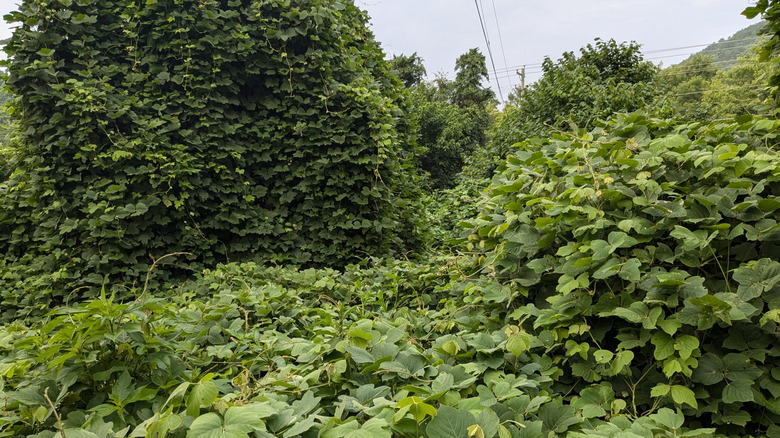
If you live in the southern states, you're probably more familiar with kudzu (Pueraria montana) than you'd like to be. At the time of this Japanese vine's Dust Bowl-era popularization as a miraculous erosion control plant, there was probably no way of knowing that it would come to be known as the "vine that ate the South," but its foot-per-day growth rate has since proved to be more than many native plants can compete with. That's potentially 7 feet in a week — 60 feet in a single growing season — and some of its stems can be as much as 4 inches in diameter.
Inch plant
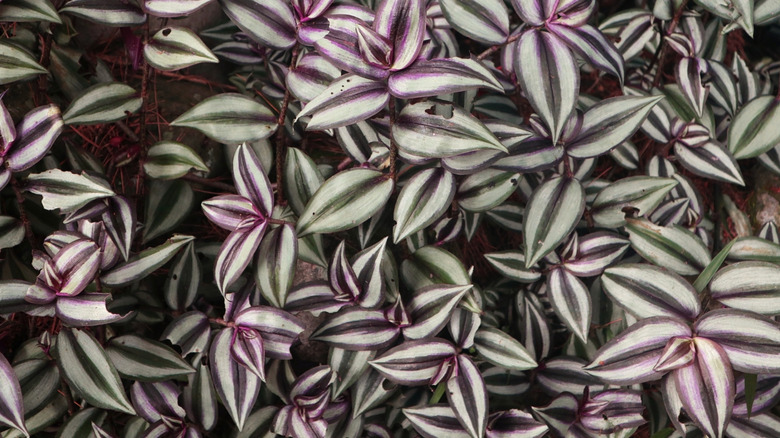
Not all fast growers are mind-bogglingly large. The inch plant (Tradescantia zebrina), also known as the zebra plant or wandering dude, can put on about an inch of growth per week (hence its common name). While this may not seem as startling a rate as bamboo or kudzu at first blush, it's proportionally pretty impressive given the plant's typical size, which tops out at about 2 feet wide. It's hardy in USDA Zones 9 through 11, but it's often grown as a houseplant or an annual in cooler climates. It's also easy to propagate and share.
Duckweed
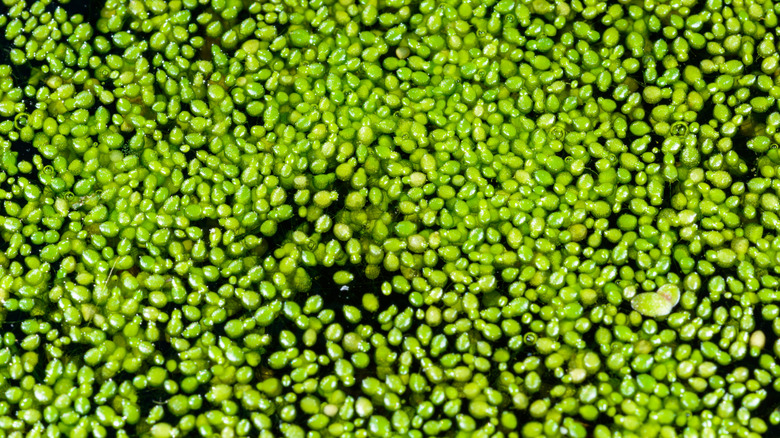
One of the fastest-growing plants in the world is also its smallest flowering plant! This record-holding "twofer" is duckweed or watermeal (Wolffia spp.) — yes, those tiny green floaties that form blankets on the surfaces of ponds. When it's comfortable, it can double in size in as little as two days (although each dot is about 1/42-inch by 1/85-inch, it adds up). This quick growth can be a headache for backyard pond owners. However, it's also one of the most protein-rich edible plants on Earth, and its rapid growth and protein content make it a potential food source for space travel.
Rhubarb (under certain conditions)
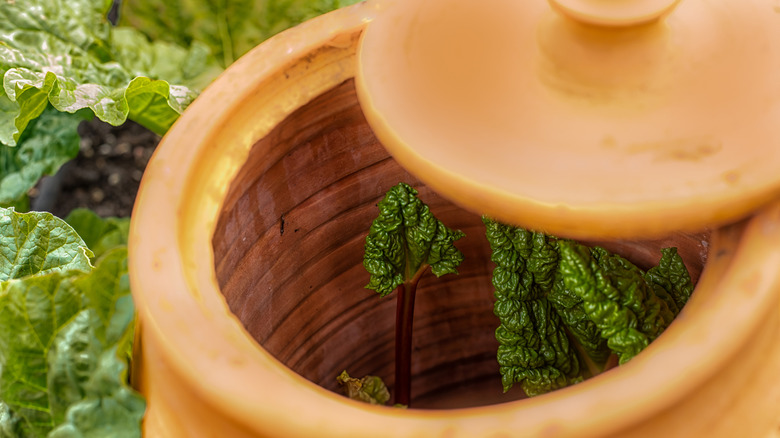
In general, though it's quite easy to grow, you'll still have to wait about two or three years after planting rhubarb (Rheum rhabarbarum) to harvest its stalks for pie. However, there is a way to make it grow so quickly that some people swear they can hear it happening. This method, known as "forcing," has been in use by English growers for centuries. Basically, to force rhubarb, you put it in the dark just after it begins its growth cycle. It will grow incredibly quickly in an effort to find light, as much as an inch per day, or 7 inches per week.
Hydrilla
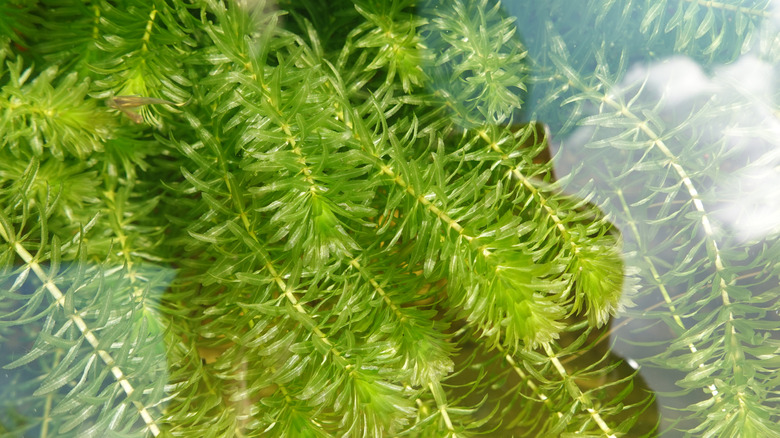
Arguably the underwater counterpart of kudzu in its impact, hydrilla (Hydrilla verticillata) was introduced to U.S. waterways as discarded aquarium plants and has since become one of the worst invasive plants in the country. Reportedly, it can grow anywhere from an inch to 2.9 inches in a day (potentially 20-plus inches per week), creating smothering mats that block out the light native plants need to survive. Like its namesake, the legendary monster of Greek mythology, the Hydra, hydrilla can grow new plants from each broken-off piece of itself, and it can even weather cold winters thanks to its tubers.
Eastern cottonwood
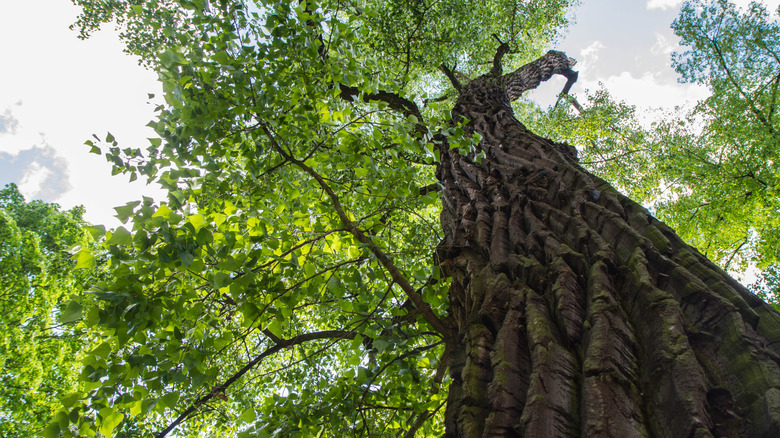
The eastern cottonwood (Populus deltoides) holds the record for the fastest-growing U.S. native tree. This member of the willow family can attain towering heights, easily reaching 75 to 100 feet (though it may possibly grow to a whopping 200 feet tall!). You wouldn't guess it from their first three weeks of life, as they tend to start slow, but after that, they can shoot up as much as 13 feet in year one. If you spread that out over 52-ish weeks, that's about 3 inches per week. It can be a messy selection to plant near your home, though.
Zinnias
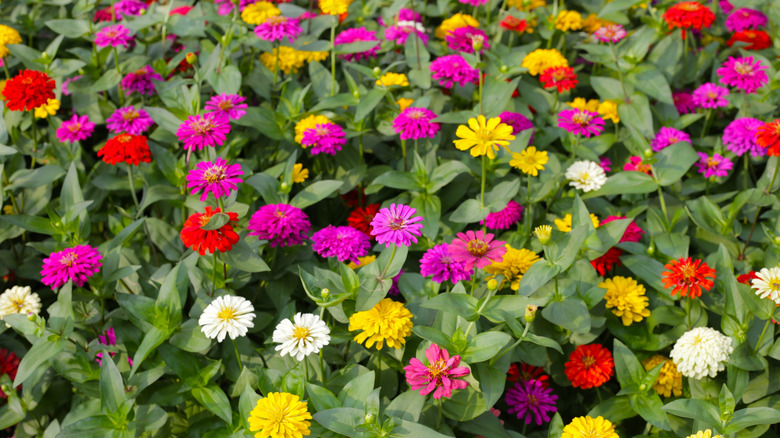
Cheerful, showy zinnias (Zinnia spp.) are extremely easy annuals to grow from directly-sown seed. Plus, they're quick to flower, delivering blooms in around six weeks given ideal growing conditions. There are myriad zinnia varieties available in heights ranging from 8 inches to 4 feet. If you calculate the growth rate of the 4-foot 'California Giant' variety across the 80 or so days it takes to reach maturity, that's more than 11 inches per week. Sow these beauties in zones 3 through 10 in full sun, and prune your zinnias properly for the best bounty.
Palmer amaranth
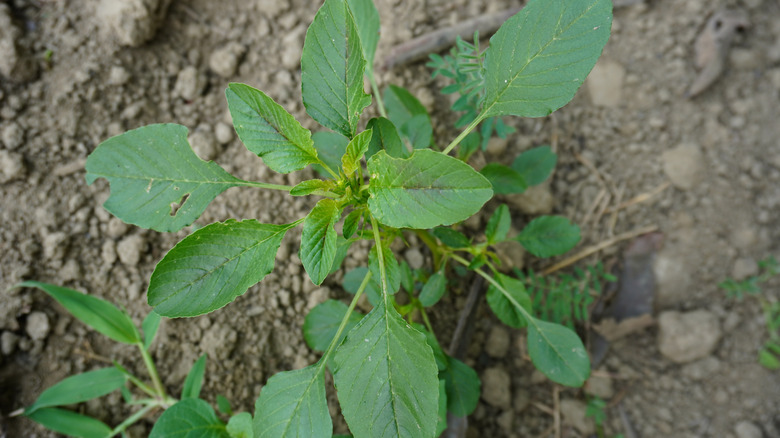
With a 2-inch-per-day growth rate (14 inches a week), Palmer amaranth (Amaranthus palmeri) is an aggressive invader not only in parts of the U.S., but also in Europe and Australia. It's actually sort of a U.S. native, hailing from the southwestern U.S. and northern areas of Mexico, but it has quickly colonized the southeastern and midwestern U.S., becoming a major problem for cotton and soybean crops in particular. In addition to their speedy growth, each female plant can produce up to a million seeds; plus, populations are becoming resistant to many herbicides.
Zucchini
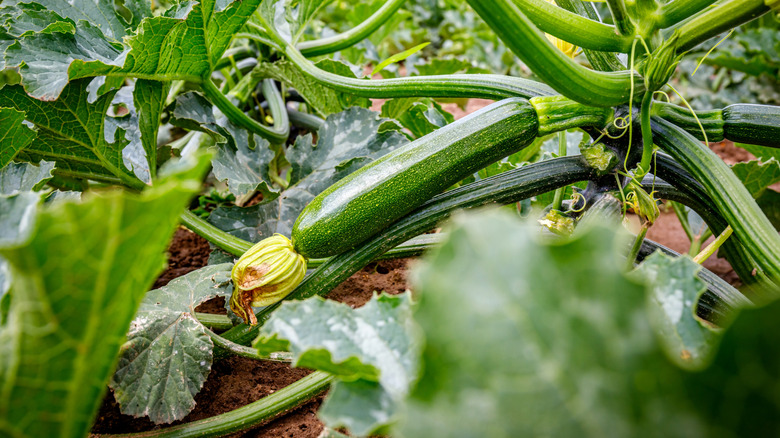
If you've ever planted this popular summer squash, you're probably already aware that zucchini (Cucurbita spp.) is a fast grower. It can put out a couple of inches of new growth per day, potentially delivering 14 new inches of vine in a week. Once it starts producing fruit at around the 60-day mark, you'll likely be hard-pressed to keep up with the prolific harvest before the fruits become too large, tough, and tasteless to enjoy. In fact, to thin their zucchini harvest, some people celebrate an unofficial "Sneak Some Zucchini Onto Your Neighbor's Porch" Day on August 8!
Mile-a-minute plant
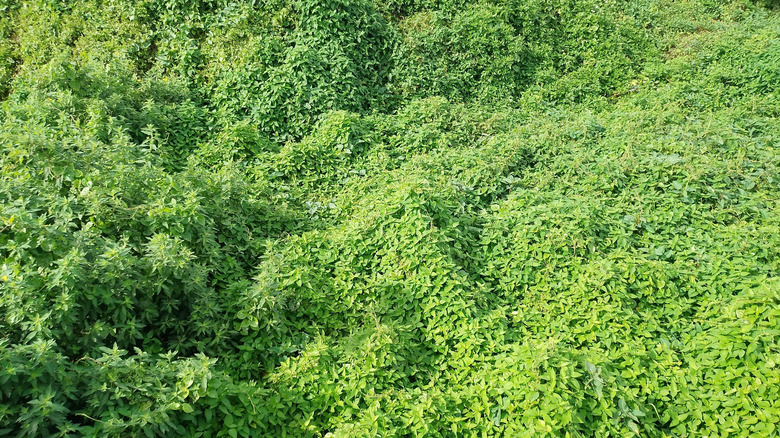
From its common name, mile-a-minute plant, it probably comes as no surprise that Persicaria perfoliata can put out 6 inches of new growth a day, or 42 inches per week. An invasive vine from Asia, its super-fast, dense growth means it easily colonizes areas and smothers native plants. The mile-a-minute plant can be a pain to get under control, literally: there are recurved barbs on its stems and the undersides of leaves. These brutal barbs give this problematic annual its other common name — tearthumb — so make sure you wear some tough gloves if you're trying to manually remove it.
Corn
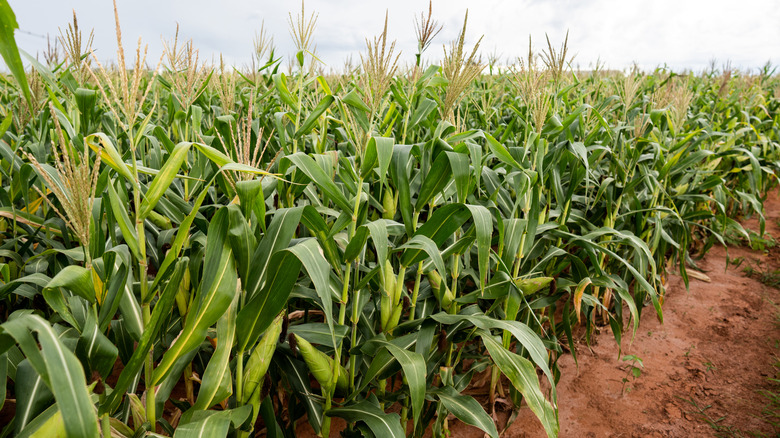
One of the most important and widely grown crops in the U.S., corn (Zea mays) is also an overachiever when it comes to growth speed. When it's particularly comfortable, it can shoot up as much as 4 inches in a day — that's 28 inches in a single week. If you live in zones 2 through 11 and get plenty of sun, you can plant your own corn. Just keep in mind that because it's pollinated by the wind, you need to have enough corn plants (at least 10) close enough to one another to ensure good kernel development.
Hardy hibiscus
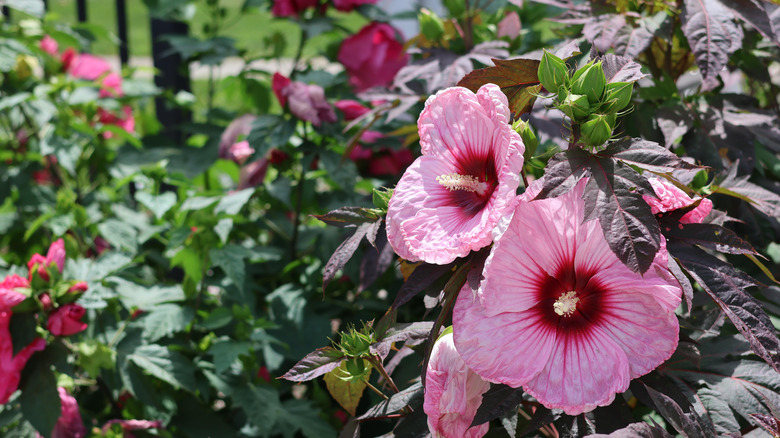
Though their more cold-sensitive tropical counterparts are typically only grown as annuals or houseplants in much of the U.S., hardy hibiscus hybrids (Muenchhusia x hybrid) are fully capable of surviving winters as cold as zone 4. One particular series, Summerific, can grow an inch per day (7 inches per week) in its preferred growing conditions. These perennials, whose lineage can be traced to the U.S. native rose mallow (Hibiscus moscheutos), produce huge flowers with a tropical vibe. Summerific and other hardy hibiscus varieties like to be planted in full sun and provided with soil rich in organic matter.
Wild cucumber
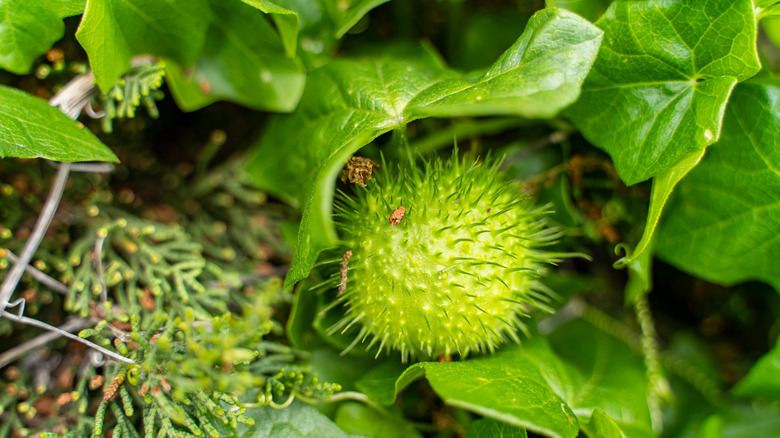
If you've spent time hiking in California, especially in chaparral environments right after it rains, you've probably encountered a sprawling vine clambering over other plants or across the ground. Wild cucumber, or manroot (Marah spp.), is a native vine in the same family as cucumbers — although you shouldn't try to eat its spiky, bitter fruits unless you're trying to revisit last night's dinner. During the rainy season, wild cucumber is among the fastest-growing plants in its range, growing several inches a day (now multiply "several" across a week!). It dies back to wait out dry times via a massive underground tuber.