

Do This To Your Garden Bed In October And Thank Yourself Later
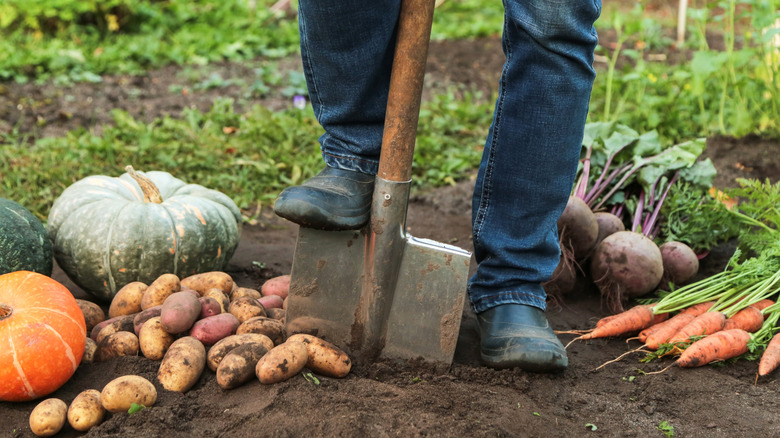
October can be a surprisingly productive and colorful time in your planting beds thanks to things like cheerful marigolds and tasty winter squash. But it's also when you need to start planning for next year's plot. One of the best things you can do for your garden at this time is to give it a good clean. Removing dead, dying, or diseased plants from your beds now can help reduce the pests and diseases that might otherwise cause problems next spring.
If you live in an area with cold winters, it's easy to assume that no bugs, fungal spores, or other plant diseases could possibly survive the snow and ice, but that's not the case. Everything from squash bugs to diseases like strawberry leaf spot could spend the winter hiding out, just waiting to return with a vengeance as soon as temperatures warm again. By clearing out old debris and dead plants, you'll prevent these pests from having a cozy spot to survive the winter in your garden, which should give you a leg up next growing season. A good fall garden cleanup is a great gift to give to your future self.
It's worth keeping in mind, however, that annual beds and perennial beds may need different treatment during your October cleanup session. After all, many beneficial native insects overwinter in the dead stems of herbaceous perennials like coneflowers, and you don't want to destroy their cozy homes. So focus most of your cleaning energy on your annual planting areas, and only remove perennial plants if they're clearly infested or diseased.
How to clean your annual garden beds in fall to ensure a healthier spring
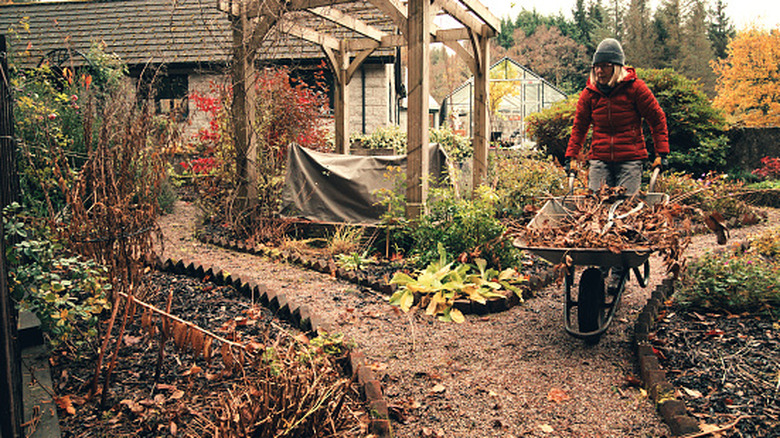
To begin your October cleanup, start by digging out the dead plants. Try to get the roots as well, since any diseases they have could easily spread to your soil. If the lovely annuals you enjoyed all summer are infected with disease, they should be put in the garbage, since your backyard compost bin may not be hot enough to kill the fungus or bacteria. As long as you don't see any signs of disease, though, old plants can be tossed into the compost to help nourish your garden the following year.
Next, check for and remove any tomatoes or other fruits and veggies that may have fallen onto the soil. Not only could these attract mice and other pests, but the seeds could sprout in spring and create serious confusion. If you still have some fall annual flowers blooming or pumpkins ripening, make a note to come back and clean up these plants once the cold and frost finally finish them off. While you're clearing out your old plants, you should also take the time to remove and clean trellises, tomato cages, and drip lines. Keeping these in your shed or garage through the winter months should help extend their lifespan. When you're finished with the cleanup, remember to disinfect tools and reusable items that contacted diseased plants before storing them.
Once you have nothing but pristine soil left in your beds, it's easy to think you're done. But it's never a good idea to leave the dirt uncovered until spring, as it can be vulnerable to erosion or opportunistic weed seeds. So finish off your October maintenance cleanup by putting down new mulch to help protect the soil during the winter months.