

What's The Best Fertilizer For Centipede Grass?
We may receive a commission on purchases made from links.
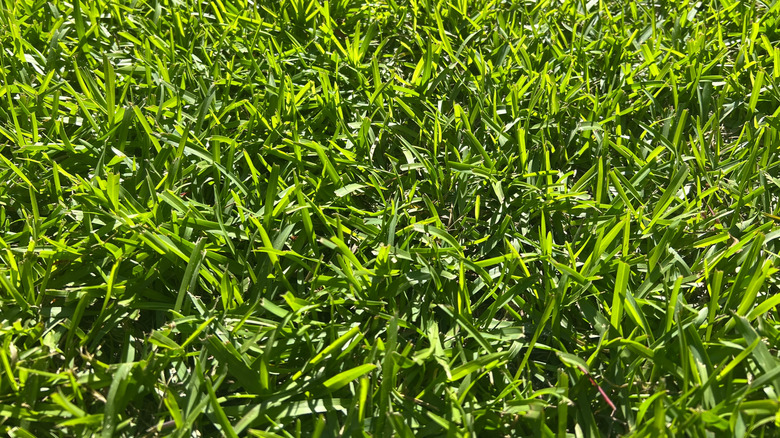
Centipede grass can make for amazing lawns. Not only is it low-maintenance and a gorgeous green color, but it also requires less fertilizer than most other types. You may not even need to feed it at all if you added a decent amount of fertilizer the previous year or a soil test shows your yard already has the necessary nutrients. If you want to provide your centipede grass with a bit of a boost, though, it's important to avoid using anything too heavy in nitrogen or phosphorus. Unless you have a soil test that suggests otherwise, it's generally best to use a 15-0-15 fertilizer. This means the product contains, by weight, 15% nitrogen and potassium and has no phosphorus.
If you're used to caring for a different type of lawn, the lower needs of easy-to-care-for centipede grass could be a bit of an adjustment. But it all makes sense once you realize that this grass is able to store nutrients and doesn't need a lot of fertilizer. A little can go a long way.
You should apply a nitrogen-based supplement to your centipede grass only in spring and summer. A product like Simple Lawn Solution's 15-0-15 Liquid Lawn Fertilizer will work well. Avoid these amendments in autumn, though, as excessive growth during or right before cold weather could set your grass up for damage and dieback. In addition to nitrogen fertilizer in warmer weather, the North Carolina Cooperative Extension suggests applying a potassium-only product like Espoma Potash Fertilizer in September, as it may help the grass survive winter.
How to meet your centipede grass's fertilizer and amendment needs
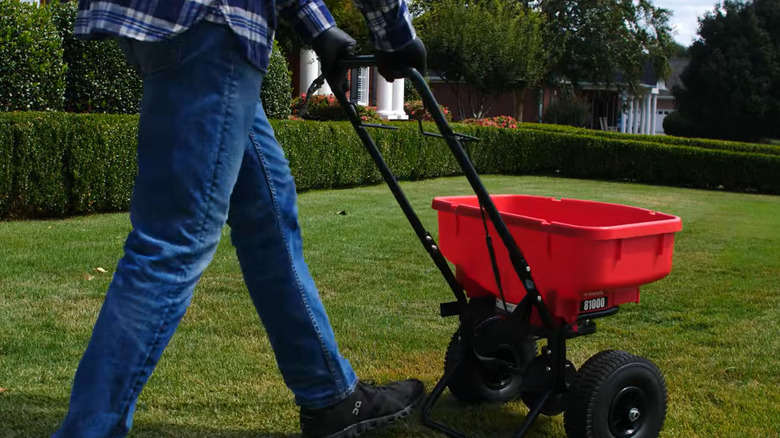
In addition to using the right fertilizer, you'll also want to avoid spreading it too thickly on your centipede grass lawn. In many cases, you only need a pound or 2 of nitrogen to fertilize 1000 square feet for a full year. Unless your soil is especially sandy, even 2 pounds could be excessive. The University of Missouri offers a calculator to help you determine how much fertilizer you need. Assuming you want to apply 1 pound of nitrogen, use 6.7 pounds of a 15-0-15 ammendment for a 1000-square-foot lawn. Adding half the fertilizer in May and the other half in August is generally ideal. The exact timing, though, will depend on your climate, since you don't want to fertilize when soil temperatures are below 65 degrees Fahrenheit.
If, despite your best efforts, your centipede grass lawn turns yellowish outside of the cold months, that could suggest that your soil is too alkaline and may have an iron deficiency. (In some cases, this can also be caused by too much phosphorus, but that shouldn't be an issue if you're using the right fertilizer.) Sulfur can help this problem, but it takes time to lower the pH. You can add a chelated iron or iron sulfate product, like Earth Science IronPro, to help the lawn stay green while you wait for the issue to resolve, but make sure to read the product's instructions carefully. They generally need to be diluted, and some brands contain nitrogen, which your lawn may already have its fill of.