

This Stunning Hydrangea Blooms Until The First Frost
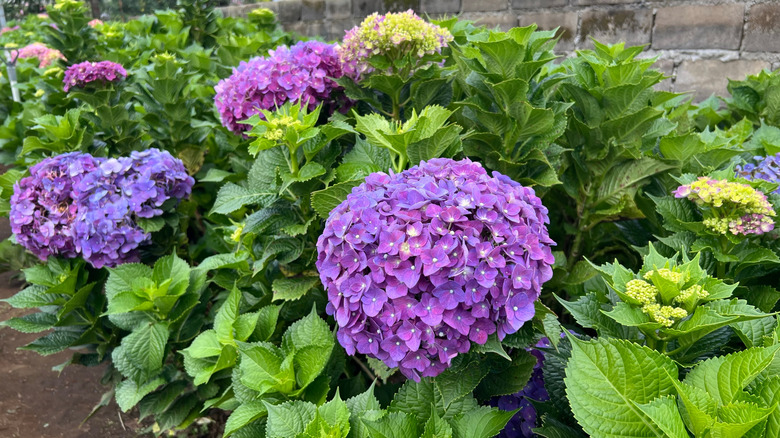
Bigleaf hydrangeas offer some of the most impressive flowers around. In full bloom, they can transform a landscape into a whimsical wonderland. Unfortunately, many of the varieties only flower in spring, leaving you with just foliage by the time late summer and autumn come around. That doesn't have to be the case if you opt for the right cultivar, though. The stunning 'Endless Summer' (Hydrangea macrophylla 'Bailmer') hydrangea can bloom repeatedly from spring through late summer and into fall, sometimes continuing until the first frost with proper care. Planting one of these flowering shrubs is a great way to bring more color to your yard through the cooler months.
The secret to 'Endless Summer's' seemingly non-stop blooms is that, unlike a traditional bigleaf hydrangea, it's remontant. This means flowers bloom on both new and old wood — the buds for the early-season blooms form on the previous year's wood, and the late-summer and fall buds develop on new growth. While you have to be careful with pruning to ensure you get the most blooms possible, 'Endless Summer' and other reblooming hydrangeas are a perfect way to keep your garden full of color well into autumn, when many other plants have finished flowering.
How to care for an 'Endless Summer' hydrangea in your landscape
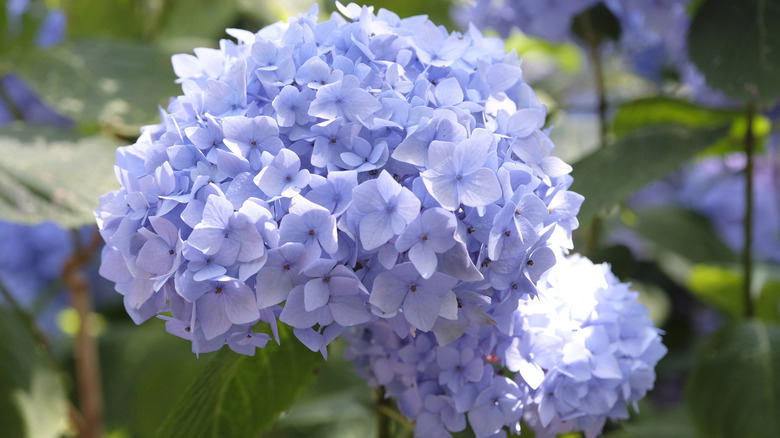
Hardy in zones 4 through 9, 'Endless Summer' hydrangeas thrive in full to part sun locations, though the hotter your summers tend to be, the more shade you'll likely need to provide. Morning sun with afternoon shade can be particularly helpful in hot climates. Like other varieties, they require moist and fertile soil to thrive. These hydrangeas' blooms can be either pink or blue depending on the pH of your soil. Acidic soil encourages blue flowers, while alkaline conditions lead to pink blooms.
When it comes to pruning, less is more. You can cut back your 'Endless Summer' hydrangeas as soon as they finish blooming in the spring if you think they need shaping. And be sure to remove your spring blooms once they're faded to ensure plenty of fall flowers. If you live in a colder part of the plant's hardiness zone (generally zone 6 or lower), you may find the winter temperatures damage your spring flower buds. You should still, though, get plenty of late-summer and fall blooms on the new wood. This is one of the biggest advantages of a reblooming hydrangea: even when winter takes a toll on the older buds, new growth can produce a fresh round of flowers.