

Landscaper Fixes His Bumpy Lawn With Only Home Depot Finds

We may receive a commission on purchases made from links.
A smooth, level lawn can be the perfect place for your family and friends to gather. While a yard full of bumps and dips may look a bit ugly, it can also be a challenge to mow. Even worse, it can potentially lead to falls, sprained ankles, and other injuries. Leveling a bumpy lawn takes work and money, but it's more than worth it. Landscaper George North of Princess Cut Lawn Care shared a clever fix using only affordable Home Depot finds, including sand, potting mix, a landscape rake, and a push broom. The basic idea is to use a sand-and-soil mixture as a thin topdressing, gradually filling shallow dips without burying the grass.
For the project, North recommends picking up the supplies mentioned above, along with a large cart or wheelbarrow to help move them. While topsoil could be used instead of potting mix, North notes that this could potentially introduce weed seeds into a lawn. That's why he recommends opting for a mix that doesn't contain pathogens or unwanted seeds, ideally something like Miracle-Gro Moisture Control. He also pointed out that while the best sand to use is medium-grit, play sand is a more affordable option that also works well.
How to level your lawn with your Home Depot supplies
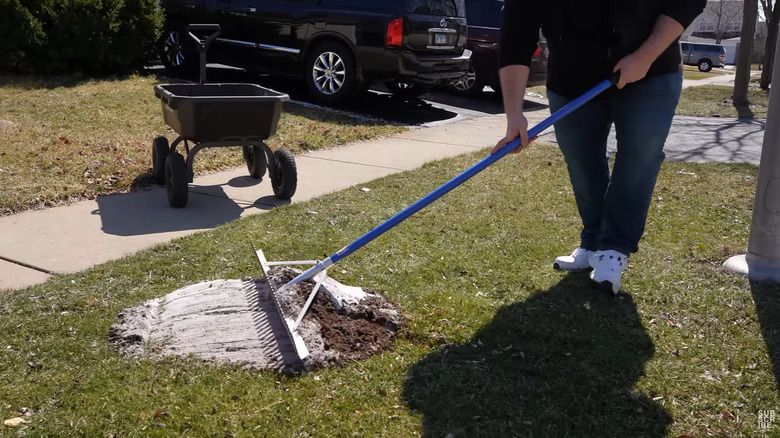
First, mow your grass to make it nice and short. Then mix your sand and potting soil, using about a third of a 50-quart bag of potting mix for every 100 pounds of sand. It's a good idea to work in small batches to keep the mixture consistent as you go. Pour a small amount of your mixture over an area with a hole or divot. Next, use the flat side of your landscape rake to spread and level the sand-and-potting-soil mix. Then use the push broom to spread it further and help ensure the grass isn't smothered under the sand and dirt. North uses a push broom as an alternative to a lawn leveling rake.
The best time to level your lawn is when the grass is actively growing and can make its way through the top mixture, which North recommends doing in late summer, ideally around August or September. You don't want to do it when your grass is dormant or during periods of extreme heat or drought.
Before you start your leveling project, consider what factors could have caused your lawn's bumps in the first place. While it's possible they're just caused by natural freeze and thaw cycles, if there are underlying problems such as unwanted critters damaging your lawn or issues with your septic field, make sure to solve those problems first. Otherwise, you could spend the time and money leveling it only to have the bumps return.