

The Best Natural Weed Killer For Your Patio Isn't Vinegar Or Salt
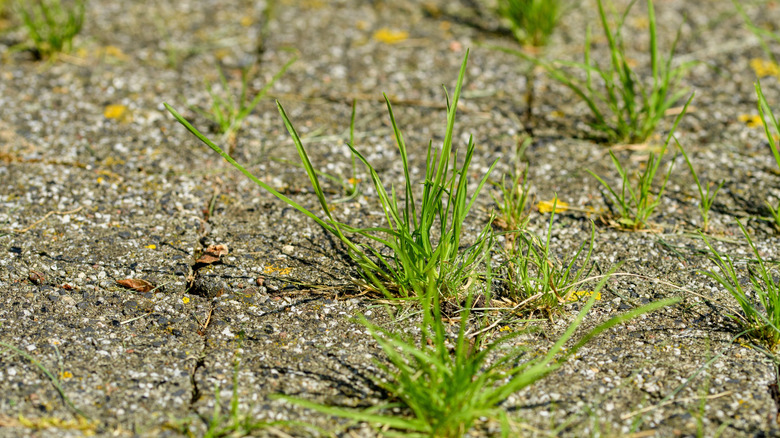
Grasses and other weeds popping up between patio stones can turn your elegant outdoor space into an unsightly mess. There are a variety of options for dealing with this annoyance. You could simply pull the unwanted growth out, use an herbicide, or turn to home remedy weed killers like using salt or vinegar. There's one even more eco-friendly option to consider, though — try killing them with boiling water.
Unlike some other solutions, boiling water is extremely accessible, fairly effective when used correctly, and once it cools, it's completely harmless to you, your family, and your local pollinators. It's important to note that it only works as a contact herbicide, and you'll likely need multiple treatments since it won't kill the roots. It works especially well on young annual weeds. It's unlikely to completely kill perennial problem plants, though.
Of course, boiling water isn't risk-free — you need to be careful not to burn yourself. Additionally, any other plants the hot water hits could be damaged, but that's unlikely when dealing with weeds between your patio pavers. However, if you also use hot water to kill unwanted grass in flower beds, be very careful to target only the problem growth.
How to use boiling water to kill weeds on your patio
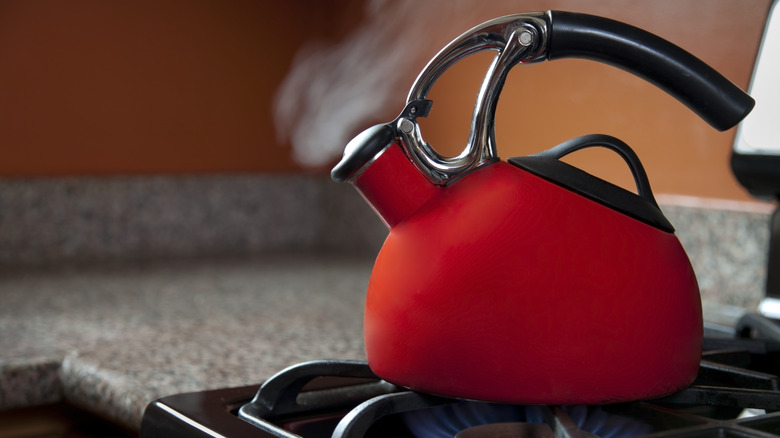
Using boiling water to eliminate patio weeds is surprisingly simple. Once the water has reached a boil, it's just a matter of carefully pouring it over the top of the pesky greenery growing through the cracks. Be sure to thoroughly drench the weeds, and avoid splashing yourself in the process. A tea kettle is the safest way to heat and transport your scorching hot water to your patio. One with a controlled pouring spout makes it easier to direct water precisely where you need it while keeping yourself safe. You'll likely need to apply more boiling water in about a week if you want to keep your patio weed-free.
As useful as this strategy is, pulling weeds, though, remains the best long-term method for eradication, especially if you can remove the roots. If you're struggling to get a good grip on the vegetation, a flat-head screwdriver can be surprisingly useful for digging them out of tight spaces. Loosen the soil around the plant, work underneath it, and pull out as much of the root as possible. Then pour boiling water over any remaining growth. This targeted approach can help keep patio cracks tidy without resorting to salt or vinegar.