

The Average Lifespan Of Your Gardening Mulch
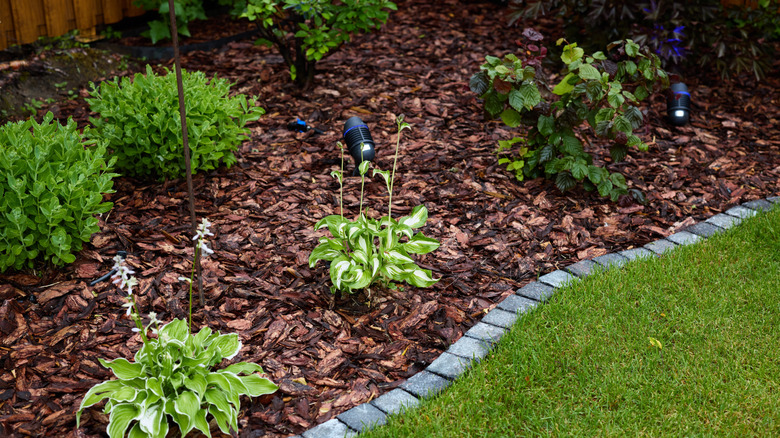
A garden without mulch likely isn't much of a garden. The landscape cover helps plants thrive by suppressing weeds, keeping soil moist, and regulating soil temperature. Unfortunately, it's not a one-and-done addition. How often you need to replenish organic mulch depends largely on what you spread in your garden. Fast-decomposing options, such as shredded leaves, will need to be replenished annually, while sturdier materials like wood chips can remain effective for much longer, up to three years. In other words, the average lifespan of your garden's protective cover is roughly one to three years for common organic options, although some types can last considerably longer.
Shredded rubber mulch is an inorganic type that's chosen for its durability rather than its ability to enrich the garden. Materials like this can stay in place for years with little decomposition, but they don't add organic matter to the soil like natural mulches do. Organic options like shredded leaves and pine bark, though, gradually break down and can improve soil quality, giving them an advantage beyond simply covering the ground. You'll have to decide if you're comfortable with the environmental and potential health downsides of shredded rubber in your garden. Small stones or pebbles are another inorganic, long-lasting mulch option, though they can cause your plants to become extremely hot, and weed seeds often germinate on top of them.
How to tell if your mulch needs to be replaced
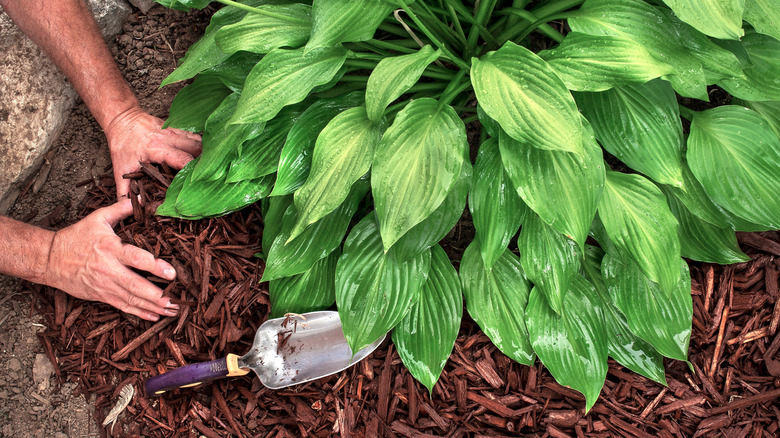
When you apply mulch, you should generally add it at a thickness of about 2 to 4 inches over the top of your soil. This is the perfect amount of mulch to prevent weeds and protect your plants from drought and temperature extremes. Once your mulch has settled and decomposed to the point where little is left and weeds regularly grow through, you'll want to add more. Don't simply pile new mulch on top of the old layer every year, and avoid creating mulch volcanoes around trees. Instead, check the depth first and refresh only what's needed. Using more than a few inches of mulch can restrict airflow to the soil and potentially create problems around plant roots.
If your goal is to find a long-lasting organic option for your garden, you may want to consider melaleuca mulch. A University of Florida study found it more durable and longer-lasting than other options, including pine bark and cypress. It's also less likely to attract termites than other wood mulches. Even with a longer-lasting product, however, inspect the bed periodically rather than relying on a fixed replacement date.