

Not Rose Of Sharon: The Ideal Fall Flowering Shrub To Plant In The Shade
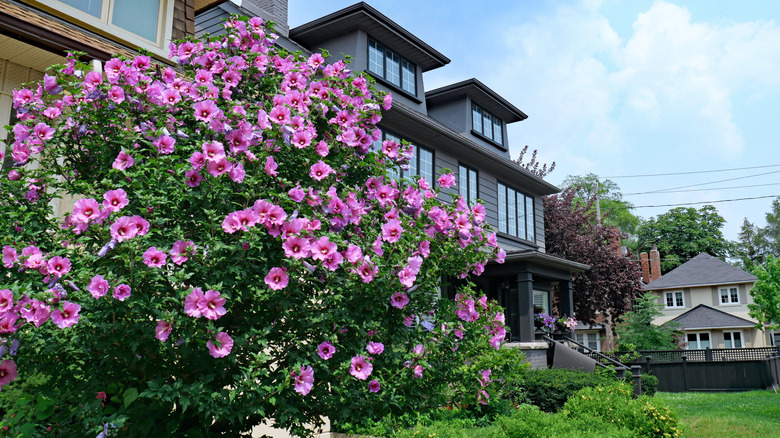
Rose of Sharon (Hibiscus syriacus) shrubs are classic landscape plants with massive, colorful blooms. While they may seem like an ideal way to add summer and fall color to shady spots in your yard, they can be fairly aggressive and are even invasive in some states. But just because you might want to pass on rose of Sharon plants doesn't mean you have to give up on late-season flowers. If you're considering digging up and removing your rose of Sharon and you want a dramatic flowering replacement that can handle shade and keep blooming into fall, hardy fuchsia (Fuchsia magellanica) is an excellent alternative.
There are a wide variety of species within the fuchsia genus, but if you need something to replace a rose of Sharon in your landscape, your best bet is to opt for a hardy fuchsia. They're perennial in zones 5 through 10, unlike many other types, which grow best as annuals in much of the United States. This shrub is ideal for adding drama to your fall garden because it boasts beautiful red flowers that hang upside down and bloom from summer until your first frost. In addition to tolerating a bit of cool weather, the plant needs less sunlight than rose of Sharon. That makes it particularly useful for gardens where a sunny planting spot simply isn't available.
How to care for hardy fuchsias in your shady landscape
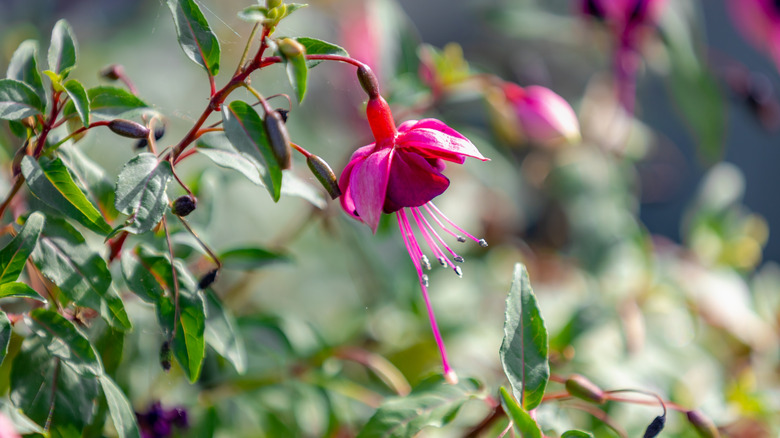
Native to South America, hardy fuchsias can flourish and bloom with as little as two hours a day of direct sun, though they also grow well in full sun locations. For the best performance in a shady garden, give the shrub filtered light or a few hours of morning sun rather than deep shade. They thrive in well-draining soil, and the biggest factor you'll need to keep in mind when growing your gorgeous them is that these beauties are heavy feeders. That means you'll need to provide them with fertile growing media and stay on top of fertilizing them regularly. If your soil is nutrient-deficient, adding compost can help these plants thrive.
If you live in an area with cold winters, don't be alarmed if your hardy fuchsias behave as an herbaceous perennial, dying back to the roots each year. As long as the base of the plant is mulched and well-protected, the shrub should pop back up again in spring. With a size that can reach between 5 and 10 feet tall and wide, this shrub is similar in size to the rose of Sharon and, much like that plant, is also a huge hit with pollinators. Hummingbirds especially love the red tubular blooms.