

The Dramatic, Old-Fashioned Flower Gardeners Rarely Grow Anymore
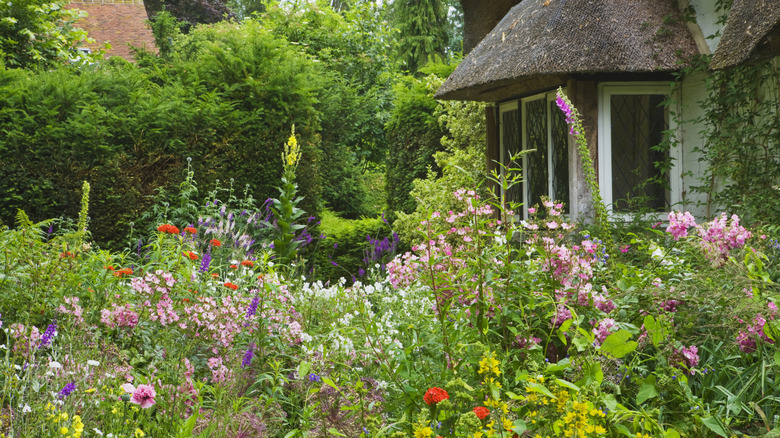
Whether you're looking for something unexpected to add to your yard or you want to install a landscape feature that complements a Victorian or colonial home, plenty of old-fashioned, rarely grown flowers fit this bill. But few have quite the visual drama of love-lies-bleeding (Amaranthus caudatus). Its history spans continents, and while it has fallen somewhat out of fashion, it has more than earned an evaluation for a spot in your ornamental or edible garden.
Native to parts of Central and South America, love-lies-bleeding, like many other types of amaranth, is an excellent grain crop and was long used as such in Mesoamerica. The Victorians adored it for its massive, dramatic tassel-like red blooms, though. Even Thomas Jefferson and William Wordsworth were fans of this unusual plant.
Despite an ostentatious appearance, love-lies-bleeding is actually fairly easy to grow in your flower bed as an annual, as long as you meet its soil and light needs. It can fit nicely into an edible landscape, since amaranth has a long history as a food crop. And the blooms aren't just great for adding drama to gardens; they also make great cut or dried flowers. Their long, dangling form can add height and movement to arrangements, which may explain why they're still used in bridal bouquets.
How to grow and enjoy love-lies-bleeding in your own garden
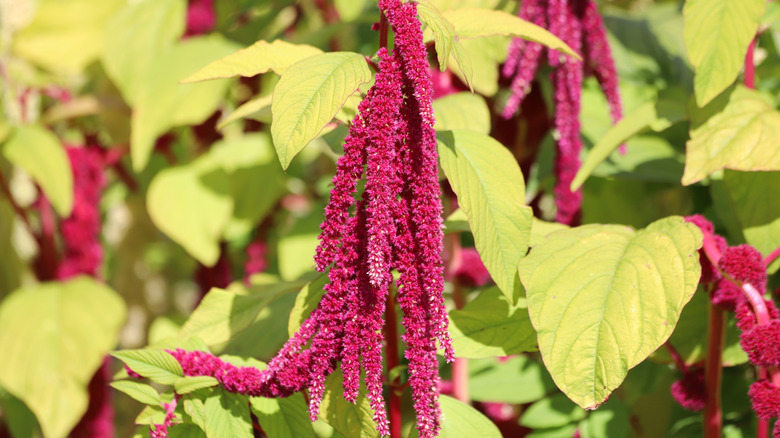
You may have a tough time finding a love-lies-bleeding plant to add to your garden, but luckily it grows well from seeds, which are widely available. Just wait until after your last frost to direct-sow them. This warm-season annual needs full sun to thrive and flourishes in moist but well-draining growing media. If you're concerned your soil is too compacted or has drainage issues, consider amending it with compost to improve the structure before sowing. Once established, it's fairly drought-tolerant. You'll also find that these flowers can reseed themselves in your garden every year. So planting this beauty once could provide you with years of unique blooms.
With a height of about 5 feet, it could be an ideal addition to the back of sunny annual borders. Give it plenty of room for those distinctive flower tassels to trail without getting swallowed up by shorter plants. If you adore the shape and drama of love-lies-bleeding's flowers but aren't thrilled with the red color, there's also a green cultivar available called 'Viridis' and a pale pink variety named 'Coral Fountain'.
And it's not just gardeners who will be taken by this gorgeous flower. Love-lies-bleeding is also a huge hit with butterflies and birds. It's a great way to attract finches to your yard.