

The Herb Combo That Looks Great Together In Fall Gardens
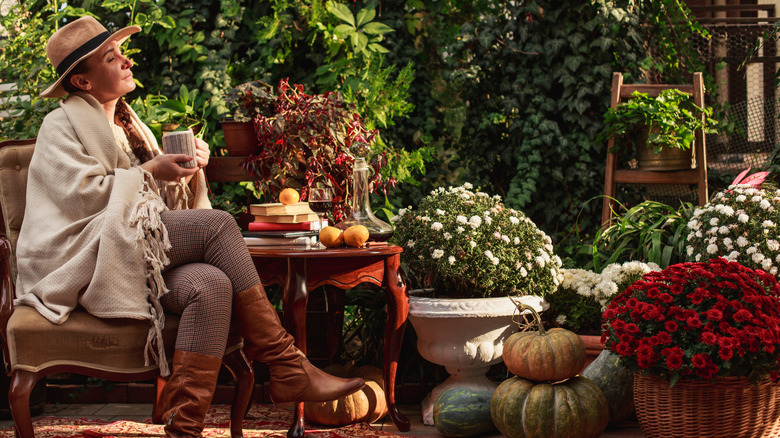
While you might focus more on warming spices than culinary greens once autumn rolls around, your herb garden can still pull its weight in both the kitchen and the landscape. The right combination of classic herbs can elevate your fall recipes while keeping your garden looking attractive as the season winds down. Three amazing plants that thrive together and look gorgeous well into the autumn months are sage, rosemary, and thyme.
Sage (Salvia officinalis), rosemary (Salvia rosmarinus), and thyme (Thymus vulgaris) are all beautiful and fragrant herbs that can bring elegance to your autumn garden thanks to their evergreen foliage. Unlike many seasonal garden plants that fade as temperatures drop, these keep providing texture and greenery. As long as your climate allows, you can often grow them together, as they have similar needs. (You might be tempted to add parsley to evoke the classic song "Scarborough Fair", but it actually requires different growing conditions than the others, making it a poor companion.)
Since all three herbs are perennials, you'll be able to enjoy them year after year. That makes this combination especially useful if you want a planting that looks good without starting from scratch every spring.
How to grow sage, rosemary, and thyme together in the garden
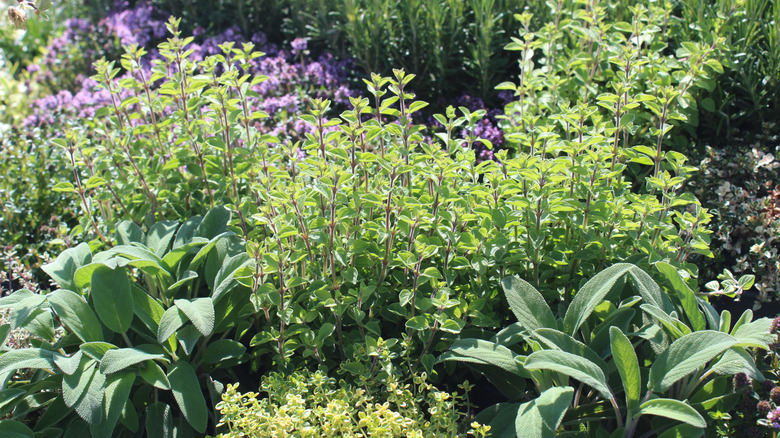
Sage, rosemary, and thyme are native to the Mediterranean, so it's no surprise they thrive together. They all appreciate full sun locations and require well-draining soil. While sage can handle part shade if necessary, the other two herbs can't. All three plants are prone to root rot in overly wet soil and are drought-tolerant once established, so avoid overwatering. They are all deer-resistant as well, so you shouldn't have to worry about hungry herbivores.
With sage generally growing to about 2 feet tall and thyme only reaching heights of about a foot, it's best to plant them in front of rosemary, which can often reach 6 feet unless you opt for a shorter cultivar. That difference in stature creates a layered arrangement, with the taller rosemary in back and the lower-growing herbs filling in the foreground. You can also place thyme along the edge of a bed or path, where its low habit is easier to appreciate.
Be aware that while sage is hardy in zones 4 through 8 and thyme flourishes in zones 5 through 9, rosemary, unfortunately, can normally survive winters outdoors only in zones 8 and higher. So if you live in a colder area, you'll need to protect your rosemary plants from the winter chill by either bringing them indoors before the first frost or growing a cultivar like 'Arp', which is hardy down to at least zone 7. And if you decide to grow your gorgeous autumnal herb combo in a container, be aware that plants grown in pots are generally about two zones less cold-tolerant than those grown in the ground.