

5 Plants To Grow If You Like Ferns
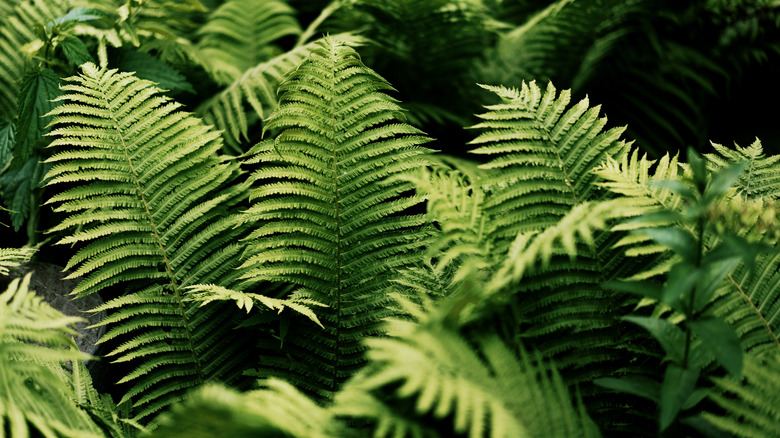
Ferns are amazing plants for creating calm and beauty in an outdoor space. Their delicate, feathery foliage and easy-to-grow nature make them ideal for shadier spots in your garden, especially if you want to create a woodland vibe. But you don't have to stick with ferns to get that same lacy, textured look — there are plenty of plants to choose from. You can even have that beautiful fern-like foliage in sunny areas by growing things like yarrow and Mexican feather grass.
What makes ferns so appealing isn't just their ability to thrive in shade, though that's certainly a bonus. Their finely divided leaves add texture, movement, and a soft, almost feathery quality to a planting bed, while their foliage can remain attractive long after many flowers have faded. The options below capture some of that same visual magic, but each brings something different. Some can handle blazing sun and dry soil, others make excellent ground covers or climbers, and one can even grow into a sizable shrub. In other words, you can borrow the fern look without being limited to its preferred growing conditions, size, or shape.
Yarrow boasts fern-like foliage in addition to its elegant flowers
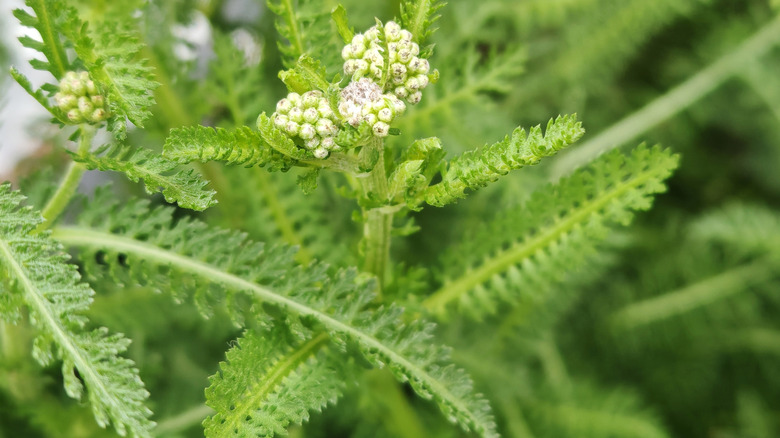
Yarrow (Achillea millefolium) is generally grown for its heads of tiny but gorgeous flowers that bloom for much of the summer. But that's far from its only appeal. It also has delicate fern-like leaves that can bring beauty to your landscape when the flowers aren't in bloom. Best of all, yarrow plants are conveniently easy to care for and low-maintenance.
Hardy in zones 3 through 9, this plant, unlike most ferns, thrives in full sun. It also appreciates relatively dry, well-draining soil. This makes it perfect for adding a fern-like touch to a drought-tolerant, sunny garden. Yarrow dies back to its roots each year, so you may want to pair it with plants that can provide winter structure and interest. At 1 to 3 feet tall, it's a great option for the front or middle of many garden beds and borders. Keep an eye on it, though, as it can spread aggressively and compete with nearby plants.
Brass buttons bring beautiful foliage and unique blooms
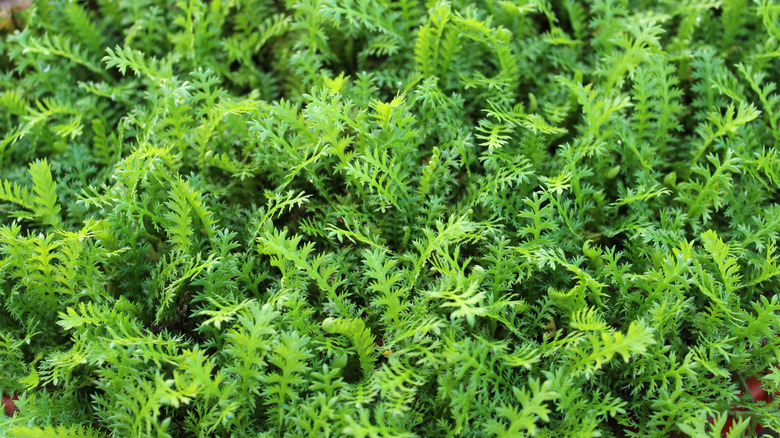
If you've ever wished you could use miniature ferns as a ground cover even in sunny parts of your garden, then brass buttons (Leptinella squalida) might be the plant for you. This unique species is native to New Zealand and is hardy in USDA zones 4 through 10. At a height of only about 2 inches and with some ability to handle foot traffic, it could even make a good lawn alternative. Its finely textured foliage creates a soft, fern-like carpet, while the 'Platt's Black' cultivar offers dark, almost black foliage for a dramatic twist.
Brass buttons flower with bold yellow blooms in June and July, adding an extra pop of color to your ground cover. The plants can handle a range of soil types, though they need a moist growing medium to thrive. That moisture requirement sets it apart from drought-tolerant options on this list, so it's best suited to areas that don't dry out quickly. Be aware that these plants can be aggressive because they spread by rhizomes and form dense mats. Give them room to spread or use a barrier if you don't want them creeping into neighboring beds.
Cypress vine offers ferny foliage on a vine with gorgeous flowers
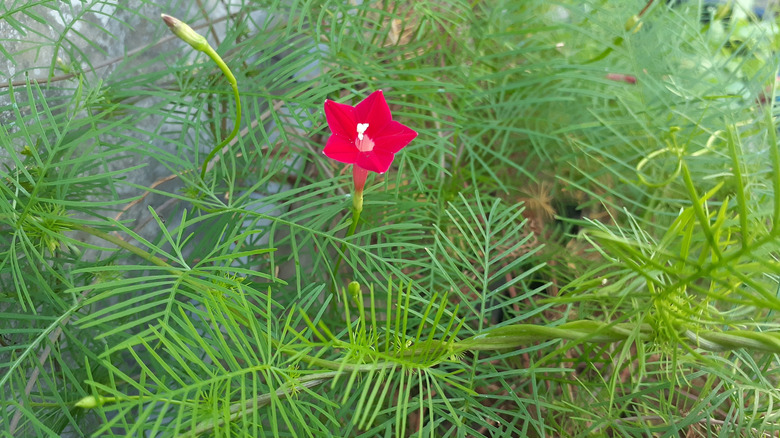
Have you ever looked at a fern and wished it could be a vine instead? If you have, the cypress vine (Ipomoea quamoclit) could be the plant for you. This fast-growing vine doesn't just have star-shaped red flowers that provide blooms all summer long; it also boasts fern-like leaves for you to admire. While it's only hardy in zones 11 and higher, it self-seeds easily, so you'll be able to enjoy it as an annual year after year in colder regions.
Native to South America and Mexico, cypress vine isn't normally considered invasive in the United States, though gardeners in Florida and other warmer areas should use caution due to its aggressive nature. It thrives in full sun locations and appreciates well-draining soil. It's a fairly resilient plant and only needs regular water and occasional applications of balanced fertilizer to flourish and bloom. Make sure to give your cypress vine something to climb, like a DIY garden trellis, since it can grow 10 feet or more in a single summer.
Sweet fern, despite not being a true fern, is a great garden addition
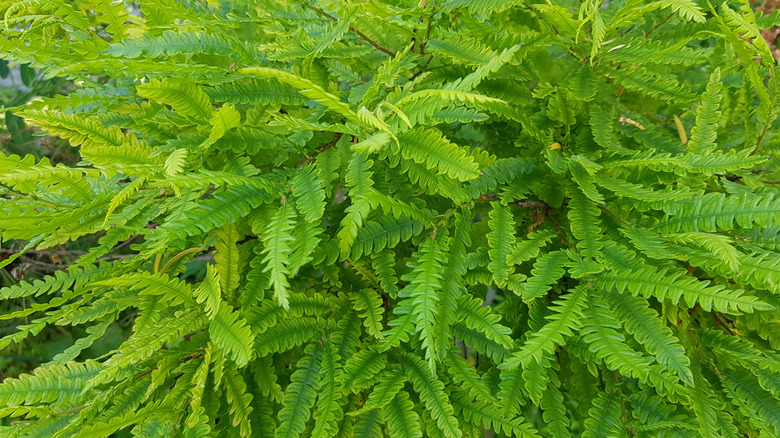
Don't let the name fool you; while sweet ferns (Comptonia peregrina) are quite charming and smell great, they're actually not ferns. Instead, they're woody perennial shrubs that are native to Northeastern North America. As their name suggests, they bear an impressive resemblance to ferns. Their narrow, finely divided leaves give them the fern-like appearance you're after, but on a much larger scale. And with a height of about 5 feet and an 8-foot spread, they could be perfect if your garden calls for something large and showy.
Hardy in USDA zones 2 through 6, sweet ferns are great for colder regions. They thrive in part shade or full sun and tolerate both droughty and wet soil. While they don't have especially dramatic flowers, their catkin-style blooms are a huge hit with pollinators. And even better, they can actually fix nitrogen. That means they need less fertilizer than many other landscape plants while also adding ecological value to the garden.
Mexican feather grass brings elegant fronds even to drought-prone areas
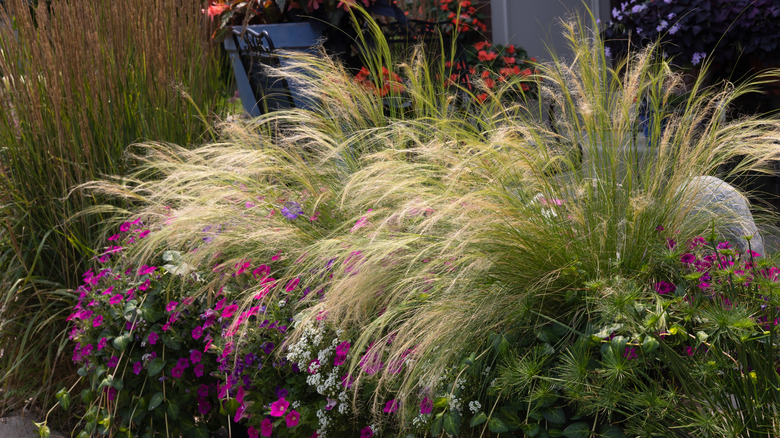
Native to Mexico, Texas, and New Mexico, Mexican feather grass (Nassella tenuissima) could be the ideal fern alternative for gardeners in drought-prone locations. It's hardy in USDA zones 7 through 10, though you can still grow it as an annual in colder regions. When growing it as a perennial, prune back the top ⅓ of the grass in late winter to help prepare it for fresh spring growth.
Mexican feather grass flourishes in full sun to part shade spots and needs well-draining soil. It also struggles with high humidity. With a height of only about 2 feet tall, clumps of this gorgeous grass are perfect for adding a textural element to your xeriscaped landscape. Its fine, flowing blades provide the same airy movement that makes fern foliage so appealing, but with a much greater tolerance for dry conditions. Just be aware that this plant is becoming a problem in California, which is outside its native range, so gardeners there may want to consider a different ornamental grass for their landscapes. Deergrass (Muhlenbergia rigens) could be an excellent alternative in that case.