

Why Are My Hostas Growing In A Circle?
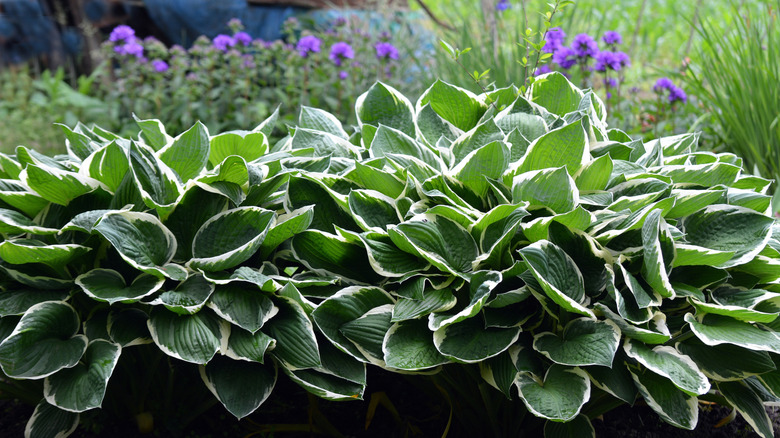
Here's a scenario: you've waited all winter and early spring for your hostas (Hosta spp.) to reemerge and make the shady areas of your yard verdant again. But when some of them start to put out leaves, you notice that their centermost part is sparse, if not completely dead-looking, while healthy foliage grows around the perimeter to form a circle. Sound familiar? You're not alone — a quick internet search will bring up plenty of forum results from baffled gardeners wondering why their hostas have suddenly gone the way of Stonehenge. To make matters more mysterious, you may also see the term "fairy ring" applied to these formations. Although there isn't much scientific evidence on this topic, this unusual pattern isn't thought to be caused by a disease or pest. Instead, mature hostas can simply become overcrowded, leaving the center of the clump weak or dead while the outer growth stays healthy. Some more good news: it is fixable!
Fairy ring is not an uncommon issue in long-established hosta plants. Clump-forming perennials can develop dead centers in their crowns over time. This also happens in certain ornamental grasses, irises, and daylilies. To mitigate this hosta-pattern baldness, you'll need to divide your clumps. It's best to perform this task every five to seven years to keep these shade-loving plants looking lush (and as an added benefit, you'll make more hostas for free while doing so!).
When and how to divide hostas
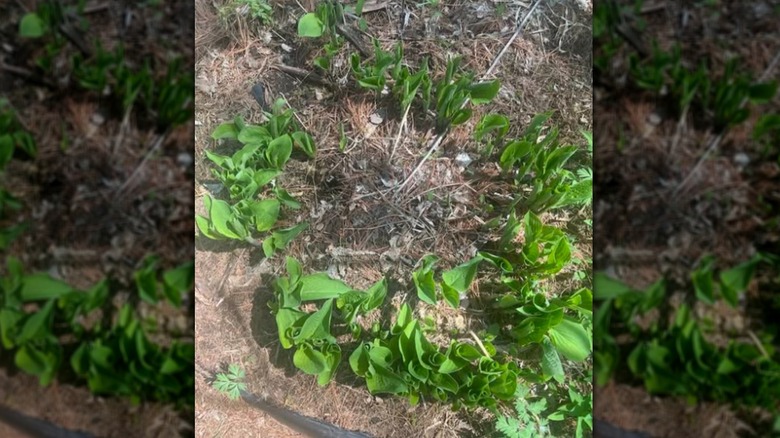
The best time of year to divide hostas is spring, just as you're starting to see leaves, or in late summer, once they've finished blooming for the season and the weather is starting to cool. If possible, wait for a cloudy day, as your newly divided plants can quickly dry out in hot, sunny weather. If the soil has been dry, water the area thoroughly leading up to the process so the roots are less stressed during the move. This is also a good time to mix in a good helping of compost to improve the planting bed and replenish organic matter.
Although some plants can be a bit of a pain to divide, hostas are generally pretty easy. Using clean, sharp tools, dig up the entire plant, leaving the circle's edge about 6 to 18 inches from the base. You'll probably cut into some roots, but don't worry too much about damaging them, as this plant will quickly and easily grow them back. Also, dividing when hostas aren't flowering lets the plants focus more energy on their roots and leaves.
Then — well, divide! Divvy up the green and growing parts of the clump and toss the dead parts of the fairy ring. Clean off some of the loose soil by shaking or hosing off the roots, then replant them where you want them, keeping the crowns about level with the soil's surface.