

The Shrub With Purple Flowers That's Nearly Impossible To Kill (It Lives For Decades)

If you're a gardener who hates to say goodbye to short-lived annual flowers every winter, a lilac shrub (Syringa spp.) can be the sort of long-term garden companion you plant once and enjoy for years. Every spring, you can look forward to enjoying its sweet-smelling purple blooms. And that's not just for a few springs — given proper care, they are notoriously long-lived and can stick around for decades, with some reportedly surpassing a couple of centuries! However, the ever-popular common lilac (S. vulgaris), for all its excellent qualities, does tend to grow quite quickly to fill all available space. This may become overwhelming, especially if you only have limited square footage to work with. For a smaller, exceptionally tough alternative, consider the dwarf Korean hybrid 'Bloomerang Dwarf Purple.' Its compact bush size doesn't mean you have to sacrifice the longevity or signature purple blooms that make lilacs so beloved.
"But wait," as a certain pitchman used to say, "there's more!" The compact 3-by-5-foot mounding form of this cultivar is only one of its positive traits. Like other members of the Bloomerang cultivar group, 'Bloomerang Dwarf Purple' blooms in spring, but then again in summer and fall. The second show may not produce quite the profusion of blossoms as the first, but it should continue offering welcome color and fragrance until the frosts come. That extended season gives this relatively small shrub an unusually big presence in the landscape. Dwarf lilacs are even ideal for growing in large containers, unlike some of their more sizable relatives. This means you can enjoy the flowers and pollinators they attract even on a patio or deck.
'Bloomerang Dwarf Purple' lilacs are cute yet tough
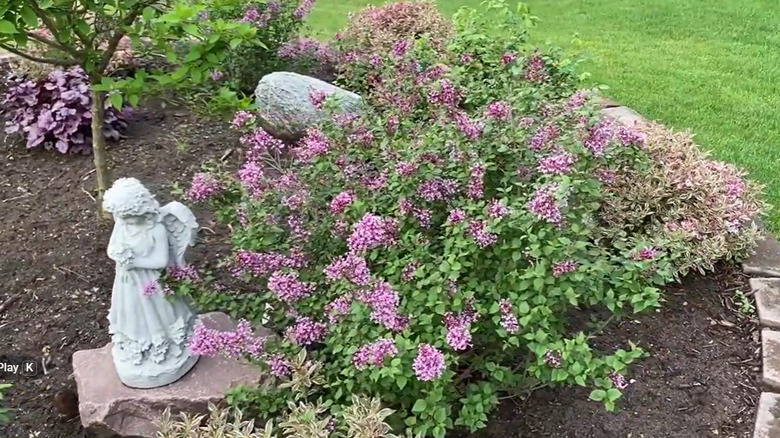
Given comfortable conditions, you can expect to enjoy your Bloomerang Dwarf Purple bush for 30 years! This cultivar is hardy in USDA Zones 3 through 7 and, like other lilacs, requires a cold-weather period for optimal blooming. It tolerates hot summers, but a cooler summer tends to result in a better rebloom. This shrub will perform best if planted in full sun in a site with soil that is moist but drains well, has good air circulation, and isn't left soggy. It isn't very fussy about whether its soil is alkaline or acidic, though. The cultivar also isn't fazed by the pollution common in urban settings, and in rural areas it won't attract the attention of deer. Powdery mildew is a frequent cosmetic problem with lilac bushes, but Bloomerang varieties may be a bit more resistant than others.
There are a few variety-specific tasks to attend to during (and between) this cultivar's bloom seasons. Bloomerang Dwarf Purple blossoms on both old and new wood, so if you want to prune these dwarf Korean lilacs without risking a less-than-stellar crop of flowers, make sure you wait to do so until just after the first round fades in spring. It's also good practice to give them a dose of fertilizer when the ground warms before their first bloom, and a second dose before rebloom. Deadheading is another effective way to boost reflowering.