

5 Beautiful Flowers That Help Repel Ticks From Your Garden
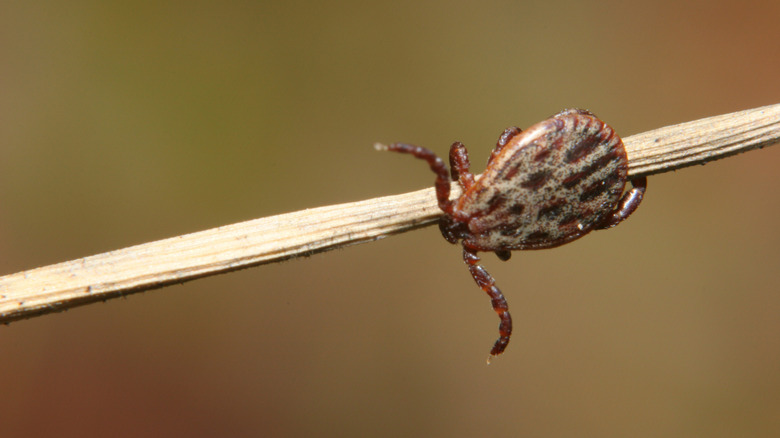
Although ticks are technically a potential risk year-round, they are most active during the warmer months of April through September. Unfortunately, this is also the time of year when humans like to be out and about enjoying the nice weather in their yards. Finding a fat, latched-on tick hiding beneath your sock cuff is an unpleasant experience in and of itself, but the real worry is that they might also transfer parasites, viruses, and other maladies to their host. Part of an effective tick-prevention plan involves habitat management, and one element of your garden that might impact the tick population is your plant selection. Certain gorgeous flowering plants like chrysanthemums and marigolds have properties that may prevent ticks from getting too comfortable in your landscape.
To be candid, there's probably no magic bullet plant that will drive away all the ticks living in your grass, and planting these flowers alone won't ward them away entirely. Any solution will work best as part of a multifaceted tick management plan. In addition to adding one or more of the following flowers to your garden, you should consider adopting additional strategies to make your yard as inhospitable as possible to these pests.
Because ticks love areas with shade and moisture, do your best to eliminate overgrown areas, leaf litter, and heavy ground cover. Mow your lawn regularly and thin out vegetation to let the sun warm damp areas. It's important to remember that tick-repelling plants aren't a substitute for personal protection, such as wearing appropriate clothing and checking yourself, children, and pets for ticks after spending time in the garden.
Lavender contains tick-repelling compounds and is unappealing to deer
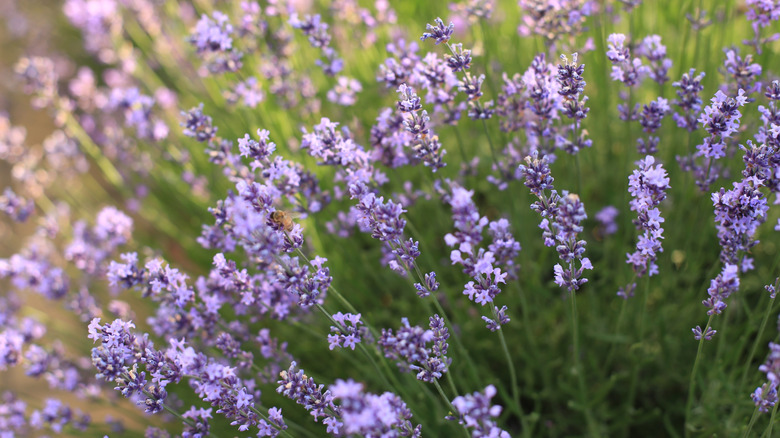
While beautiful, fragrant lavender (Lavandula angustifolia) may soothe you to sleep when incorporated into lotions or bath bombs, its scent is less appealing to pests. Plus, deer tend to avoid this strongly aromatic plant. Keeping deer out of your yard can be part of your strategy for keeping blood-sucking ticks out too, as they may hitch a ride in on browsing herbivores. Interestingly, compounds derived from lavender have also been observed to cause the same levels of tick detachment as DEET, according to a 2022 study conducted by researchers at Iowa State University and the University of Wisconsin-Madison.
Hardy in USDA Zones 5 through 9, lavender is a Mediterranean native that loves the sun and prefers its soil on the dry side. Make sure it isn't sitting around in soggy, poorly-draining soil, as this is one of the main issues that will cause it not to thrive in your garden. It also prefers good air circulation and not to be overcrowded. That open, sunny growing environment is a good fit for a tick-conscious landscape, since ticks favor humid, sheltered areas. Pollinators will love this addition to your garden, and you can enjoy it both outdoors and indoors as cut flowers or dried potpourri.
American beautyberry's crushed leaves repel Lyme-carrying ticks
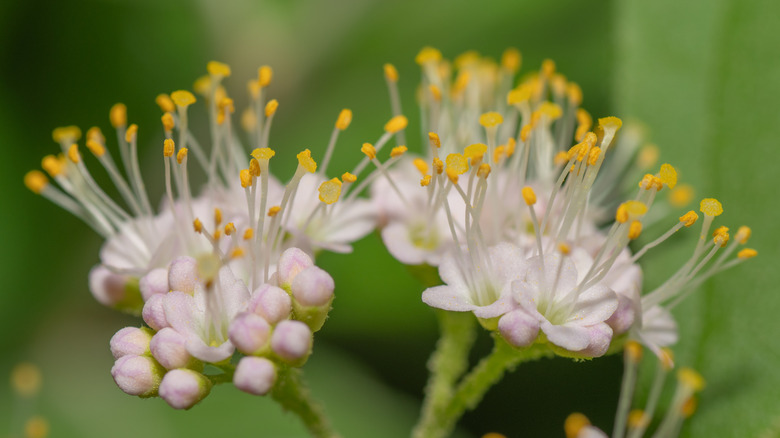
It's easy to see why the genus name of the American beautyberry's Latin binomial, Callicarpa americana, comes from the Greek words for "beautiful fruit": its berries are a brilliant, nearly neon shade of iridescent purple. Its blossoms are not to be ignored, either: ranging in color from white to pink to purple, they appear where the leaves and stem meet, creating the illusion that the branch is surrounded by them. And while the berries and flowers steal the show, the leaves are the reason this plant deserves a place on a list. When crushed, they emit compounds including callicarpenal and intermedeol that may be particularly repellent to Lyme disease-causing blacklegged ticks.
Native to central and southeastern areas of the U.S., American beautyberry is best grown in zones 6 through 10 in partial to full sun applications. It blooms in the summertime, followed by the stunning purple berries in the fall. It's a fairly tough little shrub, able to weather drought and wet soil alike and resistant to the leaf-munching activities of deer and rabbits. Try growing a few of them together: they tend to produce more of their showstopping berries when they have a friend nearby. This can look especially nice in a winter garden, as the berries will stick around long after the leaves have gone.
Chrysanthemum blooms contain a natural pesticide
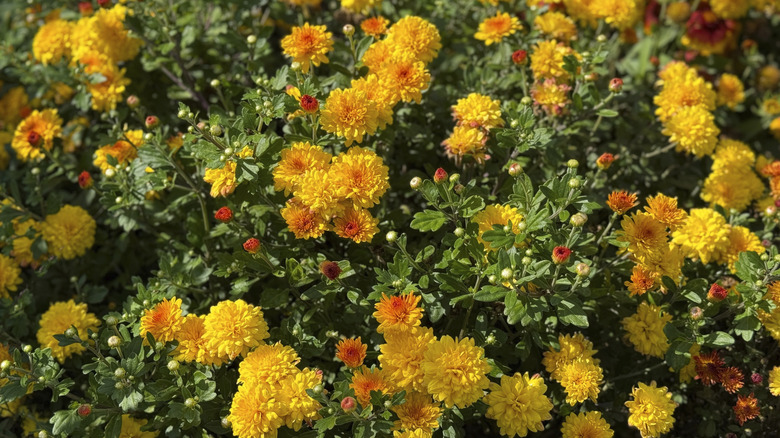
From single-layered daisy-like blooms to poofy pom-poms, there's a chrysanthemum (Chrysanthemum morifolium) for every aesthetic. But these flowers aren't just pretty: you can use chrysanthemums for pest control. When dried and crushed, they are actually a source of pyrethrum, one of the oldest known natural pesticides. The Dalmatian chrysanthemum (Tanacetum cinerariifolium) specifically is a rich source of this natural insecticide and acaricide (ticks are not insects but arachnids), which disrupts their nervous systems. Incorporating these members of the daisy family into your garden may also help repel mosquitoes, fleas, and bedbugs, as well.
Hardy in zones 3 through 9, these perennials are fairly easy to grow and deliver a burst of color in fall gardens. Chrysanthemums prefer full sun, and for the best results, try to keep the soil consistently moist. Though you'll see a proliferation of blooming mums in garden centers during the fall, if you're planning to grow them yourself long-term, you may actually want to shop for them earlier in the spring instead. This will give them more time to get established before winter. Pinch back springtime stems and buds to encourage bushier growth, but make sure you stop when they set buds in August so you can enjoy the colorful show in fall.
Geraniums smell nice to humans, not to ticks
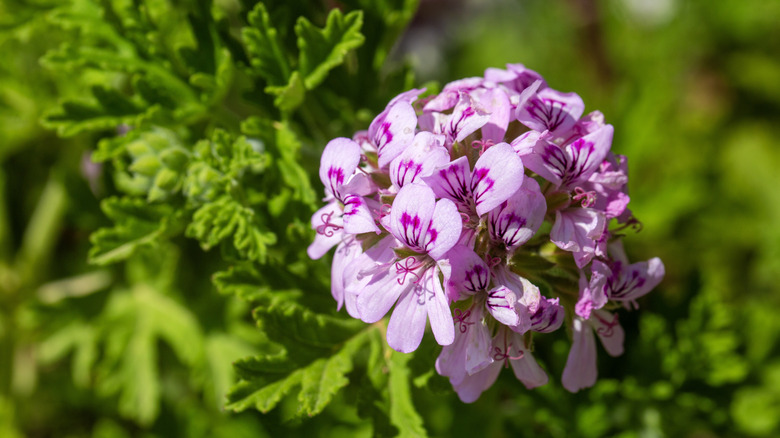
Pretty, perky, and ever-popular, geraniums (Pelargonium spp.) look fantastic in a display of potted annuals or as a colorful mass planting. And certain organic compounds found in scented geraniums may make a range of pests that rely heavily on smell less likely to hang around. In fact, essential oils found in P. graveolens were shown in a 2013 University of Mississippi study to be repellent to the Lone Star tick at varying levels. Some people also swear by sprays incorporating diluted geranium oil as a DIY deterrent when used on shoes, socks, and other places ticks like to hide. One big caveat is that geraniums are toxic to pets if ingested, so if you have a plant-nibbling pooch, you may want to give them a pass.
Although they are technically tender perennials in warm climates like those found in their native South African range or zones 10-11, geraniums are typically grown as annuals in cooler climates (though they can be overwintered indoors!). These flowers love the sun and need well-drained soil. They're more than capable of handling a little drought, but they will reward regular watering with more enthusiastic blooms. To really make sure you're getting the most out of them, mix a 10-20-10 fertilizer into the soil every four to six weeks during the growing season.
Marigolds can be a pest deterrent triple-threat
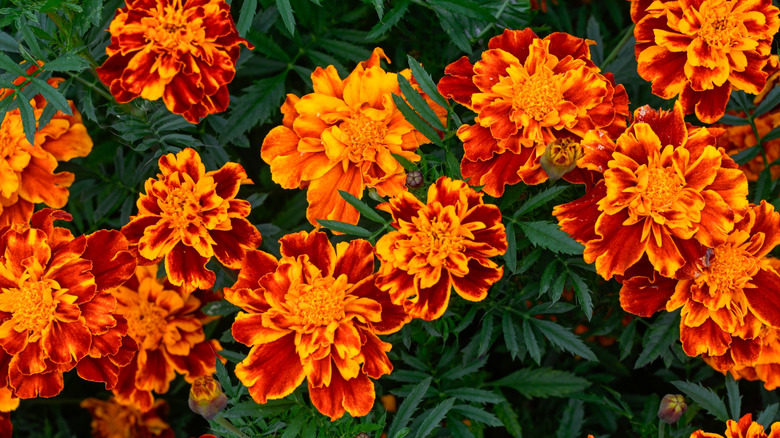
Another on the list of beautiful, fragrant flowers that are potentially far less appealing to ticks than to humans, marigolds (Tagetes spp.) are also a natural source of pyrethrum. Besides that, deer and rabbits tend to avoid them, finding them unappetizing due to their strong scent, so there may be less risk of the local tick express making your garden a stop on the line. But that's not the only reason to use marigolds for pest control. If you live in an area where root-knot nematodes are a prevalent issue, French marigolds (T. patula) specifically release chemicals that prevent these pests' eggs from hatching. They can make a useful rotational crop in your vegetable garden, particularly if you chop them up after they die in winter and incorporate them back into the soil. So while their possible effect on ticks is only one reason to grow them, marigolds offer plenty of other benefits, too. A triple-win!
You can plant marigolds in zones 2 through 11 in either full sun or partial shade, though you may see better blooming results with more sun. They're happier in drought than they are in soggy soil, so try to find a well-draining spot for them or amend the soil with sand or compost. Remember to keep up with deadheading: by removing withered blossoms, you'll encourage the plants to put out more flowers instead of setting seed. French marigolds especially will keep blooming all the way through spring, summer, and into fall if spent blooms are promptly removed.