

One Tomato Pest Can Wipe Out Your Harvest If You Wait Too Long
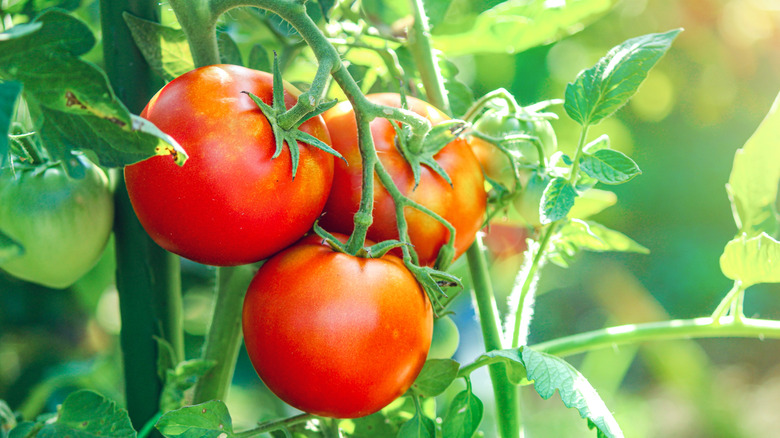
Tomatoes can be a bit challenging to grow, so there are few things more satisfying than seeing the plants thrive and begin producing fruit. Just when you think your garden is safely on its way, though, one late-season pest can transform a promising crop into a pile of ruined fruit — the tomato fruitworm. They're a major consumer of tomatoes, peppers, and corn plants and can quickly undo months of hard work, turning a harvest that looked set up for a strong finish in July into a bed of disappointment in August and September.
Tomato fuitworms (also known as corn earworms) are caterpillars that eat tomatoes. They can be shades of brown, red, or green, as their diet impacts their color. The mature moths are active at night and are generally brown or tan with a wingspan of around 1 inch. While these pests are an especially severe problem in the Southern United States, where they are able to overwinter, they can also be an issue in areas as far north as Canada, especially later in the summer.
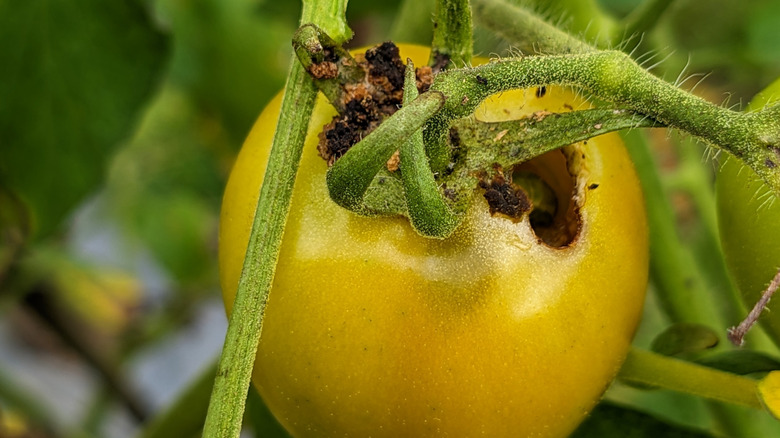
There's a good chance you won't initially notice the worms or moths at all. Instead, the first warning sign may be an ugly black hole near the stem of a developing tomato. By this time, the fruit will likely be inedible thanks to the damage and feces (called frass) the caterpillar leaves behind. That's why catching and managing an infestation early is so important.
How to manage tomato fruitworms in the garden
Regular scouting of your plants is the best way to catch tomato fruitworm activity before it gets out of hand. Setting up a bait trap for adult moths in July should give you some advance notice if fruitworms are starting to move in, giving you time to decide whether treatment is necessary before more tomatoes are damaged.
As far as management goes, there are some options. Having plenty of natural predators like parasitic wasps and lacewings may keep the number of fruitworms in your garden down to tolerable levels. But if not, BT (Bacillus thuringiensis) can be a good natural pesticide for these tomato pests. Just be sure to carefully read and follow all instructions on the label before use. If you find a tomato with larvae inside, remove and dispose of the fruit immediately. This prevents the caterpillar from emerging and continuing the cycle.
Additionally, a little planning early in the season can help limit the problem later on. Arranging your vegetable garden plants so that your tomatoes aren't too close to other crops that are vulnerable to these fruitworms, like corn and peppers, is a good strategy for limiting damage. And if you live in a part of the country where these pests can overwinter, consider digging up your garden after the season ends to destroy any worms in the soil.