

If You Do One Thing For Your Lawn In August, It Needs To Be This
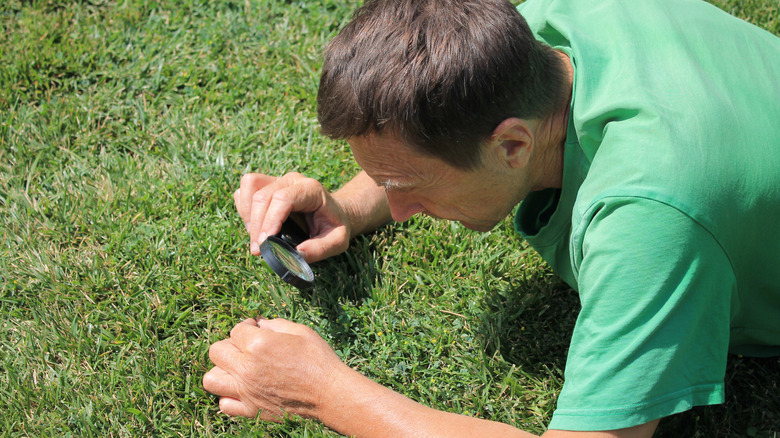
Lawn care often seems like a never-ending chore, but one simple task in August can prevent weeks of frustration later. This is the month to start checking your turf for the dreaded fall armyworm (Spodoptera frugiperda). By continually scouting for these bugs that can kill grass, you can save your late summer and early autumn lawn from being completely decimated.
Fall armyworms are moths whose hungry caterpillars feed on multiple types of turf grass, as well as corn and other crops. The adult moths lay clusters of small eggs on or near grasses or other plants, and the newly hatched caterpillars begin feeding immediately. Within about 3 weeks, the larvae are full grown and ready to pupate. Because fall armyworms mature quickly, it's essential to catch an infestation early, before the larvae are big enough to do much damage. Once you see a large number of them marching across your lawn, you may have already lost your chance to protect it from harm.
You can distinguish fall armyworm caterpillars from other garden insects by the upside-down Y-shaped marking on their faces. The adult moths are shades of gray and about 1½ inches wide from one wingtip to the other. Their destruction generally appears as brown patches on the lawn. It might look like your yard has been affected by drought, even if it's getting plenty of water. You may also notice grass blades chewed down to the stems, giving affected areas a closely grazed appearance.
How to detect and treat fall army worm infestations
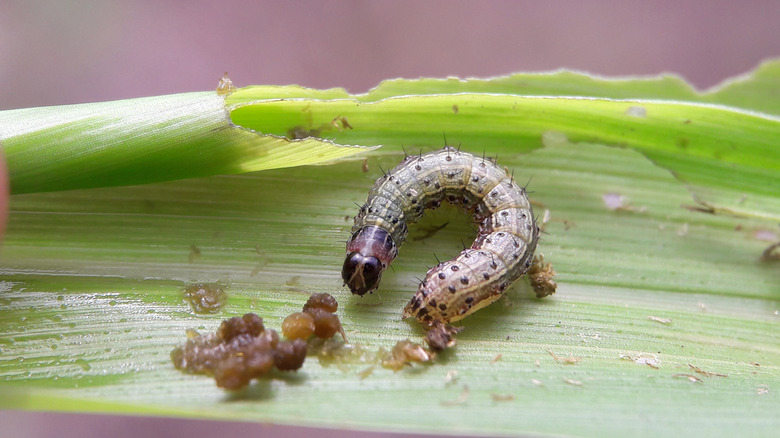
To catch an infestation early, inspect the undersides of grass blades and nearby plants for clusters of eggs, which are often covered with dirty-looking grey scales from the female moth's body. It's also worth checking light-colored outdoor furniture, fences, or decorations, as moths sometimes lay eggs on nearby surfaces. If you are seeing brown patches but can't find any signs of the insects, a good way to detect them is to use dish soap. Try pouring a mixture of 2 gallons of water and 2 tablespoons of lemony-smelling dish soap onto the grass near where you see damage. If fall armyworms are the culprits, you should see them appear in the grass within about 10 minutes. Once you've confirmed they're in your yard, it's time to choose the most appropriate treatment.
The best control method depends on the age of the caterpillars and the severity of the infestation. Almost all treatments work best when the caterpillars are still young, and become less effective as they mature. This is why acting quickly is critical. BT (Bacillus thuringiensis) is a good option for anyone looking for an organic treatment, as it is a naturally occurring bacterium and won't harm most other organisms. You can also use Neem oil on your grass for dealing with armyworms; however, it won't be a quick fix, and you'll likely need to reapply it repeatedly.
Insecticides like pyrethroids can also be used, either in a granular form or as a spray. However, they are harmful to beneficial insects, like bees, toxic to kids and household pets, and some armyworms have developed resistance to them. Regardless of what product you decide to use, be sure to read and follow all instructions on the label carefully.